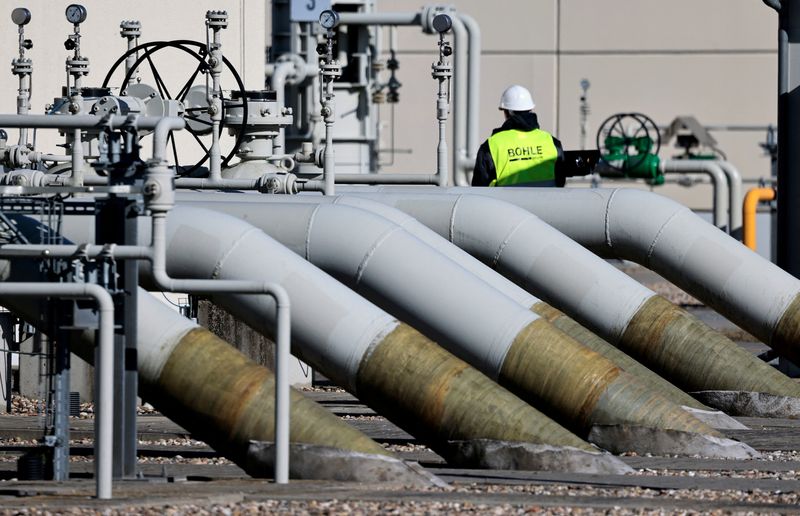
European natural gas prices fell 5.1% in the Dutch TTF front-month contract to 45.165 euros/MWh, while the UK June contract dropped 4.6% to 110.00 pence/therm, as stronger supply signals eased some war-related risk premium. Norwegian nominations rose by 5 mcm/d to 293 mcm/d and 17 LNG cargoes are expected into northwest Europe over the next two weeks. The article also notes that any sustained energy-price spike from the Iran conflict could feed inflation and pressure central banks, including the Fed and ECB, to stay tighter for longer.
The immediate market read-through is not just lower gas prices; it is a rapid de-risking of the inflation impulse that had been feeding into rate-path anxiety. That matters because the first-order move in European gas tends to propagate into power, fertilizer, chemicals, and ultimately headline CPI expectations with a lag of weeks to a few months. If this détente holds, the beneficiaries are the most rate-sensitive parts of the market: duration equities, small caps, and industrials with heavy energy input exposure, while the prior winners in LNG transport, gas storage, and upstream volatility harvesting likely give back premium. The second-order effect is that the trade is less about absolute energy prices and more about regime shift in volatility. When geopolitical risk premia compress, implied vol in energy-linked assets can collapse faster than spot, which is painful for carry strategies that were long optionality on supply disruption. At the same time, any sign that flows through the Strait normalize would pressure the narrow set of names whose earnings were being marked up on a scarcity basis rather than on underlying demand growth. The key risk is that this is a headline-driven repricing before any durable verification of supply restoration. A few days of diplomatic progress can remove panic, but physical molecules still need to move; if talks stall or retaliation resumes, gas can reprice violently higher within 24-72 hours. The market may be underestimating how quickly a false ceasefire narrative can reintroduce inflation expectations and push the front end of the curve higher again. Contrarian view: consensus is likely treating this as a simple bearish energy event, but the bigger opportunity may be in the de-stressed beneficiaries of lower inflation rather than in outright energy shorts. If European gas keeps falling, the earnings revisions may come fastest in consumers, transports, and rate-sensitive financials, while the energy complex could mean-revert without fully unwinding because supply discipline remains intact. That argues for expressing the view as a relative trade, not a naked commodity short.
AI-powered research, real-time alerts, and portfolio analytics for institutional investors.
Request DemoOverall Sentiment
mildly negative
Sentiment Score
-0.15
Ticker Sentiment
