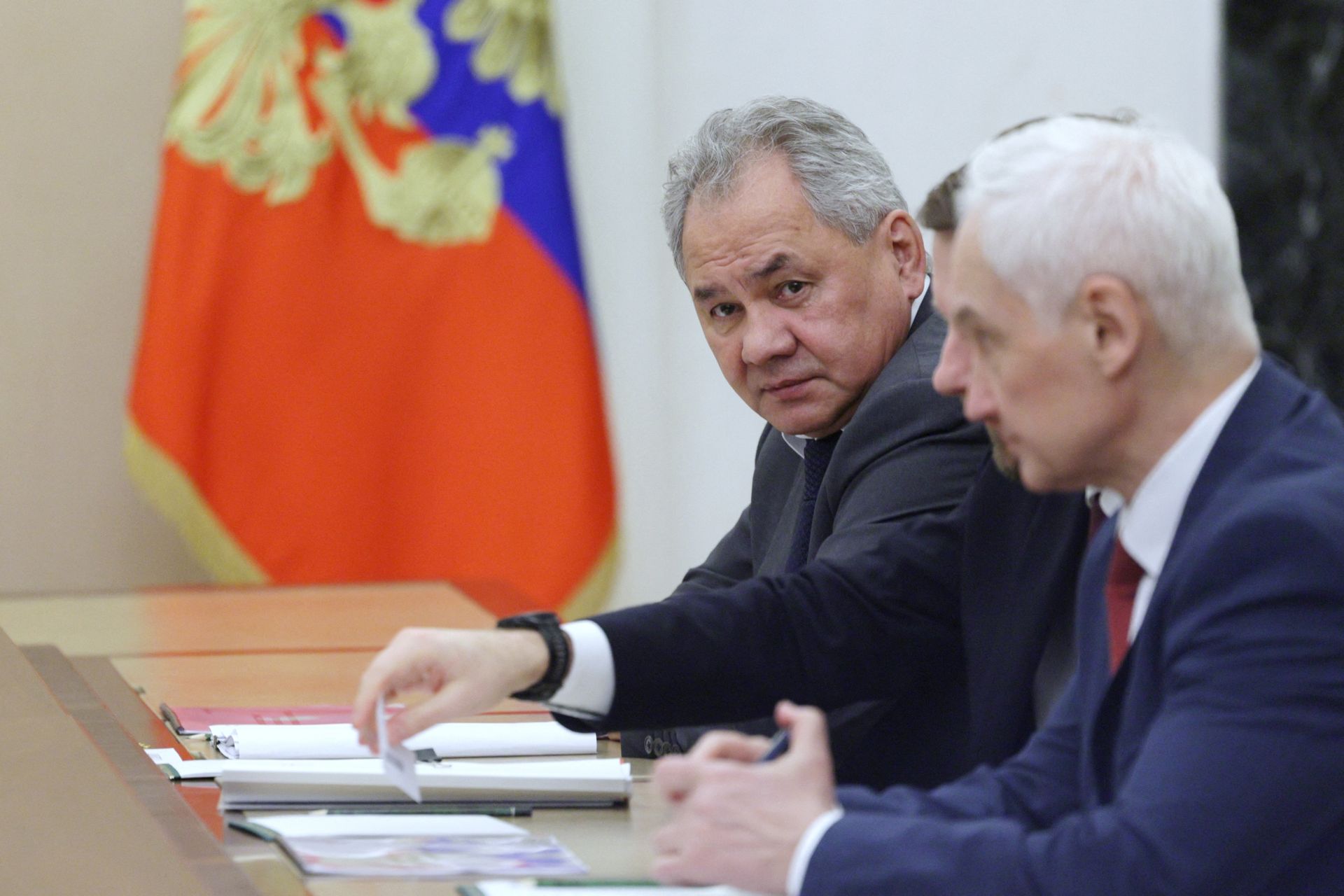
Russia warned Finland and the Baltic states that it reserves the 'right to self-defense' if Ukrainian drones strike Russia via their airspace, escalating regional tensions. Sergei Shoigu linked the warning to drone incidents around Finland and Baltic countries during Ukrainian attacks on Ust-Luga, while the Baltic states denied the accusations. The rhetoric raises geopolitical risk for European security and defense assets, though no immediate military action was reported.
The immediate market read is not about a direct kinetic escalation, but about a higher probability of wider NATO perimeter stress and a faster normalization of “airspace as contested infrastructure.” That matters because even a low-probability accusation cycle can force Baltic and Nordic states to spend more on ISR, counter-UAS, and point defense, while also increasing insurance and routing friction for northern logistics corridors. The second-order beneficiary is the defense-electronics and short-range air defense stack, not traditional heavy armor.
The more important near-term catalyst is operational: if Russia sustains this narrative, it gains a pretext to test allied response times around maritime chokepoints and cross-border drone incidents, especially in the Gulf of Finland. That raises the odds of a policy response from Helsinki and the Baltics that accelerates procurement decisions already in the queue; procurement lead times mean the revenue impact for suppliers is a 2-4 quarter story, but order announcements can re-rate names immediately. Conversely, any clear NATO deconfliction channel or public evidence disproving the route allegations would cool the tape quickly.
The market is likely underpricing the legal layer. Invoking self-defense language around alleged airspace use creates a framing device for expanded rules of engagement, which increases the chance of sanctions, export controls, and civil aviation disruptions even absent battlefield escalation. That creates hidden winners in cyber, EW, and airport/security systems, while European industrials with Baltic/Nordic logistics exposure face a small but non-zero operational risk premium.
Contrarian view: the headline may be more coercive signaling than genuine escalation intent. Russia may be trying to shape Western drone-support behavior by raising the expected cost of permissive air corridors, so the trade should be on procurement acceleration and risk premia, not on outright war escalation. If NATO responds with stronger integrated air defense but avoids visible confrontation, the defense bid can persist for months without broader macro spillover.
AI-powered research, real-time alerts, and portfolio analytics for institutional investors.
Request TrialOverall Sentiment
mildly negative
Sentiment Score
-0.35
