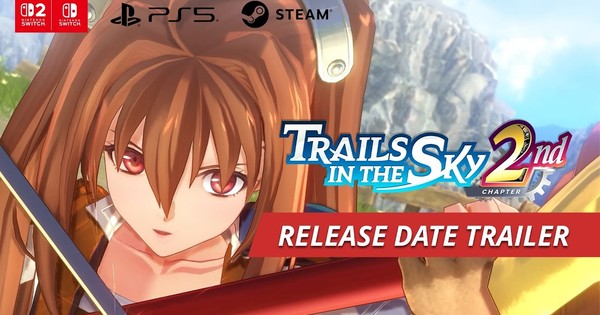
Trails in the Sky 2nd Chapter, the remake of The Legend of Heroes: Trails in the Sky SC, will launch on September 17 for PS5, Switch, Switch 2, and PC via Steam. GungHo is streaming an English-subtitled trailer, and the game will support English and Japanese voice acting across all platforms, with multiple text languages on PC and consoles. The announcement is a routine product update with limited expected market impact.
This is a low-magnitude but high-signal release for the game-content ecosystem because it confirms the publisher is executing a compressed sequel/remake cadence on a known IP rather than testing new demand from scratch. That lowers commercial uncertainty and raises the odds of a clean attach-rate tail for the prior remake, which is the real economic lever: sequel launches typically lift back-catalog engagement for 30-90 days more than the new title itself. The first-order revenue pool is modest, but the second-order effect is meaningful for lifetime value if the franchise can re-activate dormant players across console and PC.
The bigger winner is the platform mix, not the title. Simultaneous multi-platform release keeps launch risk low and reduces dependence on any single storefront’s algorithm, while also making the game a conversion vehicle for newer hardware owners who need content density. That tends to support hardware and subscription ecosystems more than pure software margins, especially if the release lands into a relatively quiet calendar window where RPG users have fewer competing time sinks.
The main risk is that remake fatigue can cap upside: if the prior remake’s unit curve already pulled forward much of the franchise’s latent demand, this becomes a retention product rather than a breakout monetization event. A secondary risk is localization quality or platform-specific performance issues, which matter more here than in mainstream tentpoles because the addressable audience is niche and review-sensitive. On timing, the tradeable window is short: two weeks into launch you’ll know whether this is a durable franchise relaunch or just a one-off nostalgia capture.
Consensus may be underestimating the catalog effect. These launches often don’t need blockbuster unit sales to matter; they can extend the tail on older entries, increase wishlist conversion for future installments, and improve bargaining power for western publishing and bundling. The upside case is a franchise that starts behaving like an annuity across back-catalog, remaster, and sequel releases; the downside is a clean but finite pop with no evidence of broader IP expansion.
AI-powered research, real-time alerts, and portfolio analytics for institutional investors.
Request TrialOverall Sentiment
neutral
Sentiment Score
0.10
