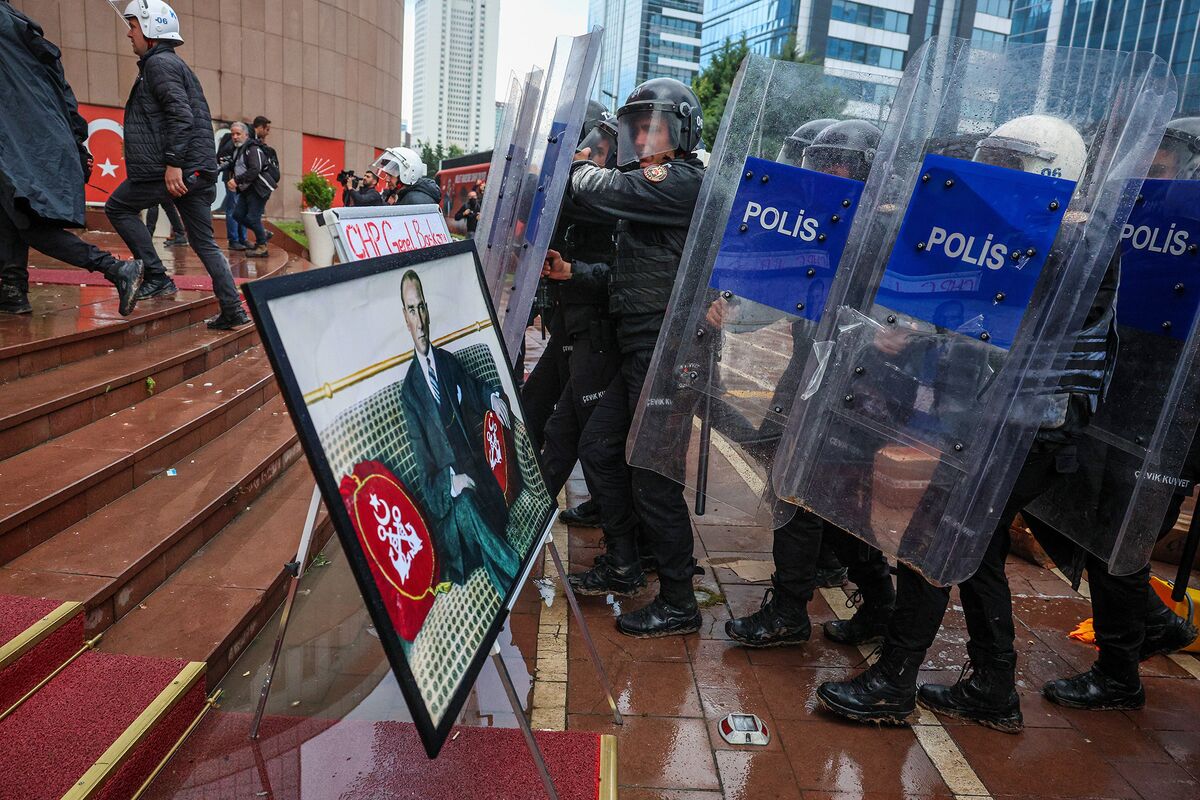
Turkey’s crackdown is broadening beyond opposition politicians to comedians, musicians, social media influencers and business executives. Comedian Tuba Ulu was detained after an Istanbul performance and prosecutors later charged her with “inciting public hostility,” seeking up to 3 years in prison. The article signals a worsening domestic political and legal climate, but it is unlikely to have an immediate direct market impact.
The immediate market implication is not about one comedian; it is about the regime shift in which discretionary enforcement becomes a signaling tool for broader social control. That tends to raise the option value of self-censorship across media, advertising, live events, and consumer brands with public-facing talent, which is a hidden tax on the local attention economy. Over months, the bigger loser is not just content creators but any company that relies on reputation-sensitive executives, influencers, or cross-border partnerships that can be disrupted by a politically motivated legal action.
Second-order effects are likely to show up in capital allocation before they show up in headline macro data. Domestic entrepreneurs and family offices will price in higher personal legal risk, which can slow hiring, capex, and M&A among mid-sized firms that need political neutrality to operate. The crackdown also creates a cleaner relative-benefit setup for offshore platforms and foreign media distribution, because audiences and creators will seek channels with lower local enforcement risk.
The main catalyst is not a single arrest but escalation breadth: once prosecutors start targeting non-political public figures, the probability of spillover into business leadership and sponsor networks rises meaningfully over 3-12 months. A reversal would require either a credible policy pivot ahead of elections or a strong external constraint from capital markets/diplomacy; absent that, this is a high-dispersion environment where single-name and sector-level underperformance can persist despite headline noise. The contrarian risk is that markets may underprice the durability of repression and overestimate short-term economic drag, which can make the initial selloff in domestic assets look too small before the second wave of capital flight materializes.
AI-powered research, real-time alerts, and portfolio analytics for institutional investors.
Request DemoOverall Sentiment
strongly negative
Sentiment Score
-0.60
