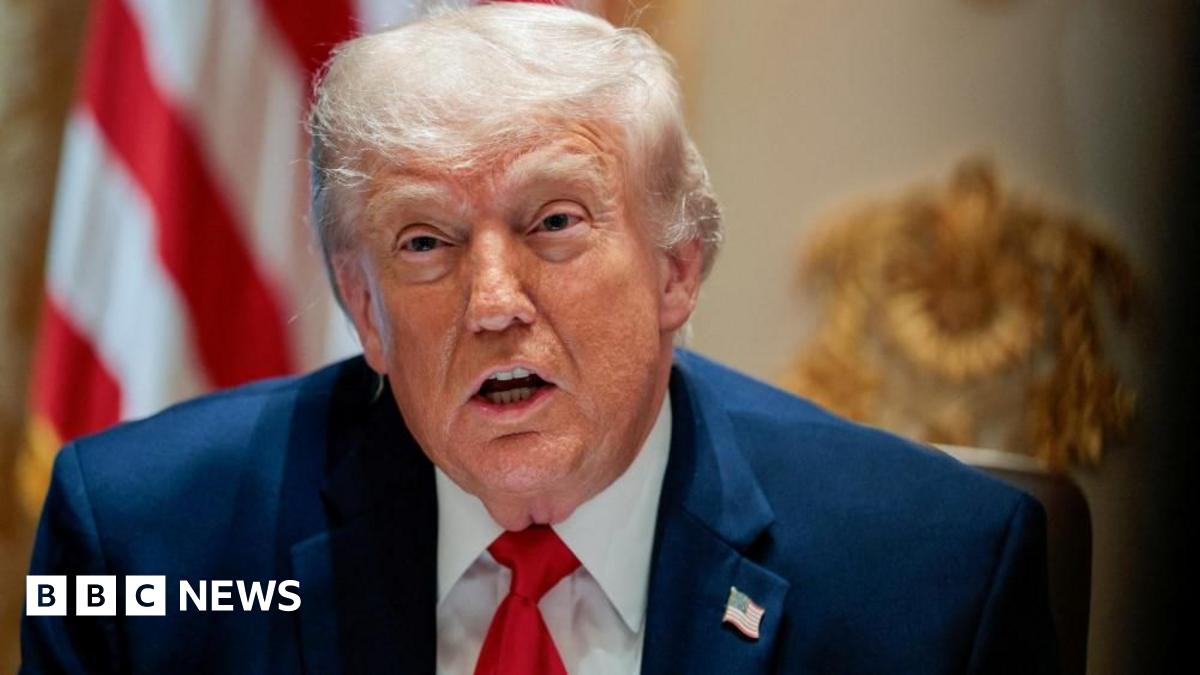
A federal judge temporarily halted creation of Donald Trump’s $1.8bn anti-weaponisation fund, blocking the Justice Department from processing or paying claims until a 12 June hearing. The fund, tied to a settlement ending Trump’s $10bn IRS tax-return lawsuit, is facing multiple legal challenges and criticism over lack of explicit congressional approval and oversight. The dispute also affects IRS review of tax filings by Trump, his family and businesses.
The immediate market read is not about the fund itself, but about institutional friction around executive improvisation. A court freeze raises the probability that any politically charged payout mechanism gets slowed, narrowed, or converted into a more conventional claims process, which is mildly negative for entities that would have benefited from discretionary settlement leverage. The bigger second-order effect is governance: if the fund is seen as a precedent for bypassing appropriations, it increases legal overhang on any similar executive-end-run structures, which tends to compress the probability-weighted value of headline policy wins.
For the IRS, the legal cloud is more important than the fund economics. Even if the fund never launches, the underlying dispute keeps tax-collection and enforcement powers in the political crosshairs, which can drag on IRS modernization, staffing, and compliance confidence for months. That matters because the agency’s operating efficiency is highly dependent on stable funding and credibility; any perception that tax administration is becoming negotiable can weaken voluntary compliance at the margin and raise downstream audit/collection risk around politically exposed taxpayers.
The contrarian read is that the market may be underpricing the chance this ends in a narrow settlement rather than a broad rollback. Courts may block implementation but still leave room for a revised, more defensible claims framework, which would preserve optionality for political beneficiaries while reducing constitutional risk. So the right trade is not to fade one headline; it is to position for prolonged uncertainty, where legal costs and management distraction persist longer than the media cycle, but tail outcomes remain highly path-dependent on the June hearing and any appellate fast-tracking.
AI-powered research, real-time alerts, and portfolio analytics for institutional investors.
Request DemoOverall Sentiment
mildly negative
Sentiment Score
-0.15
Ticker Sentiment
