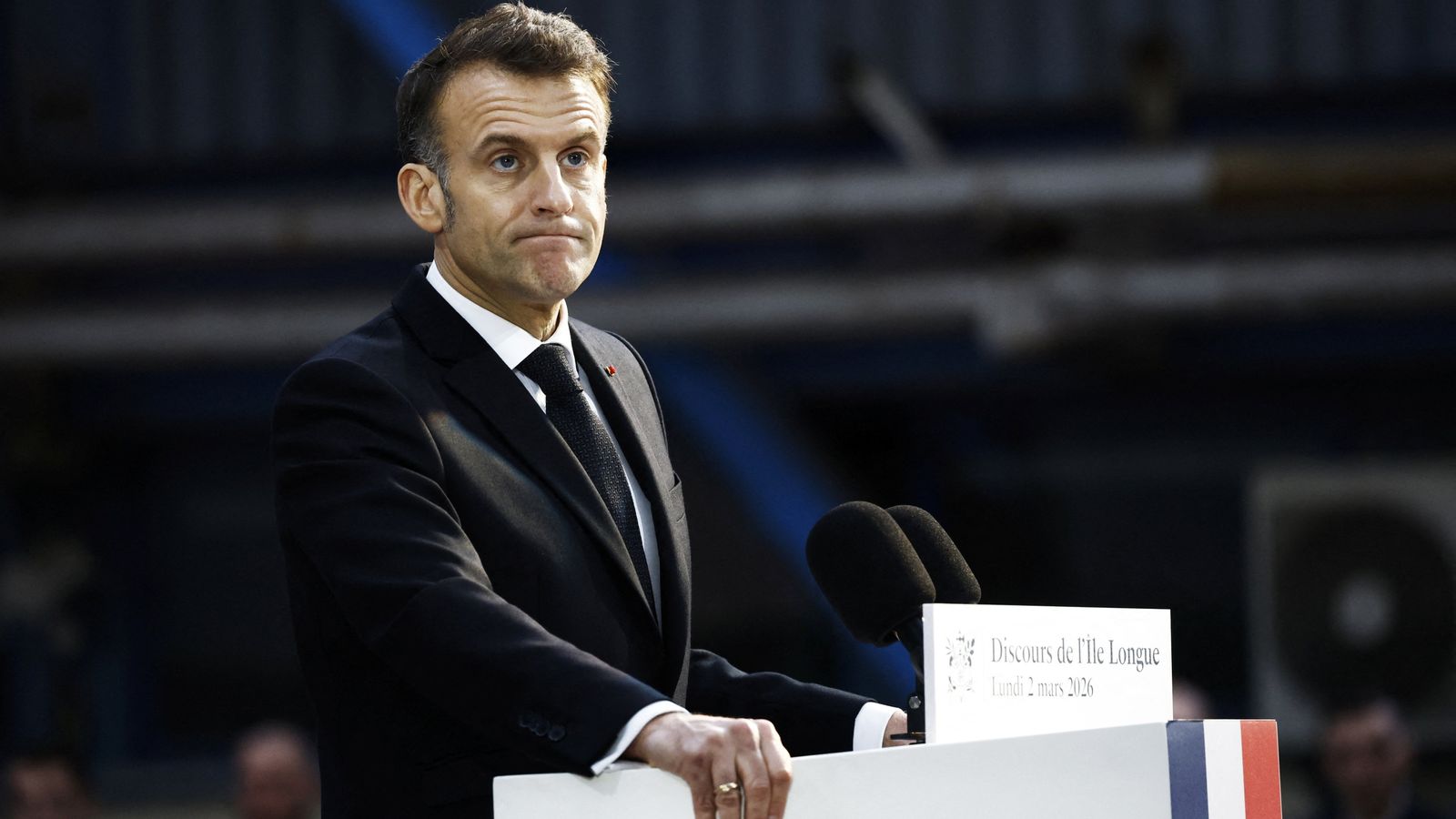
President Macron announced France will increase its nuclear warhead numbers for the first time in 34 years and will permit temporary deployment of nuclear-armed aircraft to allied countries and deeper integration on deterrence with partners, including joint exercises with Germany. The administration gave no new headcount (currently below 300) and recent French nuclear spending was about $6bn in 2024; the move raises geopolitical risk in Europe, could benefit defense contractors and shift NATO dynamics, and creates budgetary and policy uncertainty for investors monitoring regional risk premia.
Market structure: Macron’s announcement re-prioritizes European defense procurement and operational integration; direct winners are EU and US aerospace & defence primes (e.g., LMT, NOC, RTX, BA.L, HO.PA, SAF.PA) due to likely order flow, training services and munitions demand. Losers include French sovereign bonds (higher deficit risk) and ESG-focused funds that exclude defense exposure; expect supply constraints for high-end electronics and missiles, pushing lead times and prices 10–30% over 6–24 months. Cross-asset: expect short-term EUR strength vs peers on perceived strategic cohesion, a 10–30bp widening of OAT-Bund spreads over 3–12 months, higher equity implied vol (+20–40% on defense names initially), modest upward pressure on oil (+3–8%) and gold (+3–7%) if geopolitical risk rises.
Risk assessment: tail risks include kinetic escalation or targeted cyberattacks that would spike commodity and safe-haven flows and cause >50% moves in vulnerable names; probability low but impact extreme. Near-term (days) watch for 2–5% repricing in defense equities; short-term (3–12 months) depends on procurement announcements and EU/German budget alignment; long-term (1–5 years) implies sustained capex and potential industry consolidation. Hidden dependencies: export controls, rare-earth/microelectronics supply, and French domestic procurement rules could favor unlisted state contractors (Naval Group), crowding out foreign suppliers. Catalysts: French budget vote (next 30–60 days), EU/Germany joint deterrence deal execution, NATO/US official reactions.
Trade implications: tactically prefer listed defense primes with European exposure: establish size-trimmed longs (2–3% portfolio each) in HO.PA and BA.L with 6–12 month horizon, target +20–35% on contract awards, stop -15%. Hedge political/bond risk by shorting French 10y OAT futures (Euronext OAT futures) sized to limit portfolio VaR increase, add if OAT-Bund spread widens >8bps; cover if spread reverts below +5bps. Use options to buy asymmetric upside: purchase 6–9 month call spreads on ITA (or LMT/RTX) — buy 5–15% OTM to cap cost, notional 1–2% portfolio. Allocate 1–2% to GLD (3–6 month) as inexpensive tail hedges.
AI-powered research, real-time alerts, and portfolio analytics for institutional investors.
Request TrialOverall Sentiment
moderately negative
Sentiment Score
-0.35
Contrarian angles: consensus assumes broad, immediate win for all defence names — markets underappreciate domestic-content rules that will concentrate winners (Thales, Naval Group suppliers) and can penalize pure exporters; therefore avoid large positions in pure export plays without EU-localization exposure. Reaction may be overdone in short term: expect an initial pop then mean reversion until contracts are announced (window 60–180 days) — trade the news (entry on dips, take profits on +15–30%). Historical parallel: post‑2014 European rearmament produced multi-quarter outperformance for domestic integrators vs general industrials; unintended consequence is accelerated M&A and tighter input markets (chips/rare earths) that support longer-term pricing power.
