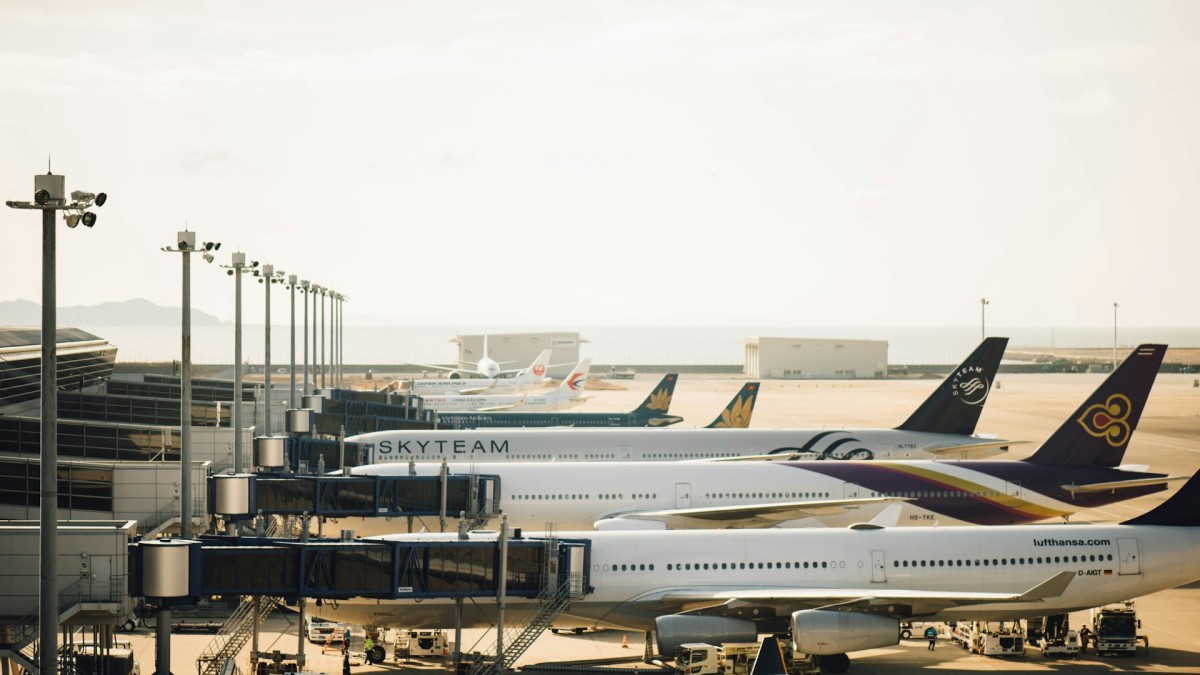
Jet fuel prices have spiked to over $200 per barrel as the war in Iran and closure of the Strait of Hormuz severely constrain Europe’s supply, with officials warning of possible kerosene shortages within weeks. EU Commissioner Apostolos Tzitzikostas said airline cancellations due to high fuel costs are not an extraordinary circumstance, meaning carriers must reimburse passengers. Lufthansa said the fuel surge could add $2 billion to its full-year costs.
The immediate winner is not the airlines best able to pass through higher costs, but the ones with the cleanest capacity discipline and strongest balance sheets. If regulators are signaling that fuel-driven cancellations will not qualify as force majeure, carriers with weak hedging and high exposure to leisure demand face a double hit: higher unit costs plus compensation/rebooking expenses that scale poorly when load factors are already tight. That creates a second-order advantage for network airlines with premium mix and stronger ancillary revenue, while ultra-low-cost operators become the most vulnerable because their product proposition leaves less room to absorb or reprice disruption.
The more important market implication is that the problem is no longer just price volatility but physical availability, which usually has a longer tail than headline spikes. Even if oil benchmarks stabilize, regional jet fuel dislocations can persist for weeks because import substitution, refinery utilization, and shipping constraints do not normalize quickly; that means the earnings risk window is likely Q3 rather than just the next few sessions. A shortage also raises the odds of opportunistic schedule cuts and aircraft repositioning, which can depress near-term capacity and support fares, partially offsetting cost pressure for the survivors.
Consensus may be underestimating how much this accelerates the split between winners and losers inside European aviation. Short-haul leisure carriers with weak hedges are the cleanest short, but the better relative trade may be long the strongest hub carriers versus short the weakest low-cost peers, because pricing power and compensation exposure will diverge more than fuel cost alone suggests. Another contrarian angle: if governments prioritize tourism continuity, they may intervene via fuel logistics or temporary relief rather than airline support, which would cap the duration of the shortage but still leave the weakest operators with a permanent cost base reset.
The risk to the bearish airline thesis is that the market has already started to price in a lot of the fuel shock, while a rapid diplomatic de-escalation could unwind the dislocation faster than expected. But absent a credible Strait of Hormuz improvement, the next catalyst is likely guidance resets and summer capacity cuts, not an immediate normalization. That favors event-driven positioning over broad sector shorts.
AI-powered research, real-time alerts, and portfolio analytics for institutional investors.
Request DemoOverall Sentiment
moderately negative
Sentiment Score
-0.35
