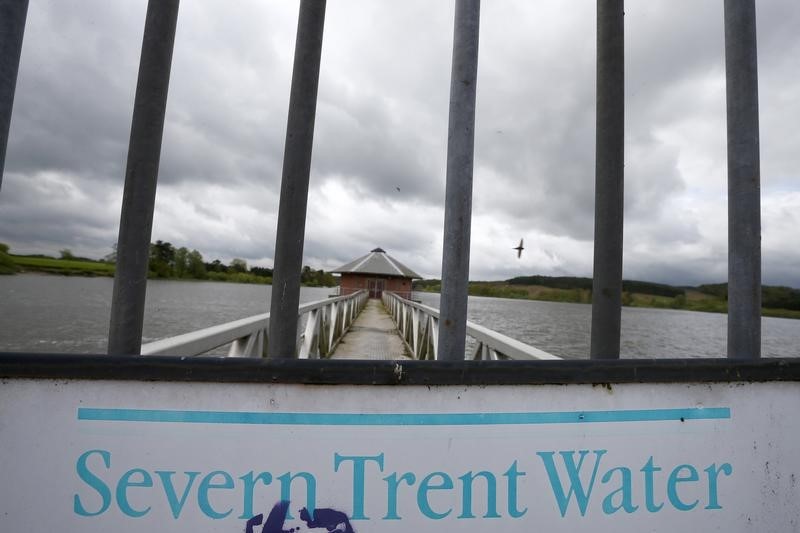
Bernstein upgraded its water-sector outlook by naming Veolia and Severn Trent as top picks, with price targets of €40 and 3,370 pence, respectively, while also reiterating positive views on United Utilities and Pennon. The thesis is driven by a major capex super-cycle in the UK and rising French water investment, with UK spending under AMP8 projected at about £104 billion versus £51 billion in the prior period and French annual investment rising from €6.7 billion in 2024 to €10 billion-€13 billion by 2040. The report highlights aging infrastructure and tighter environmental standards as key catalysts, though budget constraints in France could slow deployment.
The important second-order effect here is that water is shifting from a defensive utility subsector into a regulated capital-recycling trade. In the UK, the capex step-up should expand the addressable market not just for operators, but for contractors, treatment-tech vendors, leak detection, metering, and financing intermediaries that get paid on project volume rather than asset quality. That makes the earnings delta potentially larger for the picks-and-shovels layer than for the utilities themselves, because the utilities’ equity upside is still constrained by allowed returns and political scrutiny.
The clearest relative winner is Veolia, because French municipal fragmentation creates optionality for outsourced financing, design-build-operate contracts, and multi-service bundling when local budgets are tight. That dynamic can let a platform operator win work even in a weak capex environment, while smaller local operators and pure-play municipal contractors may lose share if cities prefer one-stop solutions with balance-sheet support. In the UK, the upside is more formulaic: the real beneficiaries should be firms with direct exposure to network upgrades, wastewater treatment, and storm overflow remediation, while the risk is that regulators offset higher allowed investment with tighter future returns.
The main risk is timing mismatch: the spending narrative is real, but cash conversion may lag by 12-24 months as planning, permitting, and procurement slow the ramp. If inflation cools faster than expected, nominal capex headlines may look large while real project activity disappoints, which would compress enthusiasm for the sector. Another underappreciated risk is political backlash if bill increases become salient, especially in the UK, where consumer pressure could push Ofwat toward harsher efficiency requirements or deferred allowances.
The contrarian angle is that the market may be underpricing the duration of this cycle. Once storm overflow and wastewater compliance become embedded, the spending stream is less cyclical than traditional infrastructure because penalties for underinvestment compound over time. That suggests the best setup is not a one-shot re-rating, but a multi-year rotation into businesses with recurring service revenue and financing leverage, while avoiding pure regulated-equity names if returns get capped by policy.
AI-powered research, real-time alerts, and portfolio analytics for institutional investors.
Request DemoOverall Sentiment
mildly positive
Sentiment Score
0.25
