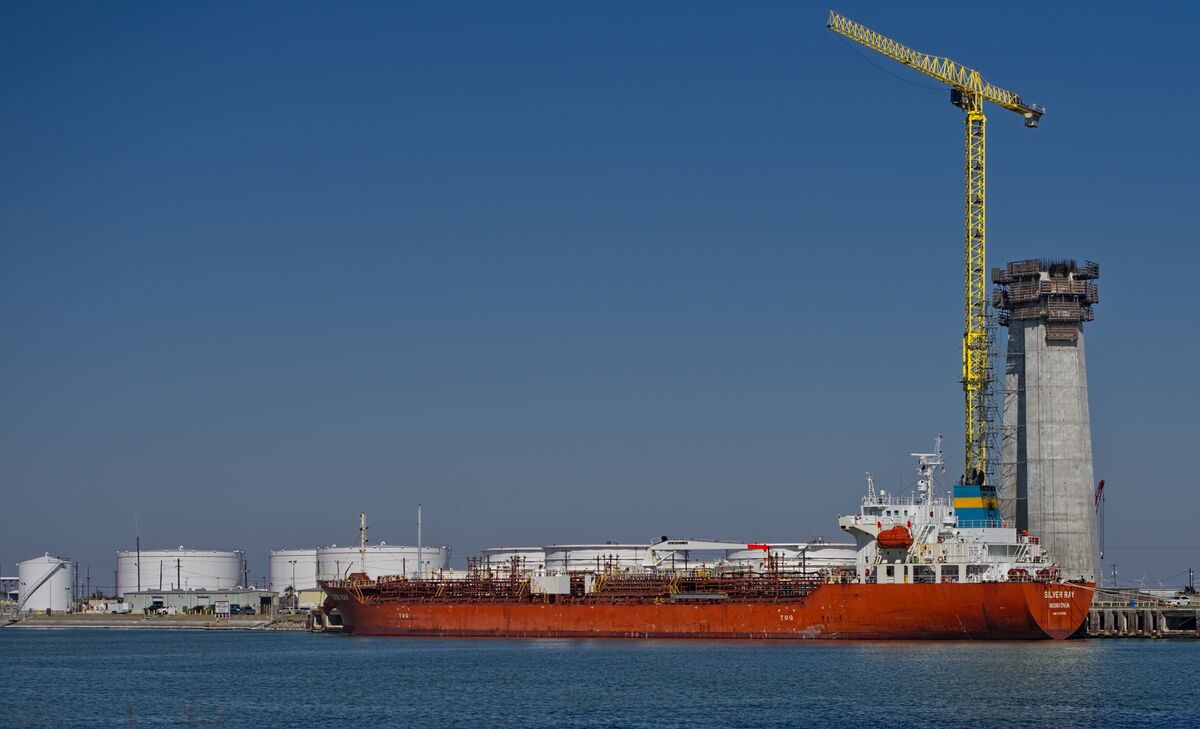
US exports of oil products hit a weekly record of 8.2 million barrels a day, underscoring the country’s role as a major supplier of diesel, jet fuel and gasoline to global markets. The surge comes as overseas buyers face tighter supply amid the near closure of the Strait of Hormuz, linking the story to geopolitical disruption and energy logistics. The data is supportive for US refiners and relevant for global fuel pricing, though the article is primarily factual.
This is less about a one-off volume print and more about a stress-test of the global refined-products system. When seaborne disruptions tighten the marginal barrel, the US acts as the swing supplier of last resort because Gulf Coast complexity and logistics breadth let it arbitrage regional shortages faster than most peers; that supports refinery utilization, export differentials, and inland crude discounts tied to Midland and heavy-sour spreads. The second-order winner is the US midstream/export chain, while the immediate loser is not just foreign consumers but non-U.S. refiners that cannot match the speed or product slate flexibility.
The market is likely underestimating how quickly this can ripple into freight and storage. Higher export intensity pulls more Jones Act-capable tonnage, barge, and pipeline capacity, which can tighten domestic distribution even if headline fuel inventories look adequate; that can widen local basis volatility in the Gulf and Midwest over days to weeks. If the Strait narrative persists for months, the longer-duration effect is a structural re-pricing of U.S. refining optionality, with cracks staying firm as long as the export pull remains stronger than any demand softness.
The main reversal risk is political or operational, not demand-led. A diplomatic easing in the Middle East, a refinery outage in the Gulf Coast, or a sudden widening of domestic crude differentials could break the export arb and compress margins quickly; in that case the market will punish the most export-levered names first. The contrarian angle is that this is bullish for the U.S. energy complex even if crude itself does not stay elevated, because the bottleneck is in products, not necessarily feedstock, so refiners and logistics may outperform upstream oil beta.
AI-powered research, real-time alerts, and portfolio analytics for institutional investors.
Request DemoOverall Sentiment
neutral
Sentiment Score
0.15
