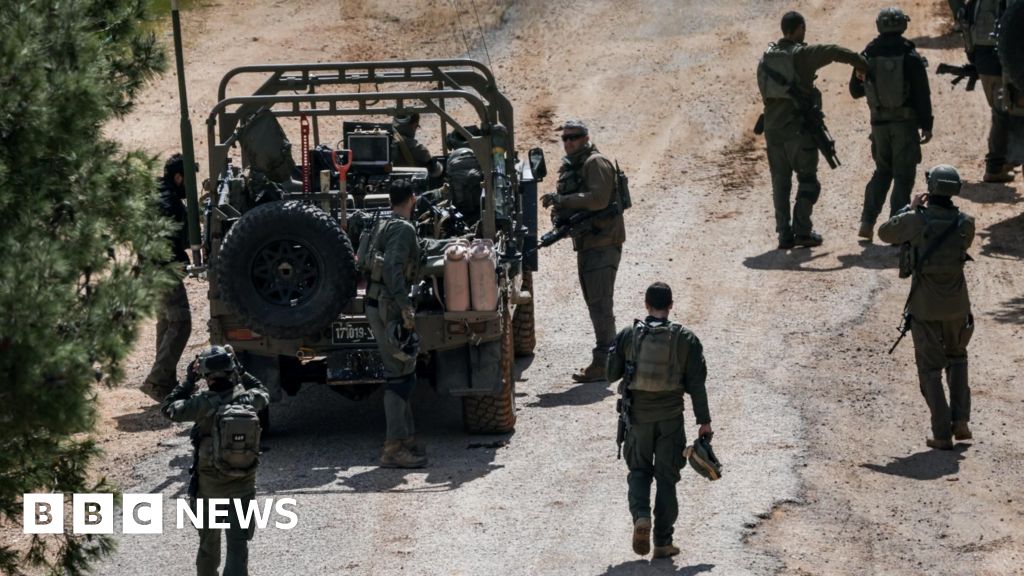
The IDF has begun limited ground operations in southern Lebanon against Hezbollah, with at least 850 people (including 107 children) killed in Israeli strikes and roughly 830,000 displaced; two Israeli soldiers have also been killed. Hezbollah has fired rockets, drones and shelled border towns while Israel expanded evacuation zones up to the Zahrani river (~40km from the border) and reportedly seeks control south of the Litani (~30km). The escalation raises risk of a prolonged occupation and regional spillovers that could hit markets and energy prices; France proposed hosting ceasefire/disarmament talks while a joint statement from several Western leaders warned of devastating humanitarian consequences. The UK mobilized £5m ($6.65m) in emergency aid for displaced Lebanese civilians.
The entry of ground forces raises the probability that this will be a multi-week to multi-month kinetic phase rather than a short air campaign; that favors durable demand for precision munitions, ISR, counter-drone systems, and ground logistics/engineering support where procurement lead times are 3–12 months and reorder cycles are measured in quarters. Expect mid-single-digit percentage revenue upside across large Western defense primes if the campaign broadens regionally and allied stockpiles are replenished through expedited purchases and foreign military sales programs.
Oil and shipping risk premia are the most immediate market transmission channels: a sustained escalation that threatens northern Levantine sea lanes, Gulf approaches or regional transits historically adds 3–8% to Brent within days and can persist for months if insurance costs and rerouting persist. That, in turn, compresses refining margins in Europe and increases LNG tonne-mile costs, creating winners among producers with flexible cargoes and losers among continentally exposed refiners and travel/tourism sectors.
Credit and EM transmission will be uneven but decisive: small sovereigns and banks with direct Lebanon/Hezbollah trade or remittance links see CDS widen quickly, while safe-haven flows bid US Treasuries and gold. Political/diplomatic catalysts (French-mediated talks, US pressure, or a rapid ceasefire) are high-probability reversal events in the 1–14 day window; the primary tail risk is direct Iran involvement, which would materially widen every market move and extend time horizons to quarters.
Tactically, this is a risk-off shock with clear asymmetries — defense and commodity-producer optionality on the upside, EM/credit and travel sectors on the downside — and it favors short-dated volatility and hedges until diplomatic clarity emerges.
AI-powered research, real-time alerts, and portfolio analytics for institutional investors.
Request DemoOverall Sentiment
strongly negative
Sentiment Score
-0.80
