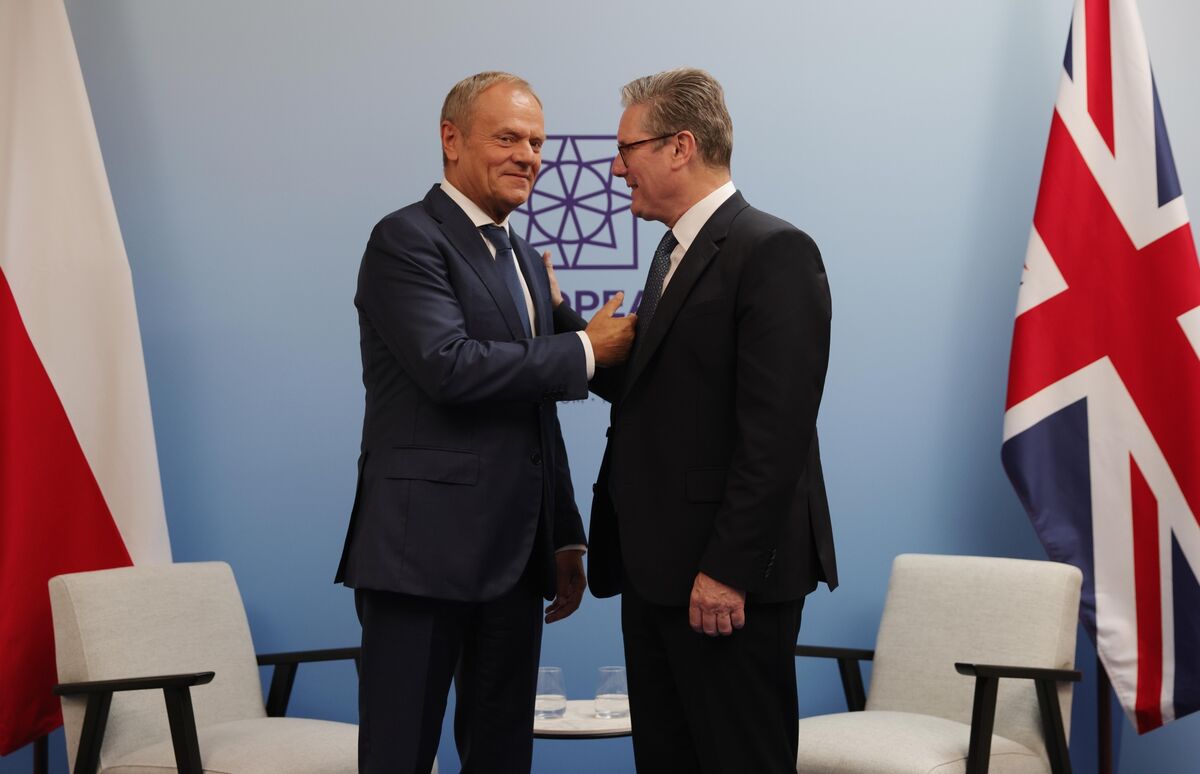
The UK is set to finalize a defense and security pact with Poland as both NATO allies respond to the Russia threat, including rising hybrid attacks such as arson, cargo fires, cyberattacks, and espionage. The agreement underscores elevated geopolitical and cybersecurity risks in Europe, but the article does not indicate an immediate market-moving policy or economic change.
The immediate market impact is less about headline defense spending and more about procurement optionality: a bilateral pact signals a higher probability of accelerated orders for air defense, drones, EW, perimeter security, and cyber tools across the next 6-24 months. The second-order winner set is broader than pure-defense primes; mid-cap integrators, niche sensors, and dual-use cybersecurity vendors should see better booking visibility because hybrid-threat budgets are easier to fast-track than large platforms.
Europe’s supply chain is the underappreciated beneficiary. Recurrent sabotage and cyber incidents force governments to spend on hardening logistics, ports, warehouses, and telecom nodes, which tends to favor infrastructure security and critical-facility monitoring rather than headline military hardware. That also creates a rotation into companies exposed to compliance-driven capex, because once procurement standards tighten, replacement cycles become sticky and less cyclical than discretionary IT spend.
The risk is that the market overestimates translation from rhetoric to near-term revenue. Defense pacts often improve sentiment immediately, but budget authority, tendering, and delivery can lag by quarters, and a de-escalation in Russia-related incidents would cool urgency fast. The more durable catalyst is any evidence that allied governments are moving from ad hoc emergency spend to multi-year framework agreements; without that, the trade is mostly a sentiment pop.
Contrarian take: the consensus may be too focused on traditional defense names and not enough on cybersecurity and industrial-security enablers. If the threat vector is increasingly hybrid, the marginal euro is more likely to go to detection, identity, endpoint resilience, secure comms, and physical hardening than to tanks or aircraft. That makes the best risk/reward in names with recurring revenue and fast deployment, not capital-intensive platforms with long backlog conversion.
AI-powered research, real-time alerts, and portfolio analytics for institutional investors.
Request DemoOverall Sentiment
mildly negative
Sentiment Score
-0.15
