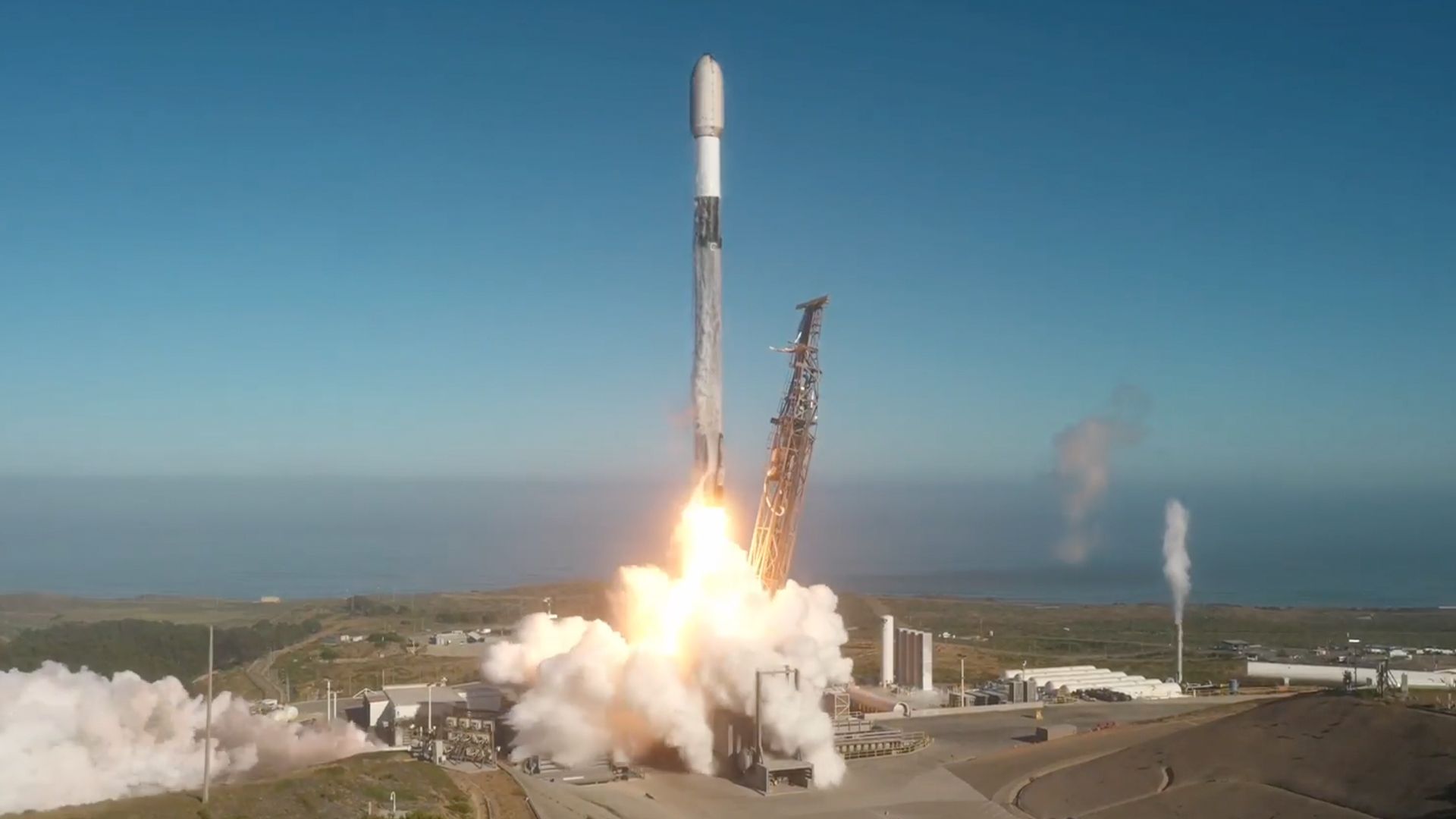
SpaceX launched 24 Starlink satellites on Falcon 9 from Vandenberg at 11:05 a.m. EDT, with successful deployment confirmed about an hour later. The flight marked SpaceX's 67th Falcon 9 launch of the year and increased the Starlink constellation to more than 10,600 satellites. The article also notes market anticipation around SpaceX's planned IPO, but the news itself is primarily a routine mission update with limited immediate market impact.
The market’s focus on an IPO headline is likely mispriced if it treats the listing as a one-day sentiment event rather than a capital-formation and governance reset. For NDAQ, the cleaner trade is not “IPO day pop,” but the prospect of elevated secondary issuance, index inclusion activity, and a longer runway for retail/speculative participation if the float is constrained. The bigger second-order effect is that a public SpaceX would likely become a liquidity magnet in private-market comps, pulling attention and capital away from other late-stage aerospace/defense venture names.
Operationally, the launch cadence matters more than the IPO rhetoric: continued high-frequency Starlink deployments reinforce a launch-services moat that competitors cannot replicate near term. That creates pressure on legacy launch providers and satellite-network alternatives because each incremental launch reduces SpaceX’s unit cost and increases switching costs for enterprise/broadband customers. The reuse milestone is also a warning signal for rivals: cost parity in launch is moving further out of reach, which should widen the economics gap in favor of vertically integrated space platforms.
The contrarian point is that the market may be overestimating immediate IPO upside and underestimating execution risk around timing, disclosures, and valuation anchoring. If the listing slips or is structured with limited float, the initial enthusiasm can unwind quickly over the next 1-4 weeks. For NDAQ specifically, the event is supportive but not structurally transformative; the real P&L for exchange operators comes from sustained post-listing trading interest, not the filing itself.
AI-powered research, real-time alerts, and portfolio analytics for institutional investors.
Overall Sentiment
neutral
Sentiment Score
0.12
Ticker Sentiment
