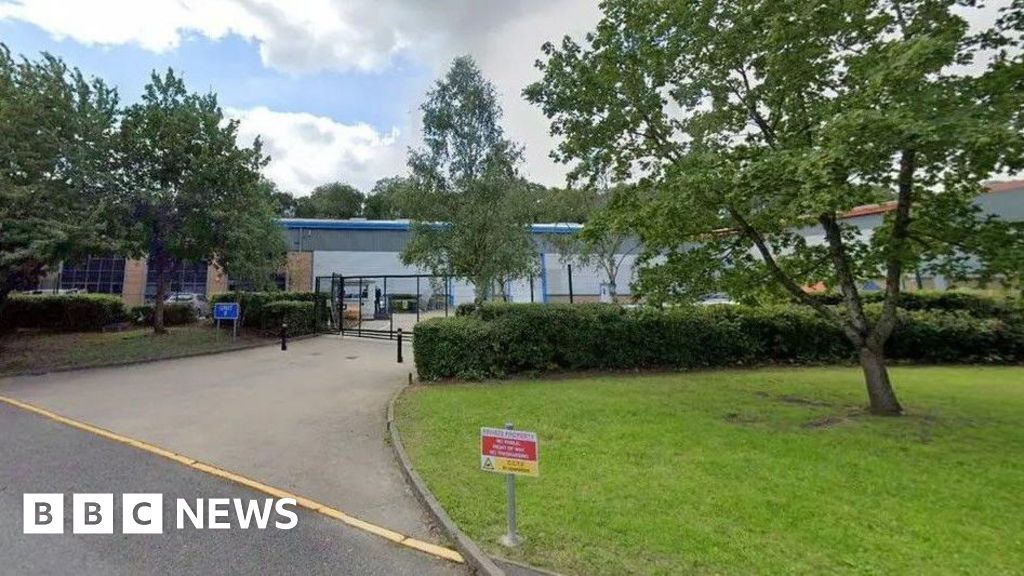
Six people were charged after a protest at a drone factory in Braunstone, Leicestershire, including one man from Norfolk. The defendants face one count each of burglary and criminal damage and are due in Westminster Magistrates' Court on Monday. The case is being led by Counter Terrorism Policing East Midlands, indicating a law-enforcement and defense-industry disruption rather than a broader market event.
This is less a direct equity event than a signal that the security perimeter around politically sensitive industrial assets is getting more intrusive. Even if no public company is named, the second-order effect is a higher cost of doing business for defense-adjacent manufacturers: more physical security spend, more board-level scrutiny on site access, and a greater likelihood of temporary operational disruption from protests, police activity, or insurance reviews. The key market implication is not lost revenue per se, but margin dilution and schedule risk across the broader defense supply chain.
The reaction risk is asymmetric because the investigation is being treated through a counter-terror lens. That raises the probability of a longer enforcement tail, including injunctions, arrests, and protest deterrence, which can cool near-term disruption but also harden the political polarization around defense contractors. Over weeks to months, that tends to benefit larger primes and diversified integrators relative to niche subcontractors, since customers will prefer suppliers with redundant sites, stronger compliance teams, and lower headline risk.
The contrarian angle is that the event may actually be bullish for the sector’s incumbents if it accelerates procurement from firms with better protection, compliance, and political connectivity. Investors often underweight the value of execution certainty in defense; when protest risk rises, buyers pay up for reliability, which can widen the moat for the largest listed names. The main reversal catalyst would be rapid de-escalation and a clean legal resolution that reframes the incident as isolated, but the reputational overhang usually persists longer than the news cycle.
AI-powered research, real-time alerts, and portfolio analytics for institutional investors.
Request TrialOverall Sentiment
mildly negative
Sentiment Score
-0.20
