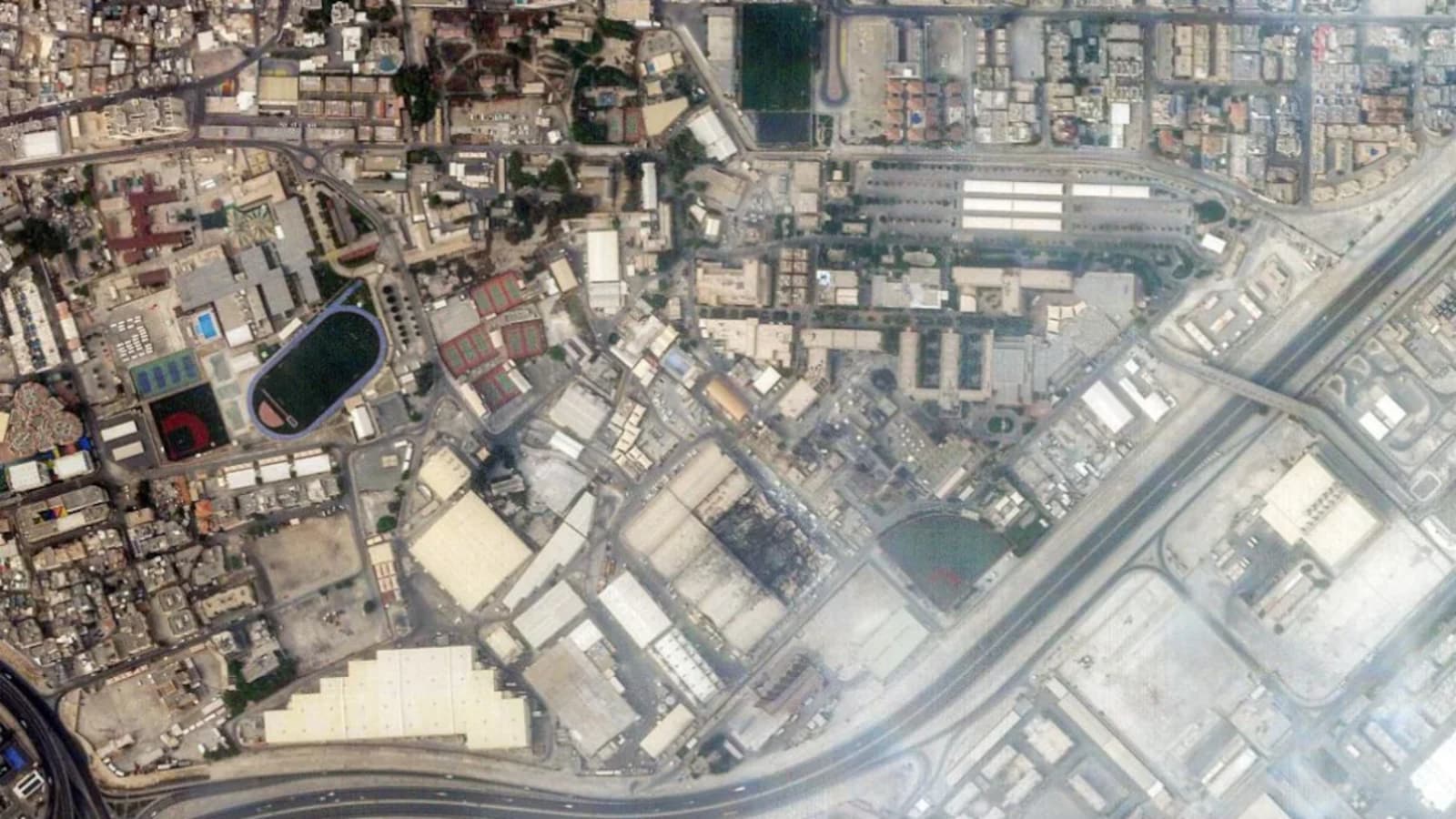
Iran's missile and drone strikes reportedly hit the US Naval Support Activity Bahrain multiple times between late February and June, damaging the main command headquarters, more than a dozen buildings, and two satellite communications systems. The attacks forced the US to move personnel, reassess base security, and consider dispersing forces across more locations rather than relying on large permanent bases near Iran. The episode underscores elevated regional military risk and the vulnerability of costly US defense infrastructure to cheaper asymmetric weapons.
The key market implication is not the headline damage itself, but the demonstration that low-cost asymmetric strike systems can impose persistent capex and operating changes on high-value fixed infrastructure. That shifts the marginal dollar of defense spend toward dispersion, hardening, decoys, and counter-UAS rather than traditional platform procurement, which should support multi-year demand for integrated air defense, sensors, EW, and base security contractors even if overall DoD budgets flatten.
Second-order effects extend beyond the Pentagon. A more distributed force posture in the Gulf is operationally less efficient, implying higher logistics costs, more inventory duplication, and slower response times; that is a quiet tailwind for military logistics providers and pre-positioned supply chain assets, while hurting any thesis tied to concentrated hub efficiency. It also raises the strategic value of nearby allies willing to host rotational assets, creating optionality for regional base-sharing agreements and localized defense spending.
The risk is that markets initially underprice the persistence of this threat because the immediate damage was limited and there were few casualties. But the lesson here is cumulative: once an adversary proves it can penetrate a marquee base, even intermittently, every future deployment in the region inherits a higher protection premium. Over the next 3-12 months, that should show up in budget revisions, accelerated procurement, and potentially a re-rating of defense names with exposure to missile defense, C2 resilience, and secure communications.
The contrarian angle is that this may be less about one-off escalation and more about a structural redesign of U.S. basing doctrine. If that is right, the upside is not in broad defense beta alone but in niche suppliers tied to rapid fielding of layered defenses, hardened shelters, and distributed command architectures. The market may be over-focusing on geopolitical risk and underpricing the capex cycle that follows when the world’s most capable military decides its current footprint is too concentrated.
AI-powered research, real-time alerts, and portfolio analytics for institutional investors.
Request DemoOverall Sentiment
moderately negative
Sentiment Score
-0.35
