

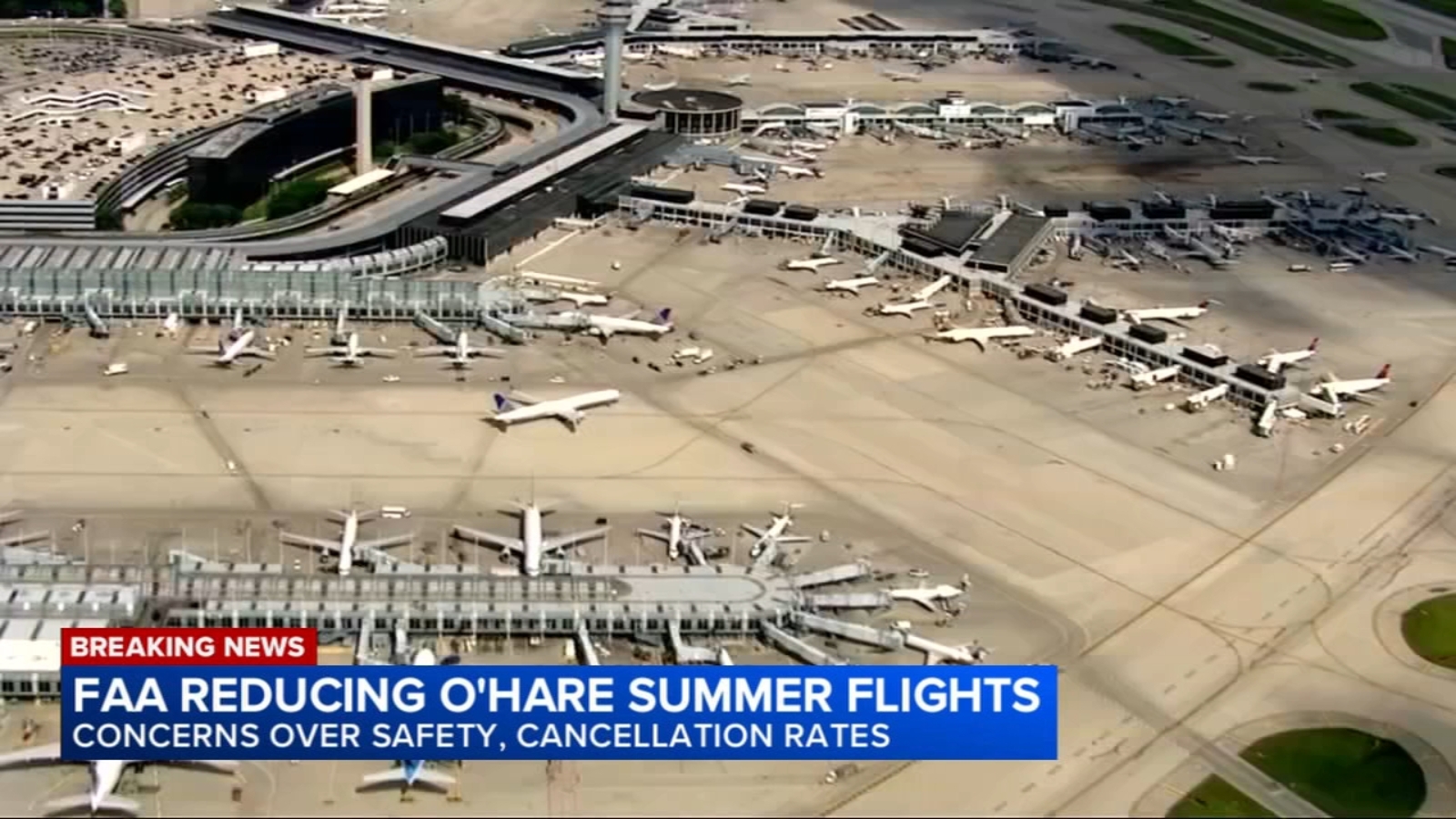
The FAA is capping Chicago O'Hare summer flights at 2,708 per day, down from an initial plan of more than 3,080 and far below the implied 14.9% increase over last year. The reduction is tied to safety concerns and elevated delay/cancellation risk, which should improve reliability but limit capacity growth for United and American at the hub. Both airlines said they are reviewing the order, while American said the outcome supports its dual-hub strategy at O'Hare.
This is a relative winner for the incumbent hub with the stronger pricing engine, but the bigger signal is that capacity discipline is now being imposed externally rather than self-selected. That usually benefits the carrier with the best schedule quality and yields, while pressuring the carrier that had been counting on incremental banked connectivity to defend share with volume. In practice, reduced throughput should improve on-time performance and asset utilization for the dominant operator, but it also caps the ability to add seats into peak summer demand, which can preserve fare strength across the market.
The second-order effect is on unit revenue mix, not just seat count. If fewer flights mean fewer irregular ops, the network with deeper loyalty and premium skew tends to capture the highest-value spill traffic, while the more price-sensitive carrier is forced to choose between holding fares and preserving margins. Watch for a delayed effect into late summer: better reliability can support pricing, but any network re-optimization may create temporary connection leakage, especially if schedules were built assuming higher throughput.
The key catalyst window is the next 2-8 weeks as airlines publish updates and re-balance crews, gates, and aircraft rotations. The main tail risk is that the restriction proves more binding than managements admit, causing last-minute cancellations and higher reaccommodation costs; that would hit both names, but disproportionately the carrier with thinner operational slack. The contrarian view is that the market may be underestimating how much of the bad news is already absorbed: if the limit simply aligns actual operations with achievable capacity, the earnings impact could be modest while reliability and fare stability improve into peak travel season.
AI-powered research, real-time alerts, and portfolio analytics for institutional investors.
Request TrialOverall Sentiment
neutral
Sentiment Score
-0.05
Ticker Sentiment
