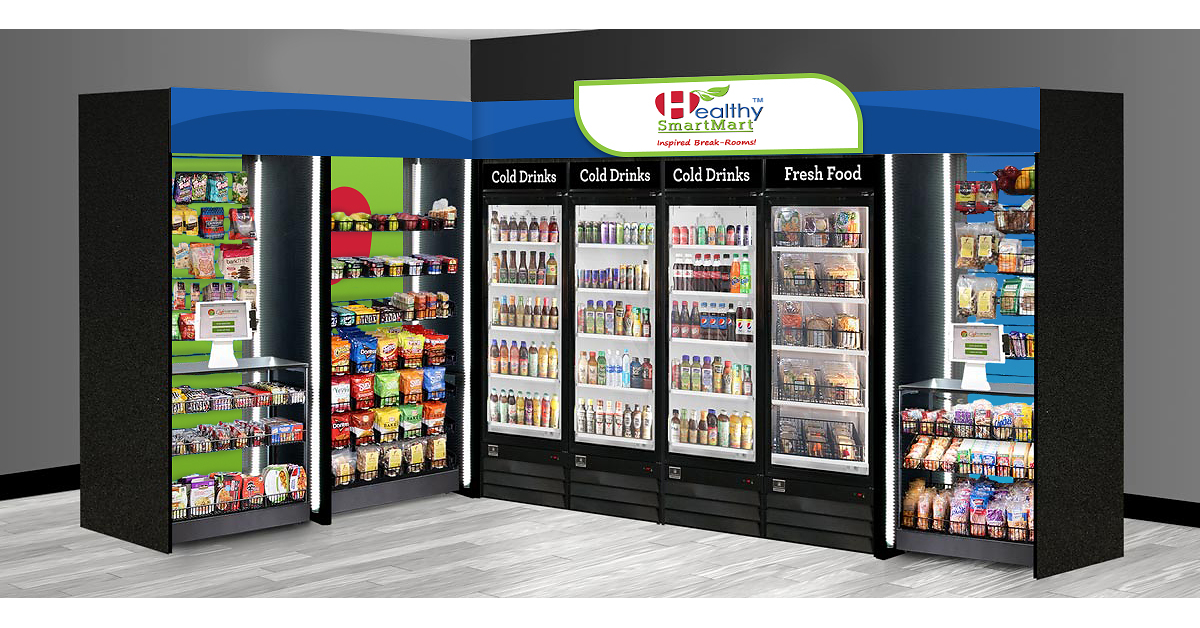
Healthy Smart Mart™ pitches an automated micro-market franchise model that runs 24/7 with cashless convenience and smartphone inventory/sales tracking, aiming to reduce staffing overhead and improve margins vs. traditional vending. The article frames scalability from 1 to 10 locations as a key advantage, but provides no financial performance metrics or funding terms. Overall, it reads as promotional/industry positioning news rather than a catalyst for public-market pricing.
This is more narrative than investable signal. The only real market mechanism is that automated micro-markets monetize office occupancy, so the economics live or die on badge swipes, spoilage/shrink, and route density—not on the software pitch. That means the closest public beneficiaries are office-reopening proxies and payment rails, but the revenue pool is too small to matter for large-cap retail or fintech names in the near term.
The main loser, if this category scales, is traditional vending and lower-end breakroom supply, which could face margin pressure from better UX and cashless checkout. But the more important second-order effect is that these businesses are surprisingly dependent on stable foot traffic and frequent restocking, so hybrid-work stagnation or a renewed office-demand slowdown would cap unit growth within 1-3 months. In contrast, a true RTO acceleration over 6-18 months would support ancillary spend per employee, benefiting office landlords and foodservice vendors more than the micro-market franchisor itself.
Contrarian view: the market may overestimate the scalability implied by the PR. This model is operationally intensive at the route level, and the headline margin story is usually diluted by service frequency, theft, and refrigeration/packaging costs; the winner is not the concept but the operator with density and disciplined site selection. For TGT and PTEFF, I see no direct catalyst; any move in either would likely be noise unless there is disclosed exposure to office amenities, cashless checkout infrastructure, or vending services.
AI-powered research, real-time alerts, and portfolio analytics for institutional investors.
Overall Sentiment
neutral
Sentiment Score
0.05
Ticker Sentiment
