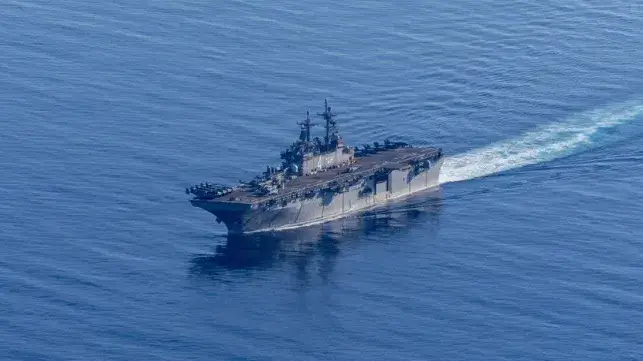
USS Boxer is departing San Diego to join USS Tripoli in the Mideast, a transit of roughly 12,000 nautical miles and at least three weeks steaming to the Gulf of Oman, signaling planning for a prolonged U.S. naval/Marine presence. Both 'big-deck' amphibs can deploy F-35B STOVL aircraft, though Iran reportedly damaged an F-35 with a surface-to-air missile, underlining elevated combat risk. The deployment was advanced in response to Pentagon requests and is accompanied by other amphib and landing ships; Boxer’s major depot maintenance (SRA) was rescheduled to Feb 2027–Oct 2028, extending time in service before planned drydock. Implications include increased regional security risk that could pressure oil shipping/energy markets and create sector-specific upside for defense-related suppliers.
A sustained U.S. amphibious posture in the Gulf is a demand shock for ship sustainment and niche maritime services that is unlikely to be priced into broad defense multiples. Expect mid-single-digit percentage upside to annual top-line for yards and mid-tier contractors that specialize in amphib and auxiliary overhaul over the next 12–24 months as depot periods are deferred and unscheduled repairs rise; that revenue shock will be front-loaded into near-term backlog rather than long-cycle new-build programs.
Energy and logistics see an outsized, high-volatility premium: even limited, intermittent security incidents in narrow chokepoints lift tanker spot rates and insurance costs by multiples, materially improving earnings for VLCC/Suezmax owners during spikes while compressing liner margins via longer voyages and reroutes. These are short-duration but high-amplitude moves (days–weeks to months) that create attractive option-like payoffs for owners and option buyers but produce stress for integrated shippers and just-in-time supply chains.
Market reversals hinge on two clear catalysts: rapid diplomatic de-escalation or credible commitments to no-fleet escalation that compress premiums within 2–6 weeks, and conversely a single kinetic event that sustains a multi-week insurance/freight shock. Practical monitoring: tanker spot and time-charter indices, announced Navy maintenance contracts/SRA changes, and near-term defense supplemental votes — each will move the trade-risk tradeoff materially.
AI-powered research, real-time alerts, and portfolio analytics for institutional investors.
Request DemoOverall Sentiment
mildly negative
Sentiment Score
-0.20
Ticker Sentiment
