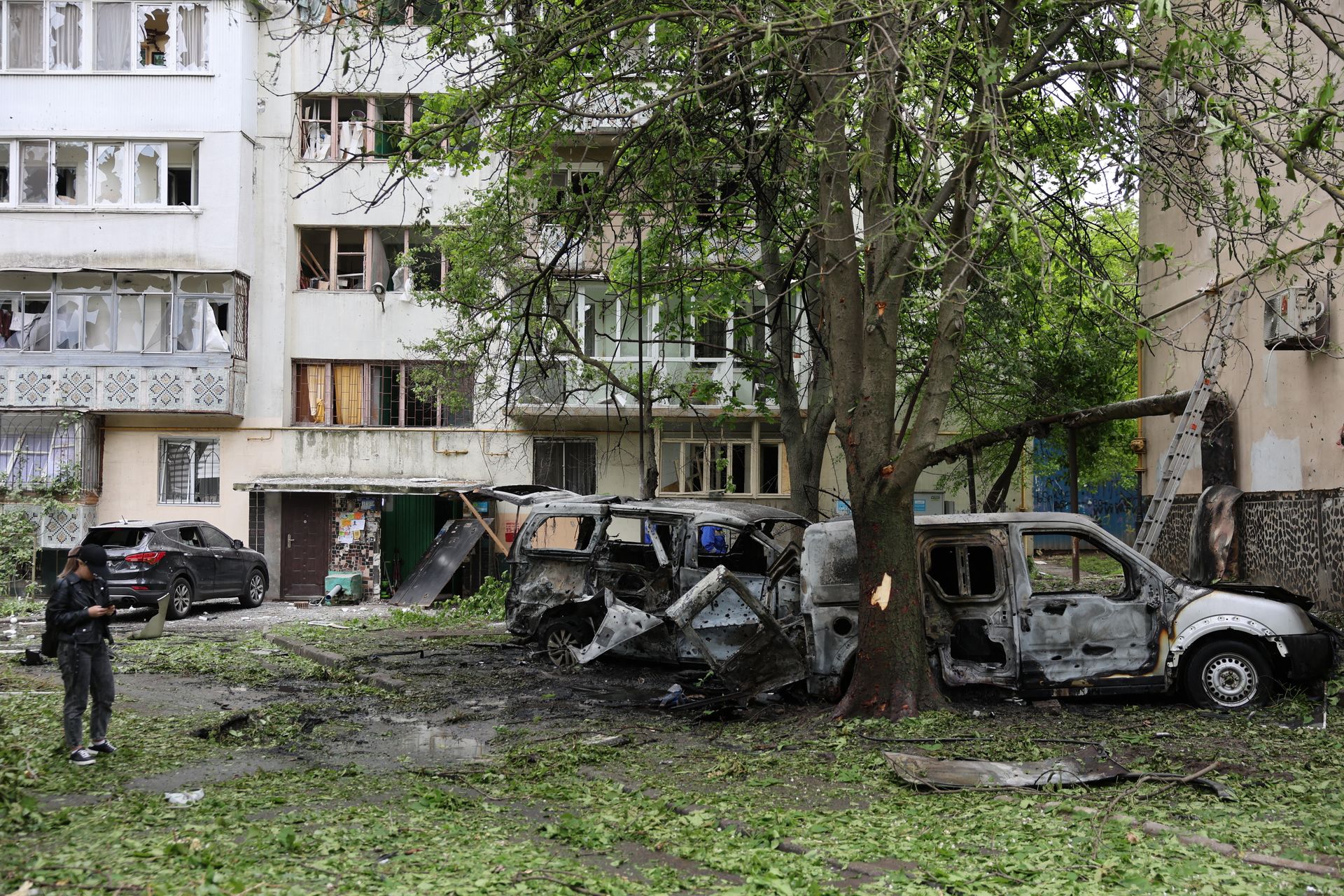
Russia launched a prolonged daytime mass attack on Ukraine, with Zelensky saying at least 800 drones had been fired and warning of possible follow-on missile strikes. The strikes killed at least 6 people, injured dozens, and hit residential, critical infrastructure, energy, and railway assets across multiple regions, including the first-ever reported attack on Zakarpattia Oblast. Railway infrastructure was hit 23 times, damaging locomotives, railcars, substations, depots, and bridges, while regional power and transport disruptions add to wartime operational risk.
This is not just an escalation in intensity; it is a tactical shift toward air-defense saturation and logistics interdiction. The second-order effect is that Ukraine’s rear-area infrastructure is now being treated as a distributed target set, which raises the probability of cascading outages in rail, power, and municipal services even when individual strikes miss strategic assets. That matters for markets because the damage path is longer-dated than headline casualty counts: rolling disruptions to freight, labor mobility, and emergency repair cycles can persist for weeks after a single large attack.
The most important near-term signal is the sequencing risk. A drone-heavy opening wave followed by missiles would force defenders to preserve interceptors for the higher-lethality follow-on, increasing the odds that civilian and transport nodes absorb more damage than usual. That creates an asymmetric benefit for firms exposed to European air-defense procurement, counter-UAS systems, and hardened critical-infrastructure retrofits, while increasing tail risk for rail operators, insurers, and regional utilities with Ukrainian or neighboring-border exposure.
The market may be underpricing the regional spillover. Repeated strikes on western transit corridors can push more Ukrainian cargo onto EU road and rail networks, tightening capacity around Slovakia/Hungary/Poland and modestly lifting short-haul freight rates. Over months, the bigger implication is budget reallocation: every new attack strengthens the political case for air defense, EW, and depot-hardening spend, which is a steadier trade than trying to fade each headline spike in oil or grain.
Consensus is likely too focused on immediate geopolitical noise and not enough on repair-cycle economics. The durable winners are the suppliers of interceptors, radars, power equipment, and rail replacement assets; the durable losers are assets dependent on uninterrupted throughput and low insurance friction. If the next phase includes missile follow-through, the downside gap in exposed infrastructure names will widen quickly, but the response trade in defense procurement should extend for quarters.
AI-powered research, real-time alerts, and portfolio analytics for institutional investors.
Request DemoOverall Sentiment
extremely negative
Sentiment Score
-0.90
Ticker Sentiment
