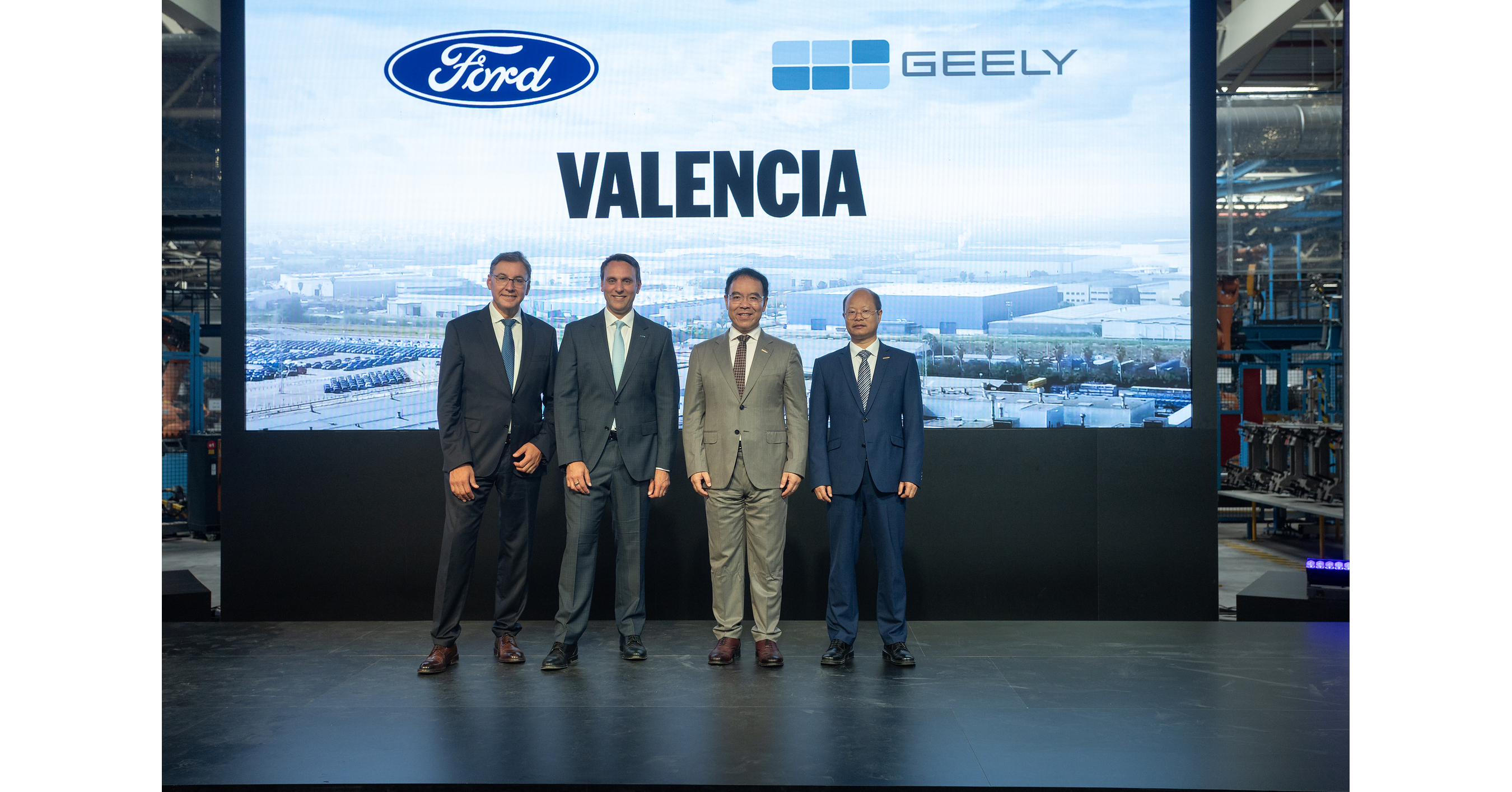
Ford y Geely anunciaron un joint venture europeo en la planta de Valencia, con operación prevista para el 1S 2027 y primeros vehículos en 2028. La JV transformará la factoría (capacidad potencial ~500.000 vehículos/año) para fabricar una nueva gama multienergía y de bajas/cero emisiones, con producción desde 2028 (nuevo crossover para Ford en 2028 y SUV Bronco en 2028) y dos SUV eléctricos de Geely desde 2028, mientras el Kuga continúa sin interrupciones. Bajo la estructura propuesta, Ford tendrá 66% y Geely 34%, con el objetivo de reducir costes por vehículo y acelerar la ofensiva de producto de Ford (5 nuevos vehículos multienergía en Europa para 2029).
This is strategically constructive for Ford, but the equity impact is mostly about narrative and optionality rather than near-term earnings. The real economic value is that Ford is buying a lower-fixed-cost European footprint without shouldering all the capital alone; that matters if Europe remains a low-growth, regulation-heavy market where legacy OEMs are being forced to sweat assets. Geely gets something arguably more important than incremental unit volume: a credible local manufacturing platform that reduces tariff/regulatory friction and makes its European expansion look less like an import-led assault.
The competitive read-through is negative for the highest-cost incumbent OEMs if Valencia becomes a proof point for cross-border industrial alliances. Volkswagen, Stellantis, and Renault face a tougher argument for premium multiples if they cannot match the same blend of localization, platform sharing, and cost discipline. The second-order effect is on suppliers: more localization and multi-energy flexibility should favor tier-1s with European capacity and penalize import-heavy EV entrants that depend on a clean policy window.
The key risk is timing. The first meaningful volume is years away, so this does little for Ford’s near-term FCF, and the market may overestimate how much of the economics accrue to shareholders versus labor, capex, and regulatory stakeholders. A reversal would come from weaker European demand, a policy shift that eases the urgency of multi-energy offerings, or execution issues in integrating two brands on one site. The contrarian view is that the announcement may be underappreciated as an option on a structurally better Europe business, but that option is long-dated and should not be valued like an earnings accretion story.
AI-powered research, real-time alerts, and portfolio analytics for institutional investors.
Request DemoOverall Sentiment
moderately positive
Sentiment Score
0.35
Ticker Sentiment
