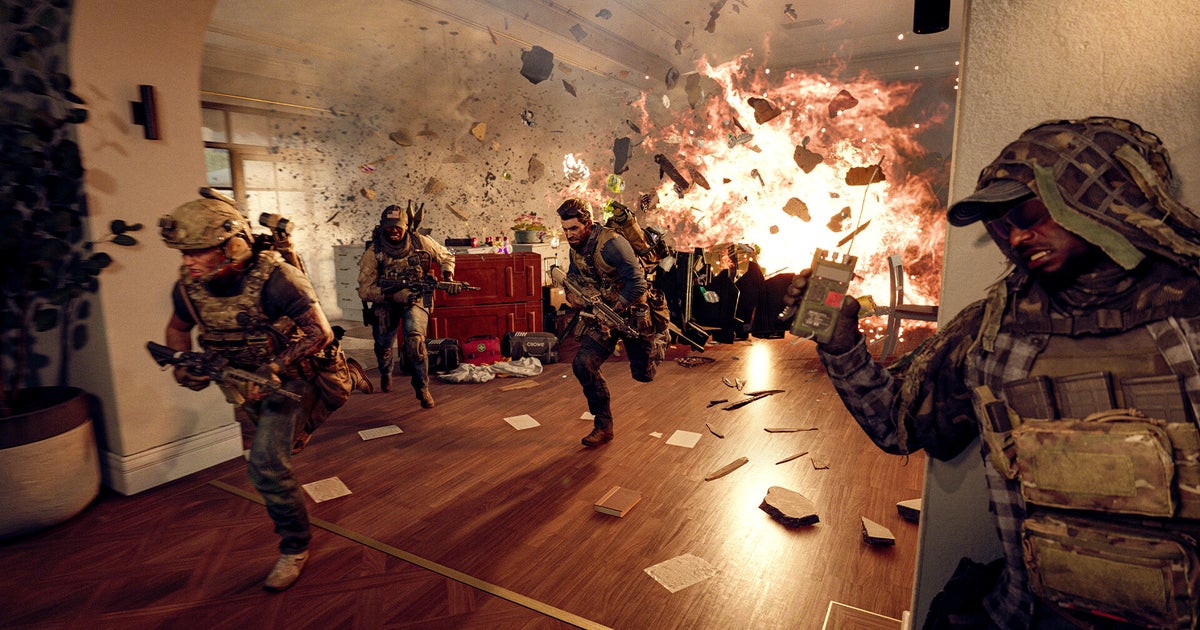
Electronic Arts is conducting layoffs across four Battlefield 6 studios (Criterion, Dice, Ripple Effect, Motive) as part of an internal 'realignment' while keeping studios operational. Battlefield 6 sold >7 million units in its first three days (Oct 2025) but active engagement has fallen from a 747,440 Steam launch concurrent peak to a recent 24-hour peak of 67,080; rival Arc Raiders' 24-hour peak is 235,475. EA says it will continue to invest in the franchise; shareholders have backed a $55 billion acquisition expected to close in Q1 2027 that would leave the Public Investment Fund with >93.4% ownership.
The workforce reductions at a marquee shooter franchise are best read as a signal that the company is prioritizing margin and run-rate content over R&D-heavy expansion; that shift tends to boost near-term free cash flow while increasing medium-term product risk as live-service roadmaps thin. Expect two second-order effects: (1) faster redeployment of senior engineers and designers into indie studios or competitor live-service teams, accelerating rival content releases within 6–18 months; (2) greater reliance on contractors, middleware, and third‑party live ops tooling, which reduces fixed cost but raises platform/partner concentration risk.
From a demand perspective, engagement volatility now matters more than unit sales — if a post-launch cadence of content and monetization misfires, ARPU and recurring revenue will compress quickly given higher operating leverage in live-service economics. Near-term catalysts that could reverse negative momentum include a successful large content drop, streamer reappraisal, or a platform marketing push; conversely, visible streamer churn, poor review momentum on a major mode, or a high-profile server/cheat scandal could accelerate downside within 30–120 days.
The broader corporate backdrop (pending governance/control changes and a concentrated future ownership base) makes traditional free-float beta misleading: liquidity-driven squeezes around strategic milestones can mute volatility but also create asymmetric risk for remaining public holders. For investors, the right play is asymmetric, event-driven sizing — exploit headline-driven knee-jerk moves while monitoring engagement metrics (concurrent players, daily active users, ARPU trends) as the true leading indicators of revenue and sentiment.
AI-powered research, real-time alerts, and portfolio analytics for institutional investors.
Request DemoOverall Sentiment
moderately negative
Sentiment Score
-0.45
Ticker Sentiment
