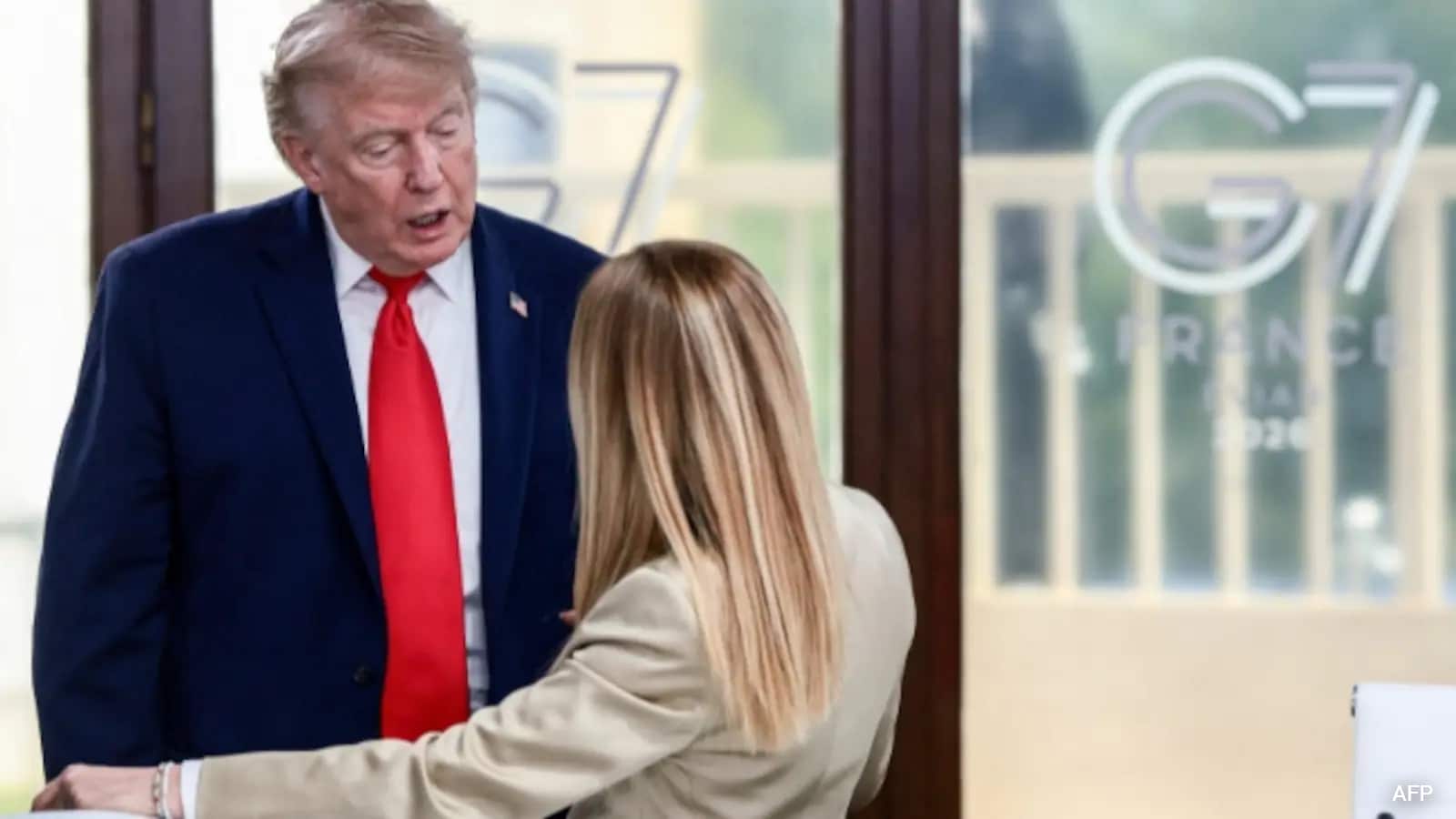
Italy's Giorgia Meloni publicly rebuked Donald Trump, escalating a political rift after he claimed she had "begged" him for a G7 photo and she responded by calling him a liar and accusing him of pandering to enemies. The dispute prompted Italy to scrap a US-Italy business forum in Miami, delaying a planned critical minerals pact tied to the U.S.-directed Pax Silica initiative. The story is politically significant and may affect Italy-U.S. cooperation, but it is unlikely to have immediate broad market impact.
This is less about personal drama than a regime shift in how European incumbents manage Trump risk. Meloni is testing the idea that visible pushback can outperform quiet accommodation politically, which matters because her coalition is strongest when framed as sovereign and pragmatic rather than deferential; that creates a template other center-right European leaders may copy if voter fatigue with US-bending becomes a campaign issue. The immediate market implication is not Italy-US trade disruption per se, but a higher probability of transactional friction around procurement, critical minerals, and defense cooperation, especially where Italy sits as a broker rather than a primary end-market.
The most interesting second-order effect is on deal sequencing. If Rome slows or re-packages the critical minerals initiative, it does not kill the strategic theme; it shifts negotiating leverage toward alternative EU-hosted supply-chain nodes and away from US-directed framing. That is mildly negative for firms relying on rapid transatlantic policy harmonization, but constructive for European industrials and defense platforms that benefit when governments internalize strategic autonomy and local content. In the near term, the market should treat this as a catalyst for more headline volatility around NATO/Ukraine/defense spending discussions, not as a durable macro shock.
The contrarian read is that public defiance may actually be the more stable equilibrium for some European leaders because Trump’s approval in Europe is so poor that “absorbing the hit” can become a political liability. If that thesis gains traction, the losers are intermediaries whose value depends on cozy backchannel diplomacy, while beneficiaries are firms exposed to domestic procurement and EU onshoring. The tail risk is that Trump retaliates via selective trade or visa pressure, but that likely plays out over weeks to months, not days, and would probably be more symbolic than economically material unless it spills into customs or export licensing.
AI-powered research, real-time alerts, and portfolio analytics for institutional investors.
Request DemoOverall Sentiment
mildly negative
Sentiment Score
-0.15
