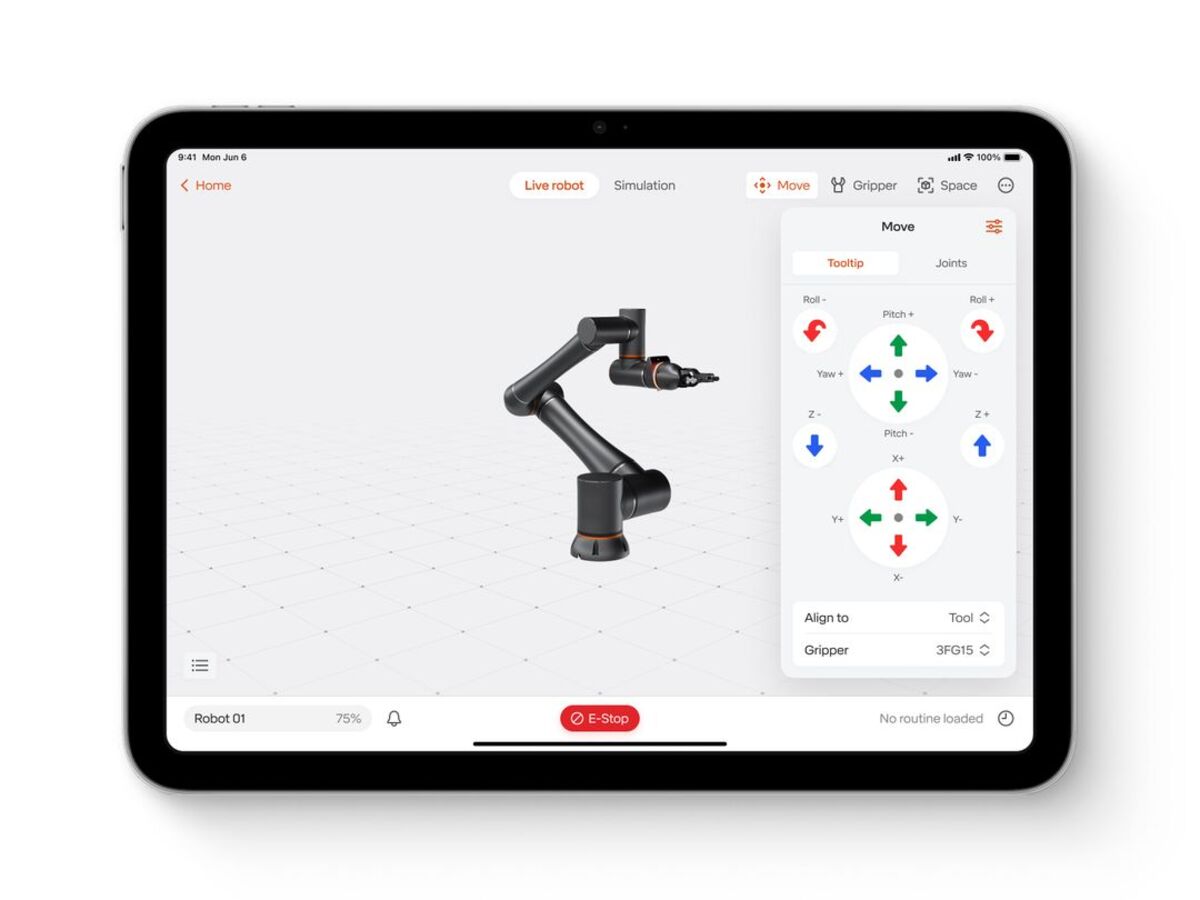
Standard Bots raised $200 million at a $1 billion valuation to scale manufacturing of robotic arms in the US, a significant funding milestone for the robotics startup. The round was led by General Catalyst and RoboStrategy, and follows a previous $63 million raise nearly two years ago. The deal underscores continued investor appetite for robotics and domestic advanced manufacturing, though near-term market impact is likely limited.
This is less a single-company financing event than a signal that robotics is moving from prototype risk to industrial policy and capacity race. The first-order winner is not necessarily the startup itself but the broader domestic automation stack: precision components, motion control, industrial vision, contract manufacturing, and systems integrators should see pull-forward demand if venture-backed robot makers keep localizing production. The second-order implication is that US incumbents in factory automation may face a more fragmented but better-capitalized competitive field, which tends to compress pricing power in new deployments while expanding total addressable market faster than consensus expects.
The more interesting read-through is that “manufacture in the US” raises the bar on execution, not just funding. Domestic assembly usually means higher unit costs in the near term, but it can improve adoption if buyers prioritize supply-chain security, defense adjacency, and serviceability over lowest sticker price. That creates a bifurcation: software and systems layers with recurring revenue likely benefit first, while pure hardware makers face margin pressure until scale and design-for-manufacturability improve. Over the next 6-18 months, the key catalyst is whether this capital translates into repeatable deployments rather than pilot-heavy growth.
The contrarian view is that the market may be over-indexing on geopolitical symbolism and underestimating manufacturing friction. If lead times, yields, or field failure rates are poor, additional capital can actually accelerate burn rather than widen moat. The downside scenario is a funding glut in robotics that pushes up valuations for a cohort whose commercialization timelines remain long; in that case, the best risk-adjusted trade is to own the picks-and-shovels beneficiaries instead of the narrative leader.
For public markets, the highest-quality expression is to lean into automation infrastructure rather than single-name robotics beta. Near term, any weakness in industrial automation leaders after broad “AI/robotics hype” rotations should be bought, because the budget cycle can improve before headline robot unit shipments do. Longer term, if domestic manufacturing incentives broaden, defense-adjacent automation and machine vision could see a multi-year spending tailwind as procurement shifts toward resilient supply chains.
AI-powered research, real-time alerts, and portfolio analytics for institutional investors.
Request DemoOverall Sentiment
moderately positive
Sentiment Score
0.55
