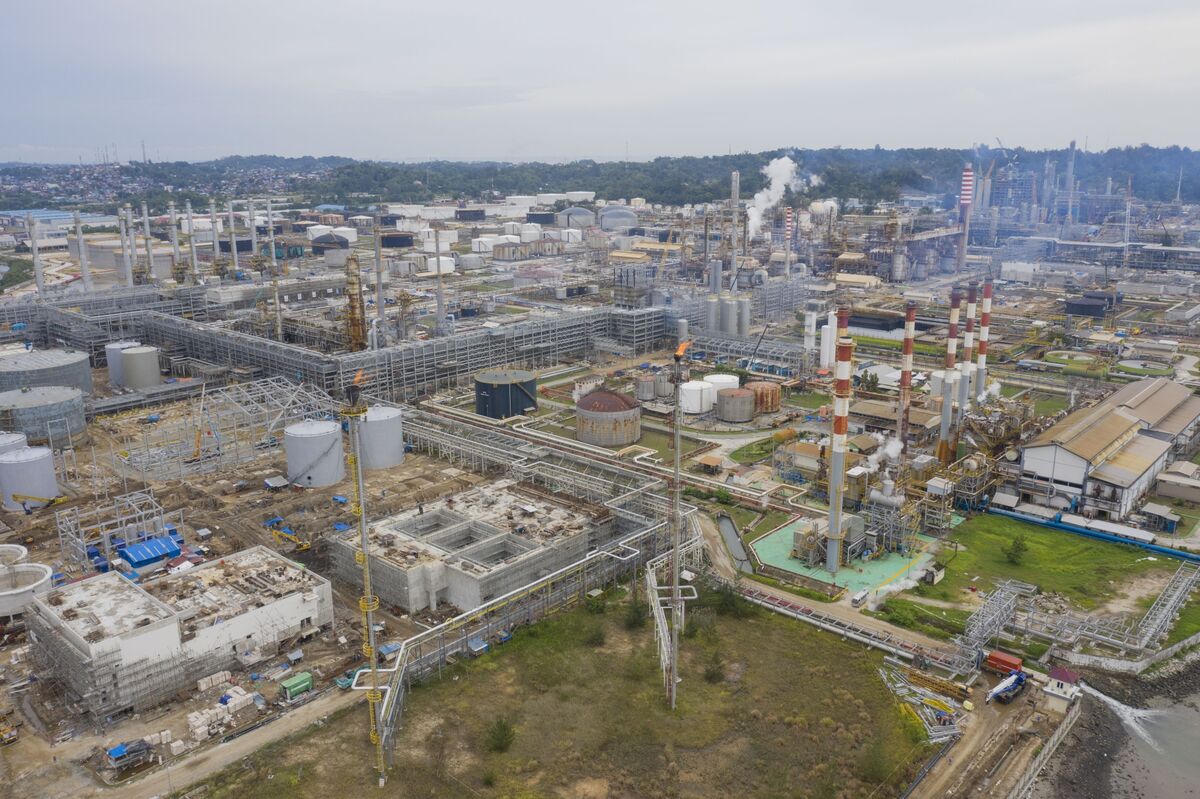
Indonesia received its first Russian oil shipment since an April deal, with just under 770,000 barrels delivered to Balikpapan on June 29 for about $75 million. Loading occurred from Kozmino, Russia, and the cargo was carried on the tanker Sierra. The move highlights Russia’s ability to add customers amid the Iran-related conflict, though the shipment itself is unlikely to drive major market-wide price changes.
This is less a direct equity event than a signal that sanctioned-barrel arbitrage is still functioning. The first-order read is not on Indonesia-specific demand; it is on Russia’s ability to place incremental crude into Asia without meaningfully discounting enough to show up in headline balances. If this becomes a pattern, the marginal loser is Middle East crude pricing into Southeast Asia, because refiners will use Russian cargoes to pressure term suppliers on netbacks and credit terms.
The second-order winner could be dry bulk/tanker logistics rather than upstream producers: longer-haul re-routing and paperwork complexity tend to support voyage economics for compliant shipowners and dark-fleet intermediaries alike. More importantly, this reinforces that sanctions leakage can absorb barrels that otherwise would have tightened global balances; that caps any near-term upside in Brent unless there is simultaneous disruption in Iranian or Gulf supply.
For Indonesia, the macro effect is mixed: cheaper feedstock can ease local fuel inflation and subsidy pressure, but it also increases exposure to policy risk if imported Russian crude draws scrutiny from Western financing, insurers, or banks. Over 1-3 months the key catalyst is whether this is a one-off test cargo or the start of recurring arrivals; over 6-18 months, the question is whether Asian buyers normalize Russian supply into contract structures, which would make sanctions less price-supportive than the market assumes.
The contrarian view is that the market may be overestimating the geopolitical novelty and underestimating how incremental these flows are relative to total seaborne trade. Unless customs data shows a sustained run-rate, this is not enough to change earnings for most public equities. The actionable signal is a watch item on freight, Russian export volumes, and any widening discount on ESPO/Urals versus Dubai.
AI-powered research, real-time alerts, and portfolio analytics for institutional investors.
Request DemoOverall Sentiment
neutral
Sentiment Score
-0.10
Ticker Sentiment
