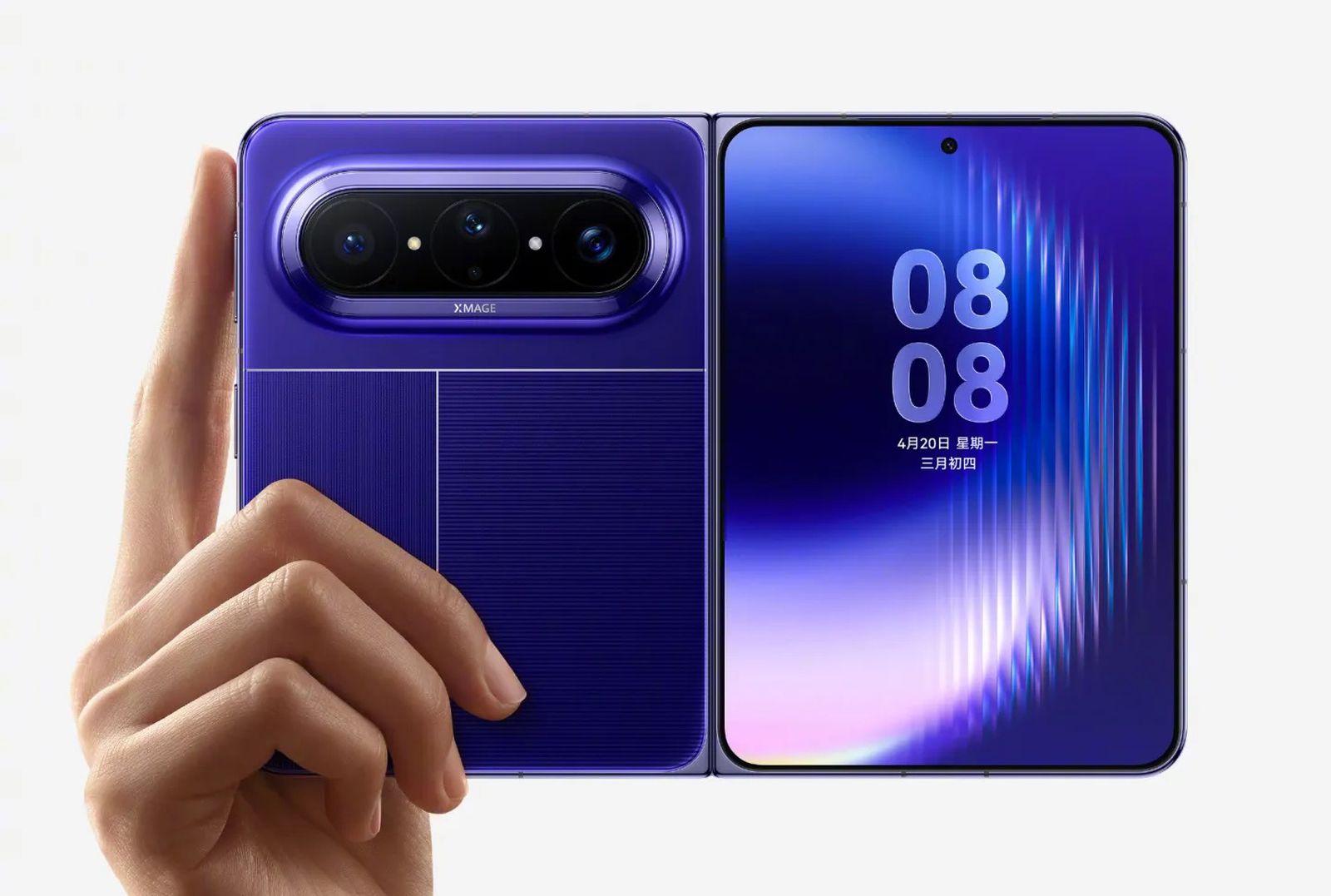
Apple's first foldable iPhone is rumored to launch alongside the iPhone 18 Pro models in September, with a starting price around $2,000 and display sizes of 5.5 inches closed and 7.8 inches open. The article highlights a book-style foldable design that may resemble Huawei's new Pura X Max and other wide-aspect-ratio foldables from Oppo and Samsung. The report is largely design- and rumor-driven, with no confirmed product details or immediate financial impact.
The strategic signal is not the foldable itself; it is Apple validating a premium wide-format category that compresses the distinction between phone and tablet. That matters because the first-order winner is likely the ecosystem layer around the device rather than the handset OEMs: displays, ultra-thin glass, hinges, and advanced packaging should see incremental design-in demand as multiple vendors converge on a similar form factor. If Apple lands this as a halo product at a ~$2,000 price point, it also gives the market a cleaner path to justify premium attach rates for accessories, cloud, and services, even if unit volumes stay niche at first. The competitive edge is probably less about raw foldable volume and more about margin protection. A book-style format with a larger cover display reduces the need for a companion tablet in some use cases, which could create a small but real substitution effect against low-end iPad demand over a 12-24 month horizon. The bigger second-order risk for peers is that Apple’s entry standardizes consumer expectations around crease quality, weight, and camera parity; that raises the bar for Android foldables and could force discounting on older designs before they have fully matured. The near-term catalyst is not sales data, but launch optics and supply-chain signals over the next 3-9 months. The key tell will be whether Apple sources enough high-yield foldable panels to avoid a constrained first generation; if initial volumes are capped, sentiment may overestimate the revenue opportunity while underestimating the halo benefit to suppliers. The contrarian take is that the market may be too focused on the iPhone upgrade supercycle and not enough on ecosystem monetization: even modest foldable penetration can be more valuable if it lifts service ARPU and accessory mix, while the handset itself remains a low-volume, high-margin statement product.
AI-powered research, real-time alerts, and portfolio analytics for institutional investors.
Overall Sentiment
neutral
Sentiment Score
0.10
Ticker Sentiment
