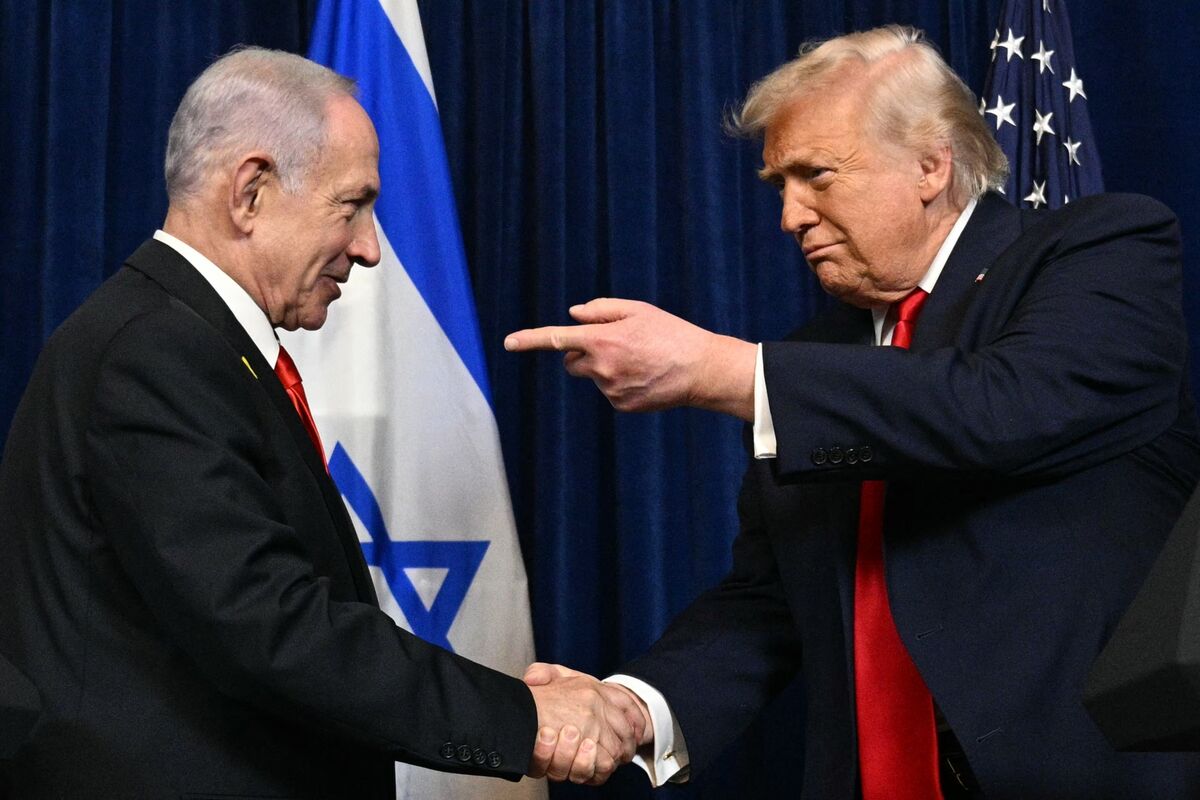
The article focuses on tensions in the Trump-Netanyahu alliance as U.S. and Israeli interests diverge over Iran policy and the conflict’s endgame. It is primarily political analysis rather than a market-moving event, with no new data, policy action, or financial magnitudes cited. The likely market impact is limited unless the geopolitical split translates into concrete changes in U.S. or regional security policy.
The key market read is that this is less about a single diplomatic disagreement and more about optionality compressing across the Middle East risk stack. When Washington and Jerusalem diverge on end-state objectives, the probability distribution widens: you get a lower chance of a clean de-escalation, but also a lower chance of an all-out regional shock because both sides retain incentives to avoid a costly rupture. That tends to keep defense-related equities bid on headline risk while capping the upside in crude unless there is a direct supply disruption.
Second-order beneficiaries are defense primes, missile defense, EW/counter-UAS vendors, and select cybersecurity firms tied to critical infrastructure hardening. The more important underappreciated effect is on supply chains: even without a new kinetic event, insurers, shippers, and industrial buyers tend to pay a persistent geopolitical risk premium for 1-3 quarters after any visible policy split, especially for LNG routes, Red Sea-adjacent shipping, and Gulf logistics. If tensions rise but stop short of conflict, that premium accrues to contractors and air-defense names rather than broad commodity producers.
The contrarian view is that markets may be overestimating the durability of political friction and underestimating how fast alliance discipline reasserts itself when both leaders face domestic constraints. In that case, the event decays into noise within days to weeks, leaving crowded hedges in energy and defense exposed to mean reversion. The larger risk is not an immediate war premium, but a sequence of smaller escalations that keep implied volatility elevated without producing a clean directional move.
For timing, the tradeable window is likely in the next 2-6 weeks: headline volatility can create attractive entry points in beneficiaries of sustained deterrence, while short-lived spikes in oil or defense can be faded if no logistics or asset disruption follows. If there is a fresh nuclear or regional proxy escalation, the move could extend over months; absent that, the setup is primarily a tactical volatility trade rather than a structural regime shift.
AI-powered research, real-time alerts, and portfolio analytics for institutional investors.
Request DemoOverall Sentiment
neutral
Sentiment Score
-0.05
