
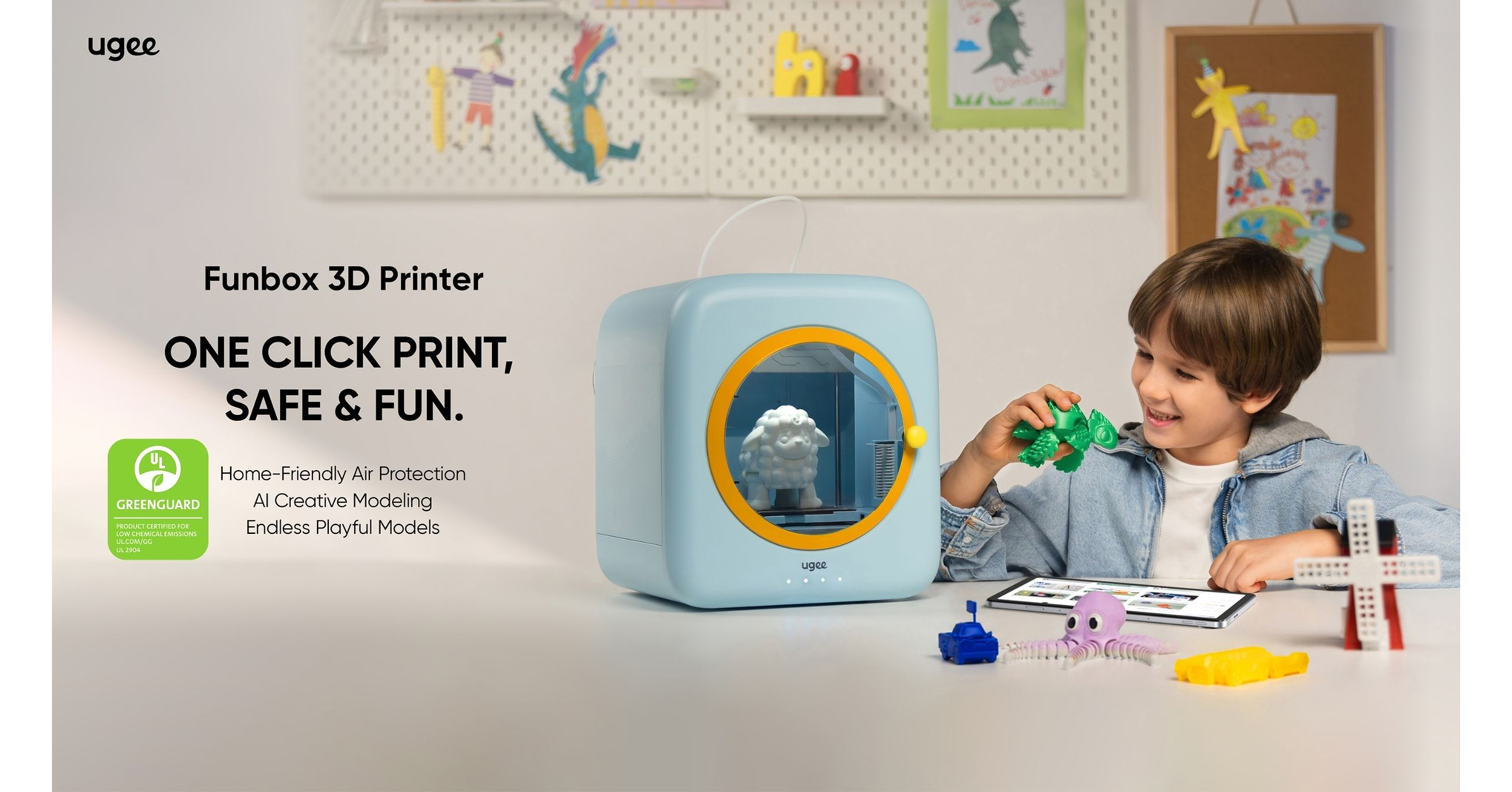
UGEE launched Funbox, a kid-focused desktop 3D printer with UL GREENGUARD-certified safety features and one-tap pre-assembled setup. The model supports 12V low-voltage, a dual air purification module (HEPA + activated carbon) and claims 0.05mm layer precision with up to 500mm/s peak speed; pricing starts at $269 via pre-order starting July 15, bundled with 7 rolls of PLA filament.
This is not a direct public-market catalyst; it is a category-positioning event that tests whether consumer 3D printing can move from hobbyist novelty to appliance-like gifting. The investable second-order is a small reallocation of discretionary spend toward STEM hardware, but that is likely to come out of broader toy/gift baskets rather than create new category dollars. Any benefit to public names is more likely to accrue to marketplaces and commodity consumables than to the printer makers themselves.
The real constraint is post-purchase friction, not safety branding. If the user experience is truly low-maintenance, the first proof will be repeat filament orders and positive review velocity over the next 6-12 weeks; absent that, the product stays a one-time holiday buy. A negative review cluster, warranty issue, or supply shortage would quickly reverse the optimism because parents do not tolerate setup or failure rates in this segment.
Contrarian view: the market may be overpricing TAM because universal PLA support means the business model lacks the lock-in that usually drives durable margins. That limits the long-run economic moat and makes this look more like low-ASP consumer electronics than a software-like ecosystem. For PLCE specifically, the read-through is weak; at most this is mild gift-budget competition, not a fundamental demand shock.
AI-powered research, real-time alerts, and portfolio analytics for institutional investors.
Overall Sentiment
mildly positive
Sentiment Score
0.25
Ticker Sentiment
