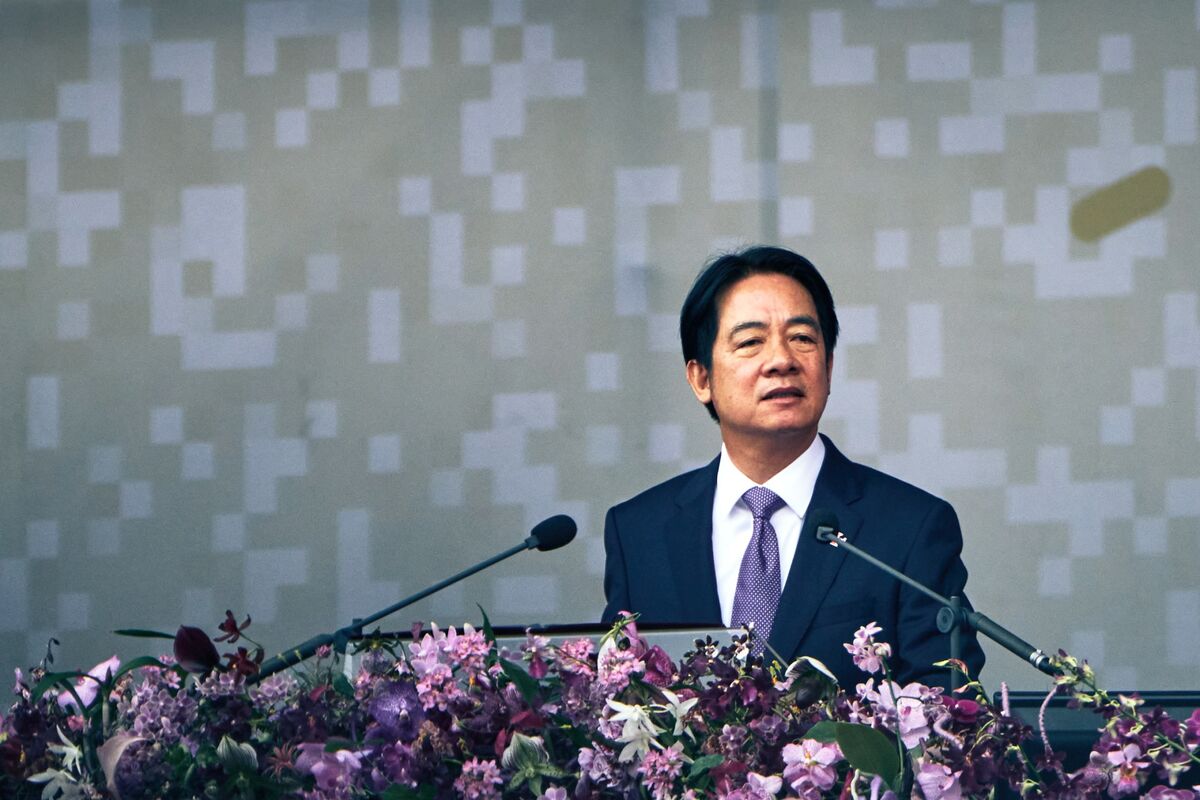
China said it welcomed the apparent blocking of Taiwan President Lai Ching-te’s trip to an African diplomatic ally, underscoring Beijing’s continued efforts to isolate Taiwan diplomatically. The remarks reinforce geopolitical tension around the One-China principle and Taiwan’s external travel and diplomatic space. The article is largely political and unlikely to have immediate direct market impact, though it adds to cross-strait risk sentiment.
This is a marginally negative signal for Taiwan’s diplomatic capital, but the bigger market implication is not immediate sovereign stress — it is a gradual increase in the probability of more frequent low-grade coercion around travel, transit, and symbolic recognition. That matters because even if no single episode moves macro fundamentals, repeated friction raises the discount rate on Taiwan-linked risk assets by keeping headline volatility elevated and making cross-strait de-escalation harder to price.
The second-order effect is on regional realignment. Countries that publicly or quietly align with Beijing on protocol will likely face less Taiwan-related diplomatic and commercial friction from China over time, while states that host Taiwan officials may see higher administrative and trade pressure. For EM investors, the important transmission is not Taiwan itself, but the willingness of China to use access and routing decisions as leverage — a template that can spill over into ports, aviation, tourism, and select bilateral investment relationships across Asia and Africa.
The near-term catalyst path is binary but low-impact unless it cascades into retaliation. If Taiwan responds with a louder international outreach campaign, Beijing can tighten the screws via unofficial channels within days to weeks; if Taipei stays restrained, the market may shrug and the signal remains mostly rhetorical. The underappreciated risk is that each incremental diplomatic setback pushes Taiwan to seek alternative security and logistics partnerships, which could deepen the island’s strategic dependence on a narrower set of counterparties over 6-18 months.
Consensus is likely underpricing the persistence of the headline risk but overpricing the immediate economic damage. The better trade is to express caution through volatility and relative-value exposure rather than outright directional shorts on Taiwan. The asymmetry favors buying protection on episodes of escalation and fading any knee-jerk relief rallies once headlines normalize.
AI-powered research, real-time alerts, and portfolio analytics for institutional investors.
Request TrialOverall Sentiment
mildly negative
Sentiment Score
-0.15
