
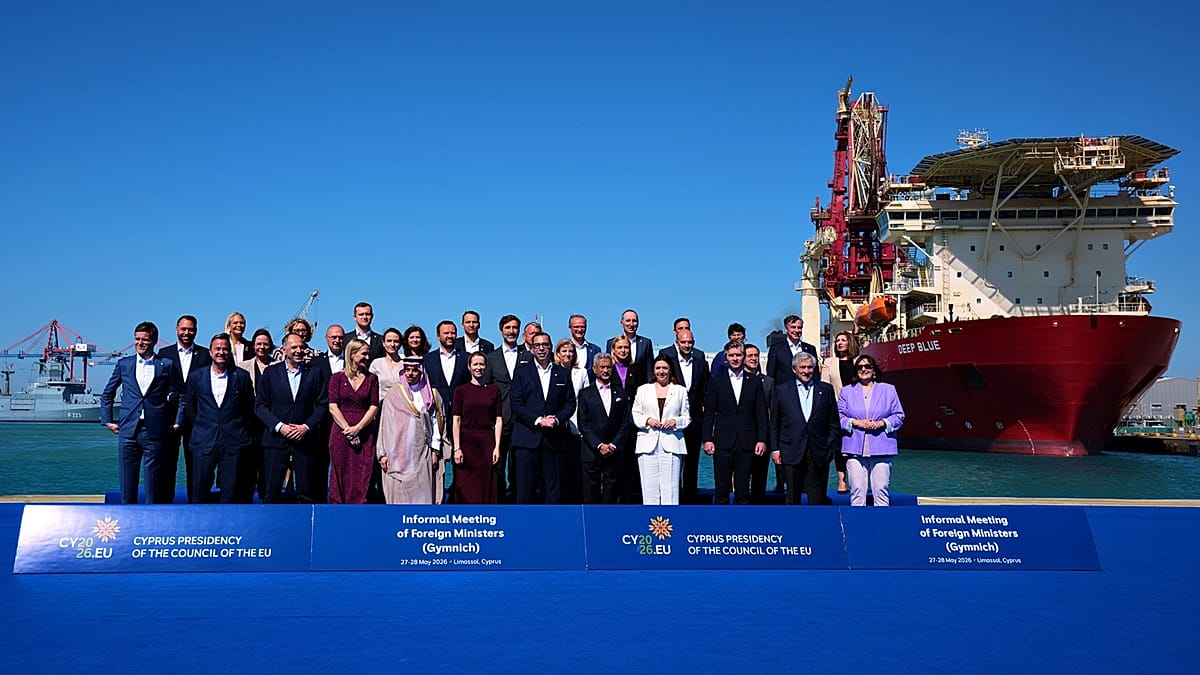
EU foreign ministers are debating whether to appoint a special envoy for talks with Russia, but the key issue is the bloc's mandate and unity rather than the individual chosen. Officials stressed a 'one voice' approach, greater pressure on Russia, and continued support for Ukraine as Russia's attack on Kyiv and threats to diplomats heighten tensions. The discussion could affect EU-Russia negotiation dynamics and broader geopolitical risk, though no concrete policy decision was announced.
The market implication is less about any near-term diplomatic breakthrough and more about the EU telegraphing a longer, harder bargaining posture. That usually supports a regime of higher defense and security spending, but it also raises the probability of a drawn-out status quo where headline risk stays elevated while real military outlays remain sticky. In that setup, the primary beneficiaries are not broad Europe beta but firms with direct exposure to replenishment cycles, air defense, ammunition, ISR, and border/security infrastructure.
Second-order effects matter more than the envoy debate itself. If Europe insists on a unified mandate and “maximalist” preconditions, the negotiation window narrows, which tends to delay any sanctions relief and keep energy, logistics, and sovereign risk premia in place. That is mildly negative for European industrials with heavy gas/input sensitivity, but supportive for US LNG exporters and defense primes with NATO replenishment pipelines. The biggest loser is any asset priced for a quick de-escalation in Ukraine-related geopolitical risk.
The contrarian read is that the market may already be conditioned to expect strategic ambiguity from Brussels, so the incremental surprise is low unless the June summit produces concrete funding or procurement commitments. If the US truly steps back further, Europe may be forced from rhetoric into budget action faster than consensus expects, which would be bullish for defense equities over the next 3-12 months. A failed coordination process, however, would likely show up first in widening CDS for frontier EM and a slower rotation out of European cyclical exposure rather than in immediate broad-market stress.
For KYIV, the near-term signal remains neutral to slightly negative: diplomatic process uncertainty can delay a durable ceasefire premium, but it also increases the odds of sustained external support. That keeps the trade asymmetric toward volatility rather than direction, with headline-driven gaps likely around summit dates or any formalization of an EU negotiating mandate.
AI-powered research, real-time alerts, and portfolio analytics for institutional investors.
Request TrialOverall Sentiment
mildly negative
Sentiment Score
-0.15
Ticker Sentiment
