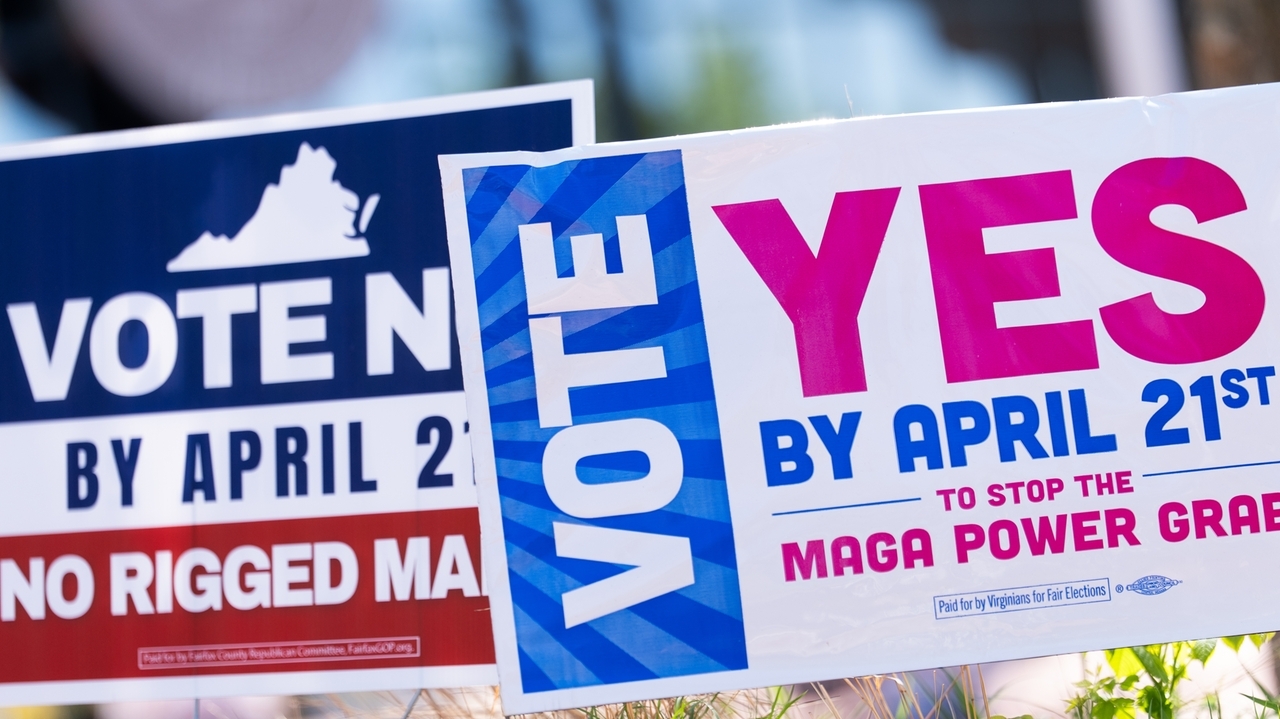
Virginia's Supreme Court is hearing a Republican challenge to the voter-approved congressional map that could give Democrats up to four additional U.S. House seats. The key issue is whether lawmakers followed required procedures to place the constitutional amendment on the ballot; if not, the court could invalidate the amendment and nullify last week's vote. The dispute is part of a broader national redistricting battle that could affect control of the narrow U.S. House majority, but near-term market impact is limited.
The market implication is not the headline seat math; it is the growing probability of a post-election, court-driven redraw of the House landscape that could persist into the filing/primary calendar. That creates an asymmetric advantage for state-level legal teams and incumbents with faster map-finalization paths, while punishing candidates and vendors exposed to delayed district certainty. The second-order effect is fundraising efficiency: campaigns in contested redistricting states may accelerate cash burn now to lock in name ID before lines are settled, benefiting digital ad platforms and media sellers over a 3-6 month horizon.
The biggest tail risk is a judicial pause that preserves the status quo long enough to make the amendment politically relevant but operationally useless, which would compress expected value for Democrats and embolden Republicans to pursue similarly aggressive procedural challenges elsewhere. If Virginia is invalidated, it likely reduces the perceived payoff of mid-decade redistricting nationally and could slow the spread of copycat efforts in states with narrower majorities and cleaner procedural records. That matters because the real market-moving variable is not the map itself, but the likelihood of multiple-seat swings becoming locked in before candidate filing deadlines.
Consensus is underpricing how much legal uncertainty benefits incumbents with durable fundraising networks relative to challengers who need a static district to build viable campaigns. In practice, uncertainty tends to favor the better-capitalized party apparatus and national committees, not necessarily the party that initially gained seats on paper. The overdone assumption is that a voter-approved map is already 'priced in'; the underappreciated reality is that judicial reversal risk can keep several seats effectively in limbo for months, sustaining volatility in political consulting, media, and election-tech demand.
AI-powered research, real-time alerts, and portfolio analytics for institutional investors.
Request DemoOverall Sentiment
neutral
Sentiment Score
-0.05
