
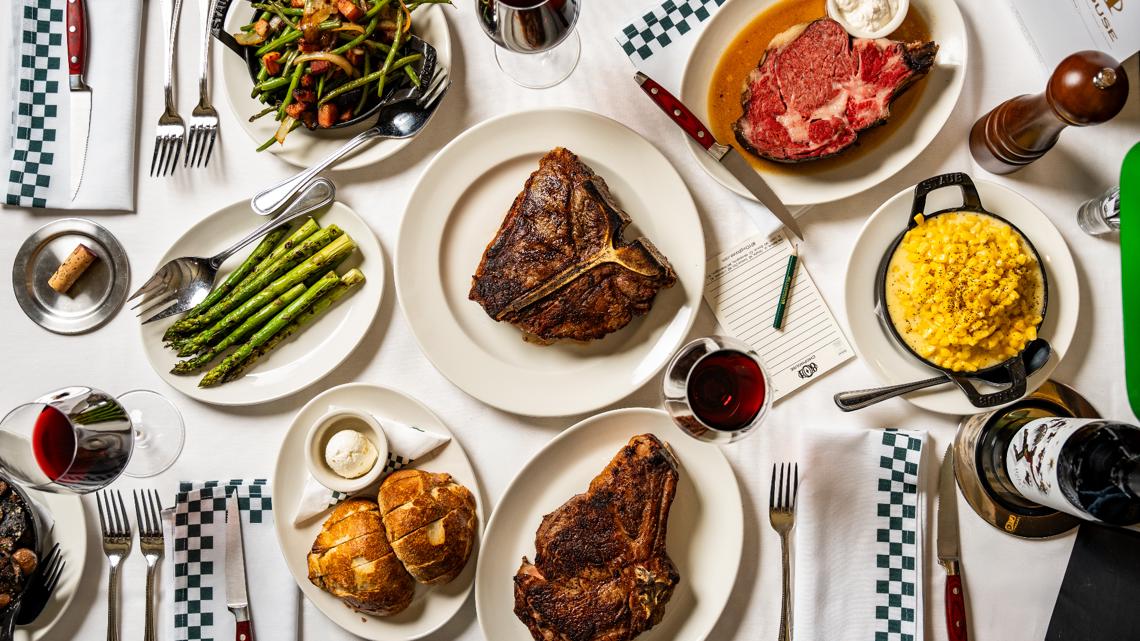
801 Restaurant Group LLC, owner of 801 Chophouse and 801 Fish, filed for Chapter 11 bankruptcy on April 10 in U.S. Bankruptcy Court in Kansas. The chain operates eight 801 Chophouse locations, including one in Denver, and recently closed its 801 on Nicollet concept in Minneapolis amid pressure from surging beef costs and weakening demand for expensive sit-down dining. Beef prices have jumped sharply, with steak up 16% to $12.73 per pound and ground beef to $6.86 per pound as of March 2026.
This is less about one bankrupt operator and more about the final stage of a margin squeeze in premium casual dining: a cost shock at the input layer colliding with a demand cliff at the top end. High-end steakhouses are uniquely exposed because they have poor pricing elasticity on already-expensive menus, so they cannot pass through commodity inflation fast enough without accelerating traffic loss. That creates a nonlinear earnings problem for peers: once the customer decides a $140 steak is discretionary, a small rise in check averages can trigger a disproportionate drop in visit frequency.
The second-order winner is not necessarily cheaper steak concepts, but operators with more menu flexibility and broader occasion coverage. Brands with heavier exposure to beef-heavy dining and older footprints face both lower same-store sales and rising occupancy deleverage, which can force further closures even if raw commodity inflation stabilizes. For suppliers, this may actually intensify volume pressure: restaurant operators respond to margin stress by trimming portion sizes, substituting proteins, or shrinking menus, which can cap demand even before cattle fundamentals improve.
The timeline matters. In the next 1-3 quarters, the market is likely to focus on earnings revisions and closure announcements rather than the bankruptcy itself. Over 12-24 months, the bigger risk is a reset in consumer willingness to pay for premium dining, especially if elevated food inflation persists while real wage growth cools. That makes this a structural demand story, not just a cyclical beef-cost story.
The contrarian angle: the current bearish read may be slightly overextended for the right operators. A distressed sector often clears weaker concepts first, leaving survivors with better unit economics, improved site availability, and less competitive intensity in trade areas. If beef prices mean-revert or operators get more aggressive on menu engineering, the survivors can reprice with less resistance than the market expects, but that benefit accrues unevenly and only to brands with traffic resilience and stronger balance sheets.
AI-powered research, real-time alerts, and portfolio analytics for institutional investors.
Request TrialOverall Sentiment
strongly negative
Sentiment Score
-0.78
Ticker Sentiment
