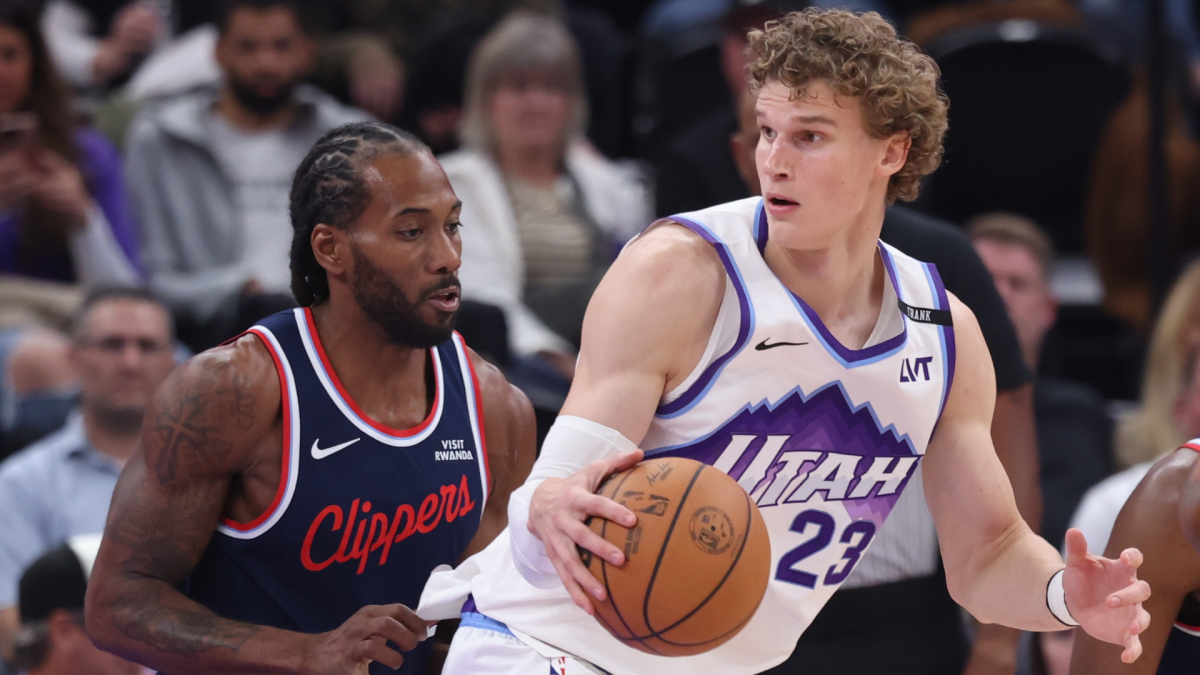
The NBA Draft Lottery reshuffles offseason trade scenarios for several teams, with Washington, Utah, the Clippers, Indiana and Brooklyn all identified as possible blockbuster participants. The article suggests the Wizards may be more willing to move Anthony Davis after landing No. 1, while the Clippers' No. 5 pick could accelerate a Kawhi Leonard trade and the Nets may pivot from tanking to win-now acquisitions. Overall impact is thematic and speculative rather than immediately price-moving.
The lottery outcome changes the bargaining power of the league more than the valuation of any single player. By concentrating elite rookie talent at the top, it reduces the number of teams willing to pay full freight for a veteran star, which should widen bid-ask spreads for big contracts and force more salary retention, pick sweeteners, or three-team structures. That is a near-term technical headwind for the trade market: buyers can now justify patience because the replacement-level cost of chasing a playoff core just improved dramatically.
The biggest second-order effect is on timing. Teams that missed the top tier now have a sharper incentive to act before free agency and Summer League hype recalibrates public expectations, while the teams that did well can wait and let desperation build. That should create a late-May through mid-July window where volatility in star names and mid-lottery picks is highest, especially for clubs trying to convert uncertainty into optionality.
The contrarian read is that the market may overstate how fast these teams will pivot. Even with a better lottery slot, most front offices still prefer to keep the superstar insurance policy until a stronger offer appears, and a number of these clubs are now structurally constrained by apron mechanics and future pick scarcity. In practice, this means fewer clean blockbuster announcements and more slow-drip negotiations; the real edge is in identifying which teams are most likely to accept a multi-asset package rather than chase marginal on-court fit.
From a competitive-dynamics standpoint, the likely winners are the patient asset collectors and the teams with outgoing picks to spend, while the losers are the middle-tier contenders whose trade chips just got weaker relative to the top of the draft. If that dynamic persists, the market should reprice toward younger, optionality-rich rosters and away from win-now veterans with long-term money, particularly those whose best use case was as a bridge until a lottery result. The catalyst to watch is whether any of the newly advantaged teams use the draft to solve a fit problem; if they do, trade volumes could accelerate quickly and flatten the whole offseason curve.
AI-powered research, real-time alerts, and portfolio analytics for institutional investors.
Request DemoOverall Sentiment
neutral
Sentiment Score
0.05
