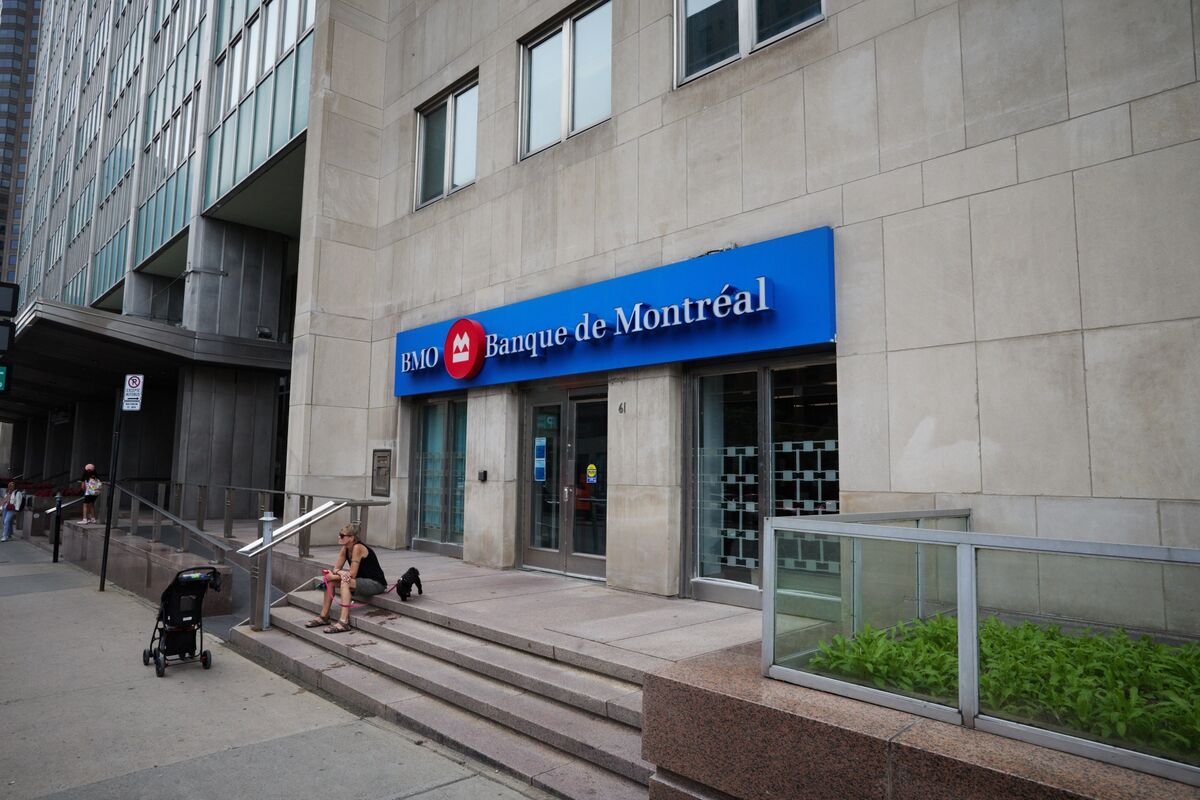
A Bank of Montreal-led group is marketing a $775 million Pellera Technologies leveraged loan at 4.5 percentage points over benchmark and a discounted price as low as 92 cents on the dollar. The steep discount highlights weak investor demand for debt tied to the HIG Capital-backed software company’s buyout financing, marking one of the sharpest discounts in the U.S. leveraged-loan market this year.
The pricing implies a forced-clearing event rather than a healthy distribution. When a syndicate needs to sell at a meaningful discount after sitting on exposure for over a year, the market is signaling that bank balance sheets are still the backstop for sponsor-driven risk, and the marginal buyer is demanding compensation for extension risk, downgrades, and potential liquidity drag. For bank investors, the immediate issue is not this one loan’s mark-to-market loss; it is the precedent it sets for any similarly structured hold inventory now sitting in warehouse mode.
For BMO specifically, the second-order effect is reputational as much as financial. A visible concession on a leveraged software deal suggests underwriting discipline is being judged against distribution reality, which can pressure future fee economics if the bank has to accept wider flexes or retain more paper to get mandates done. That can matter more over the next 1-3 quarters than the current loss: a weaker ability to syndicate risky assets usually shows up later as lower investment-banking conversion and more cautious capital deployment.
The broader loser is the private-credit and direct-lending ecosystem at the margin, because public loan market clearing at a steep discount raises the hurdle for any refinancing alternative. Borrowers with similar leverage profiles may find that “market-clearing” means punitive spreads or maturity extensions, which increases amendment-and-extend risk and can trap deals in a zombie zone for 6-18 months. If credit conditions stay tight, the next leg is not necessarily defaults first; it is lower sponsor exits, slower M&A, and more refinancing friction.
The contrarian view is that the discount may be a cleaning event rather than a contagion signal. If this is a one-off orphaned asset, the market could be telling us that levered software credits are finally re-pricing to a more realistic risk premium after a long period of delay, which may actually reduce future tail risk. The key tell over the next 30-90 days is whether similar bank-held LBO loans clear at comparable discounts; if they do, this becomes a broader read-through on bank credit appetite and a negative for leveraged-finance originators.
AI-powered research, real-time alerts, and portfolio analytics for institutional investors.
Request DemoOverall Sentiment
moderately negative
Sentiment Score
-0.35
Ticker Sentiment
