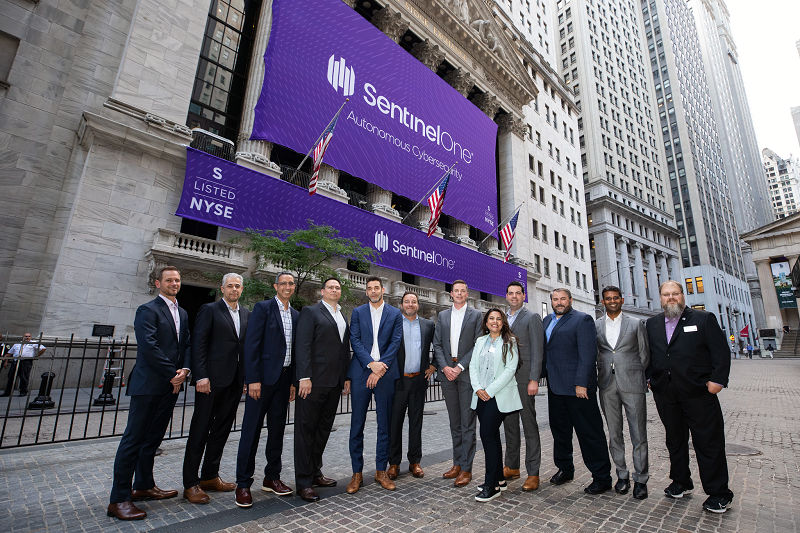
SentinelOne reported first-quarter fiscal 2027 revenue and gross margin slightly below FactSet consensus, but operating margin and annual recurring revenue came in modestly above expectations. The company reiterated full-year top-line guidance while raising operating income assumptions, and delivered $44 million of net new ARR, up 55% year over year, alongside improving net revenue retention and solid AI security traction. Management also announced an 8% reduction in force, and several analysts remain constructive despite the mixed print.
The key signal is not the modest top-line miss; it is that management is willing to trade near-term headline growth for margin durability while still seeing acceleration in net new ARR. In cybersecurity, that combination usually matters more than quarterly revenue beats because it implies the install base is still monetizing and the sales motion is becoming more efficient rather than merely pulling forward deals. The 8% workforce reduction is a second-order tell: if execution is intact, this should translate into a cleaner operating leverage story over the next 2-3 quarters, which can support multiple expansion even if growth remains in the low-20s.
The competitive implication is that SentinelOne may be stabilizing against larger platform vendors by leaning into AI security and better net retention, but the real winner here could be the broader cybersecurity cohort if investors re-rate the group on profitability instead of pure growth. That said, this cuts both ways: if peers report similar “growth with discipline” messages, the relative advantage fades and the market may compress valuations across the sub-sector. The biggest hidden risk is channel digestion; when billings lag while ARR holds up, it can mask a longer conversion cycle that eventually shows up in bookings and renewal quality.
Consensus appears to be underestimating how much of the current setup is driven by operating narrative rather than fundamental inflection. The stock likely needs only modest follow-through in the next one or two prints to work, because the market is already primed to reward margin expansion and AI-related differentiation. But if macro weakens or AI-security demand proves more marketing than budget line-item, the multiple can de-rate quickly since the name still trades as a high-duration software asset, not a mature cash generator.
AI-powered research, real-time alerts, and portfolio analytics for institutional investors.
Request DemoOverall Sentiment
mildly positive
Sentiment Score
0.25
Ticker Sentiment
