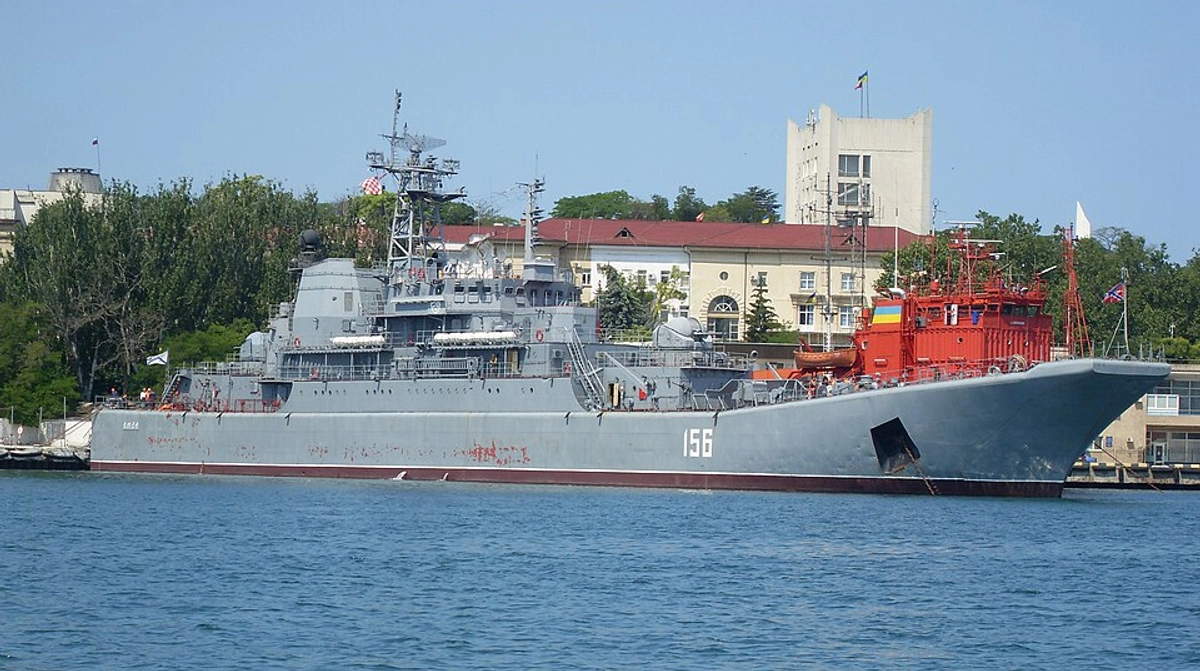
Ukrainian forces say they struck three Russian military vessels in occupied Crimea, including the landing ships Yamal and Azov, plus an unidentified warship. Additional damage was reported to a Grachonok anti-sabotage boat, communications equipment, radar assets, and fuel tanks at the Yugtorsan oil depot. The report underscores continued escalation in the Black Sea theater and has potential implications for regional defense and logistics operations.
This is not an energy shock; it is a durability signal. The market takeaway is that Ukraine has shown an ability to degrade Russian maritime logistics and sensor coverage in Crimea, which raises the expected cost of keeping the peninsula operational as a forward military hub. The first-order damage is tactical, but the second-order effect is a slow tightening of Russian force-generation capacity: more maintenance burden, more asset dispersion, and higher insurance/risk premia for any infrastructure tied to the Black Sea war economy.
The more important implication is asymmetric escalation risk over the next days to weeks. Russia now has stronger incentive to harden, relocate, or preemptively distribute naval and depot assets, which is expensive and operationally inefficient; that tends to push incremental spending toward defense repair, air defense, EW, and logistics redundancy rather than offensive capacity. If these strikes continue, the least visible casualty is Russian sustainment efficiency, which can matter more than headline vessel losses because it compounds with each additional hit.
For investors, the trade is not in direct Crimea exposure but in beneficiaries of prolonged Western rearmament and infrastructure resilience spending. The catalyst path is months, not days: every demonstrated Ukrainian ability to penetrate defended rear areas supports higher European defense budgets and faster procurement cycles, especially for drones, sensors, munitions, and anti-ship/air-defense systems. The contrarian view is that the market may already broadly price in a long war; what is underpriced is the need for replenishment and layered defense systems, which creates a more durable earnings tail than one-off munitions spikes.
The main risk is de-escalation or a shift in battlefield asymmetry that reduces the urgency of procurement. A ceasefire headline could hit defense multiples quickly, but even then, replacement and stockpile-restocking demand should linger for several quarters. The bigger tail risk for the bullish defense view is not peace; it is a fast diplomatic thaw that relaxes budget pressure in Europe before order books refill.
AI-powered research, real-time alerts, and portfolio analytics for institutional investors.
Request TrialOverall Sentiment
mildly negative
Sentiment Score
-0.25
