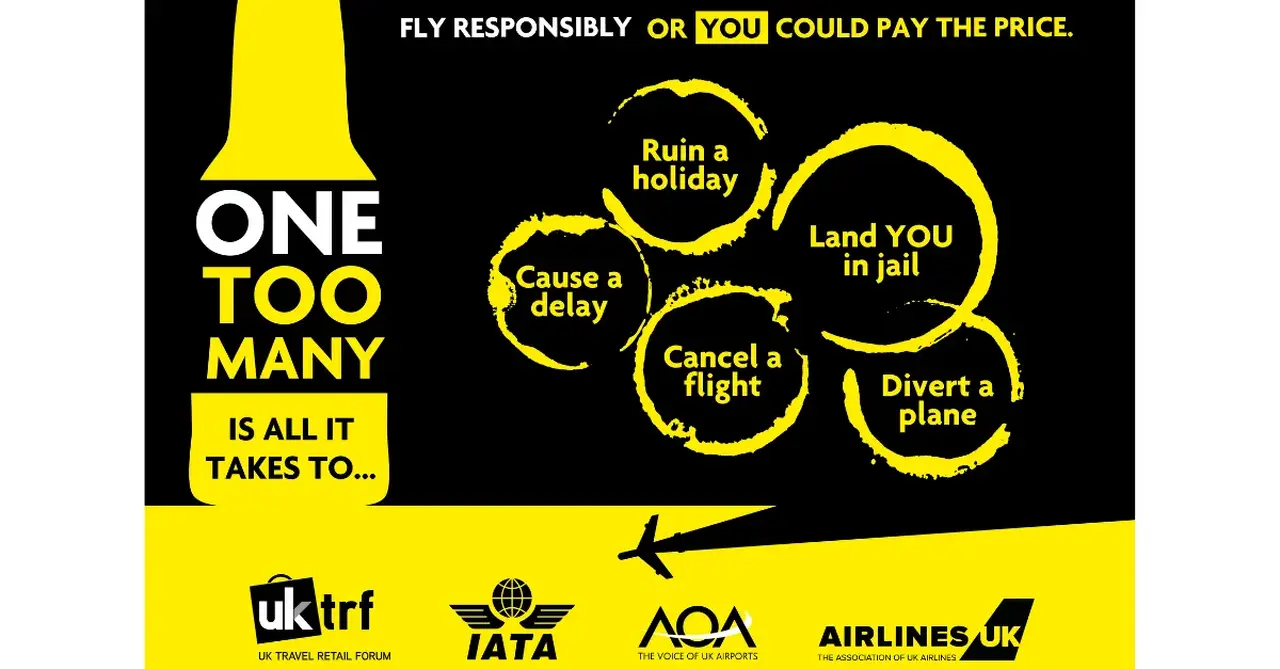
The UK aviation industry has relaunched its 'One Too Many' campaign for 2026 across more than 20 airports, warning passengers that disruptive behavior can lead to up to 2 years in prison, an £80,000 fine for a mid-air diversion, and a £5,000 fine for delaying departure. The campaign also highlights lifetime bans for flight cancellations and denied boarding for unfit passengers. The message is preventive rather than market-moving, reinforcing zero-tolerance expectations for summer travel.
This is not a direct earnings story, but it is a soft-positive for the airport ecosystem because it lowers the probability of operational disruption at the margin during the highest-yield travel window. The biggest economic beneficiary is not the airlines themselves so much as the airport retail/concession stack: a smoother passenger flow preserves dwell time, impulse spend, and ancillary conversion, while disorder tends to spill into security, turnaround, and customer-service costs that are harder to recover than a delayed departure. The campaign also reinforces a broader regulatory posture that shifts blame and liability toward the individual traveler, which should marginally reduce the tolerance for edge-case behavior that can create disproportionate disruption.
The second-order effect is on staffing and service mix. If disruptions are even modestly lower, airports can lean slightly less on buffer staffing and contingency spend in the summer peak, which supports margins for operators with high fixed-cost leverage. Conversely, the reputational and legal deterrence narrative is a tailwind for carriers that already position on premium service and punctuality, because they benefit when the travel experience feels controlled and predictable. The impact should be felt over days to weeks in booking and day-of-travel behavior rather than as a durable multi-quarter demand driver.
The main contrarian read is that the campaign itself is evidence of an industry trying to manage a recurring nuisance, not eliminate it; that means the issue is persistent but likely not systemic enough to matter for topline air travel demand. The market may overestimate the direct effect on airline P&Ls while underestimating the benefit to airports with retail-heavy business models and to security/IT vendors that sell crowd-management, screening, and incident-response tooling. If summer travel volumes disappoint for macro reasons, this headline will be noise; if volumes hold up, the cleaner experience may modestly improve attach rates and customer satisfaction without moving the needle on seat demand.
AI-powered research, real-time alerts, and portfolio analytics for institutional investors.
Request DemoOverall Sentiment
neutral
Sentiment Score
-0.05
