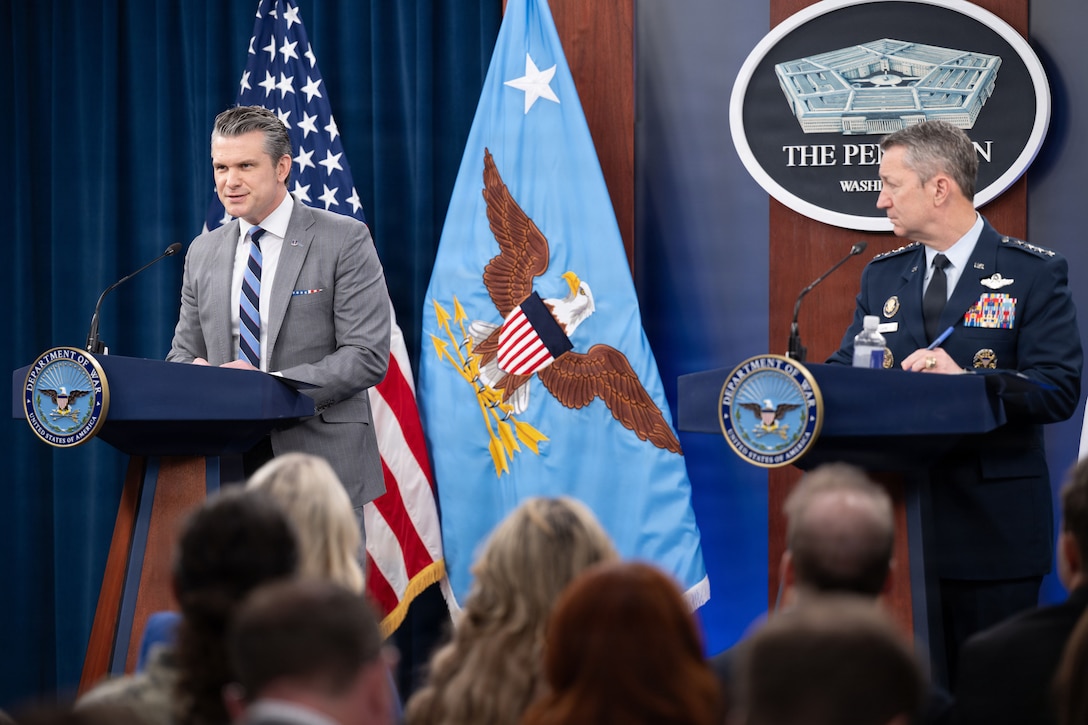
The article is a Pentagon photo caption describing a press briefing by Secretary of War Pete Hegseth and Chairman of the Joint Chiefs of Staff Gen. Dan Caine on Operation Epic Fury, with no operational details, financial figures, or policy changes disclosed. It is routine defense-related coverage and does not present a clear market-moving catalyst.
This is less a single-stock headline than a reminder that the defense budget is increasingly being reprioritized toward operational readiness, command-and-control, and asymmetric strike support rather than legacy platform counts. The second-order beneficiary set is the pick-and-shovel layer: electronics, secure communications, munitions replenishment, logistics software, and firms with exposure to sustainment cycles, because those budgets tend to scale after an operation reveals bottlenecks. The market often underprices the follow-through spend because the initial event looks episodic, but procurement usually shifts over the next 1-3 quarters once after-action reviews translate into funding requests.
The bigger risk is not the headline event itself but the policy signal it sends to allies and adversaries: when military tempo rises, the procurement cadence and inventory drawdown assumptions get reset. That tends to favor companies with backlogs already stretched and penalize prime contractors exposed to fixed-price execution risk, since urgent replenishment can compress margins if input costs or delivery schedules worsen. For infrastructure-linked names, the read-through is mostly indirect: elevated geopolitical risk supports hardening, base resilience, and cyber spend rather than broad-based civil infrastructure demand.
Consensus may underappreciate that defense “surge” themes can reverse quickly if the operation resolves without a sustained supply-chain replenishment cycle. If policymakers conclude current stockpiles are adequate, the trade can fade within days; if not, the setup can persist for months as supplemental appropriations and allied restocking kick in. The key variable is whether this becomes a one-off operational showcase or a catalyst for a multi-quarter inventory rebuild and theater-wide modernization push.
AI-powered research, real-time alerts, and portfolio analytics for institutional investors.
Request TrialOverall Sentiment
neutral
Sentiment Score
0.00
