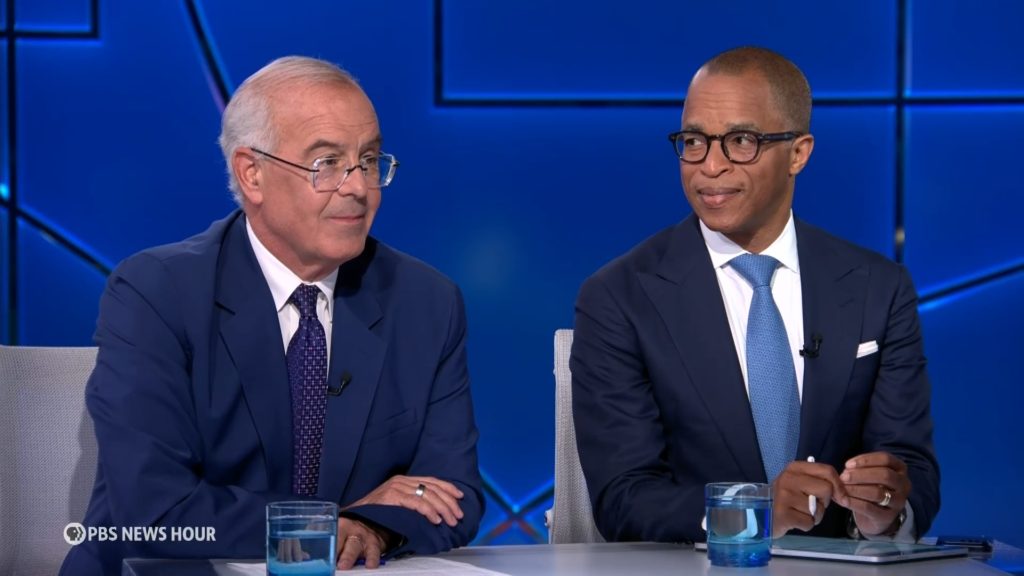
The discussion centered on a possible U.S.-Iran deal, with panelists skeptical that Tehran will give up its nuclear program or support for Hamas and Hezbollah, and warning that a conflict could leave the U.S. and region worse off. They also highlighted rising Republican resistance to Trump on FISA Section 702 and other issues, suggesting some erosion in party discipline. The White House UFC event was framed as a symbolic cultural shift rather than a market-moving event.
The market implication is less about the headline diplomacy and more about the path dependency of sanctions enforcement. A credible de-escalation would primarily compress geopolitical risk premia in energy, freight, and defense, but the bigger second-order effect is on the timing of supply normalization through the Strait of Hormuz: even a partial reopening can mechanically lower implied tail risk in front-month crude and tanker rates faster than it changes long-run balances.
The administration’s apparent preference for a fast, optics-heavy deal creates a fragile setup. If talks stall, the market likely has to reprice from “imminent relief” to “extended coercion,” which is typically worse for crude vol than for outright prices because participants are forced to re-hedge supply interruption probabilities. That favors options over directionally sized futures exposure; the skew is in event risk over the next 2-6 weeks, not in a durable multi-quarter macro regime change.
The contrarian view is that the consensus may be underestimating how much of the price reaction is already in the tape. If the market believes a deal is within reach, crude, tanker, and select defense names may have already discounted a decent portion of the headline risk reversal. The bigger tradeable mispricing may be in policy credibility: a failed or shallow agreement would reinforce a higher geopolitical discount rate across the region, especially for assets exposed to Gulf shipping, while a real deal would likely be narrower than advertised and leave sanctions leakage as the dominant driver.
For equities, the more interesting loser is not just defense contractors but the entire Saudi/UAE logistics and insurance complex if shipping risk premium falls quickly. Conversely, if talks collapse, the beneficiaries are upstream producers with low lifting costs and names with exposure to higher freight/insurance spreads; the move should be asymmetric in smaller-cap energy rather than megacap integrateds. In domestic politics, the signaling around congressional authority and surveillance is less relevant for broad risk appetite than for event-driven legal/regulatory names, but it reinforces a market where policy reversals remain a live source of gap risk.
AI-powered research, real-time alerts, and portfolio analytics for institutional investors.
Request DemoOverall Sentiment
mildly negative
Sentiment Score
-0.15
Ticker Sentiment
