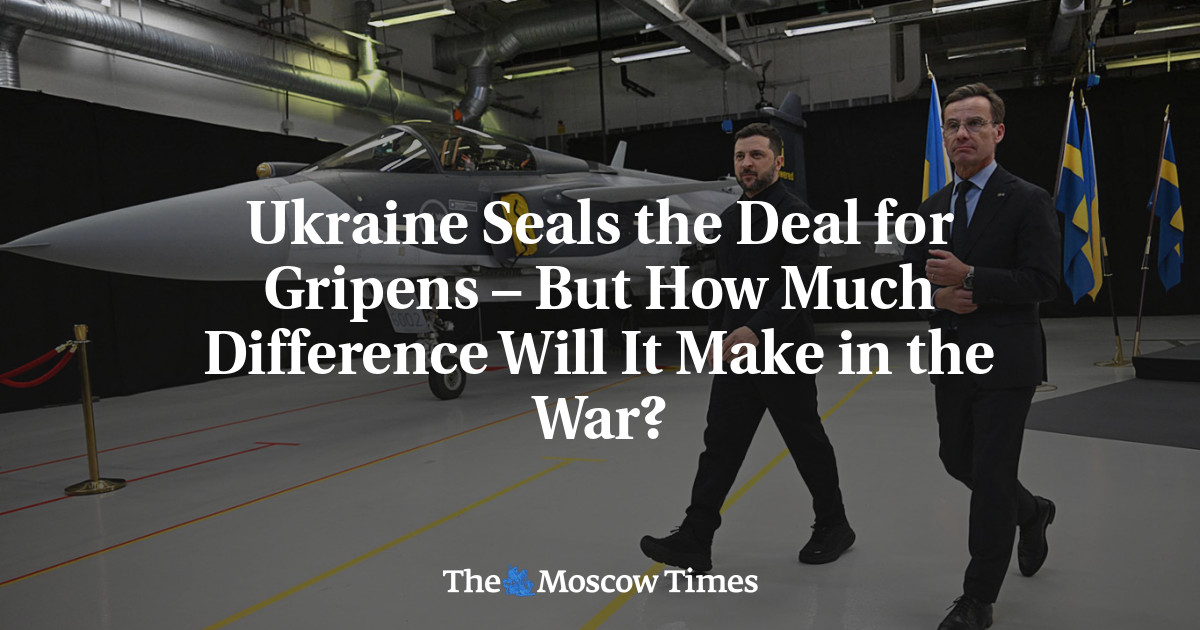
Ukraine has agreed to acquire 36 Saab Gripen fighters, with Sweden donating 16 older C/D jets and Kyiv buying 20 newer E/F models for 2.5 billion euros, financed through an EU-backed 90 billion euro loan. First deliveries could begin as early as 2027, and Ukrainian pilots are already training on the aircraft. The deal is strategically significant for Ukraine’s air defense but is unlikely to decisively alter the war on its own.
This is less about near-term battlefield impact than about extending Ukraine’s air-defense endurance curve. The real economic winner is the European defense ecosystem: a platform that is cheaper to operate, simpler to disperse, and less dependent on U.S. munitions increases the probability of repeat orders across NATO countries that need survivable air policing in a high-threat environment. That shifts marginal demand toward European missile, maintenance, and dispersed-baselayout suppliers, while reducing the relative strategic moat of U.S.-centric fighter ecosystems if allies start valuing sovereignty-of-supply over maximum performance.
The second-order effect is procurement timing risk. The capability gap remains wide for years, so the market will likely be disappointed if it prices this as an immediate war-changer; the delivery cadence matters more than the headline size of the package. The important catalyst is not jet arrivals but whether follow-on orders for weapons, spares, training, and runway-hardening get accelerated in 2026-27, which would create a multi-year revenue stream for European primes and a better backlog mix. Conversely, any ceasefire or frozen-conflict framework would slow the urgency premium and compress the valuation multiple for the most Ukraine-exposed suppliers.
The contrarian view is that the move is still underappreciated, but not for combat reasons: it is a signal that Europe is willing to finance a stand-alone air-defense architecture at scale. That favors companies with European content, exportable missiles, and low maintenance burden more than legacy airframe makers. The biggest operational risk is industrial bottlenecks in munitions and training throughput; if those choke, the story becomes one of headline commitments without usable lift, which would reverse the read-through to defense revenues over 6-18 months.
AI-powered research, real-time alerts, and portfolio analytics for institutional investors.
Request DemoOverall Sentiment
neutral
Sentiment Score
0.05
