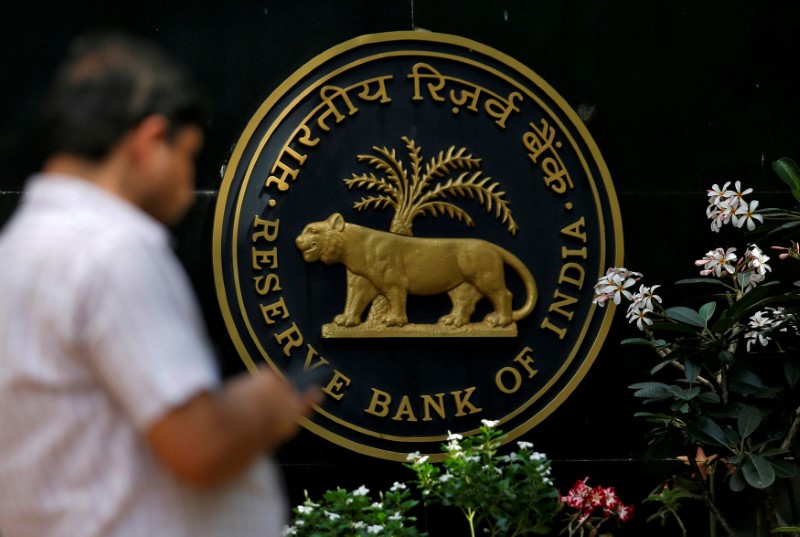
RBI Governor Sanjay Malhotra said it is premature to discuss interest rate hikes, emphasizing that policy remains data-dependent and that the central bank will stay neutral unless it first shifts to a restrictive stance. He said inflation risks have eased but second-round effects remain uncertain, while the RBI does not target a specific exchange rate and intervenes only to ensure orderly FX volatility. The rupee traded about 0.3% higher near 95 per dollar, with the RBI expecting encouraging capital inflows even as equity-driven inflows may moderate.
The immediate read-through is not “higher-for-longer India,” but a slower normalization of global risk appetite that keeps Indian duration assets supported while capping domestic financial beta. If the RBI is signaling it is not close to tightening, front-end yields should stay anchored, which is positive for rate-sensitive domestics and for leveraged growth expectations, but the bigger effect is on cross-border capital flows: a softer policy bias in India becomes attractive only if global equities stabilize, otherwise foreign inflows will remain fragile and style rotations will dominate.
The second-order loser is not just banks, but the entire liquidity-sensitive mid-cap complex. When the central bank emphasizes orderly FX rather than a defended rupee level, it implicitly allows some currency drift; that tends to compress foreign ownership appetite at the margin and raises hedging costs for overseas allocators. In that setup, the market can still rally, but breadth usually deteriorates: large-cap defensives and domestic-duration proxies outperform while high-multiple names, including market infrastructure and IPO-adjacent beneficiaries, underperform as valuation discipline returns.
For NDAQ specifically, the message is that volatility and lower risk-taking can hurt trading and listing sentiment even if Indian policy is benign. A mild correction in Indian equities is not catastrophic for exchange volumes, but if global tech de-risks simultaneously, the sensitivity to issuance and retail participation is amplified. By contrast, SMCI and APP remain beneficiaries of the broader AI capital-expenditure theme, yet their upside is now more dependent on multiple expansion than fundamentals; in a risk-off tape, they become the highest-beta expressions of the same momentum trade.
The contrarian angle is that the market may be underpricing how quickly a benign RBI stance can turn into a supportive domestic liquidity regime if inflation data cools further. That would favor a tactical rebound in Indian financials and consumer cyclicals over the next 1-3 months, especially if FX stabilizes and foreign flows return. But if global yields re-accelerate, the same setup becomes a slow bleed rather than a sharp selloff, making put spreads or relative-value shorts preferable to outright directional bets.
AI-powered research, real-time alerts, and portfolio analytics for institutional investors.
Request DemoOverall Sentiment
neutral
Sentiment Score
-0.05
Ticker Sentiment
