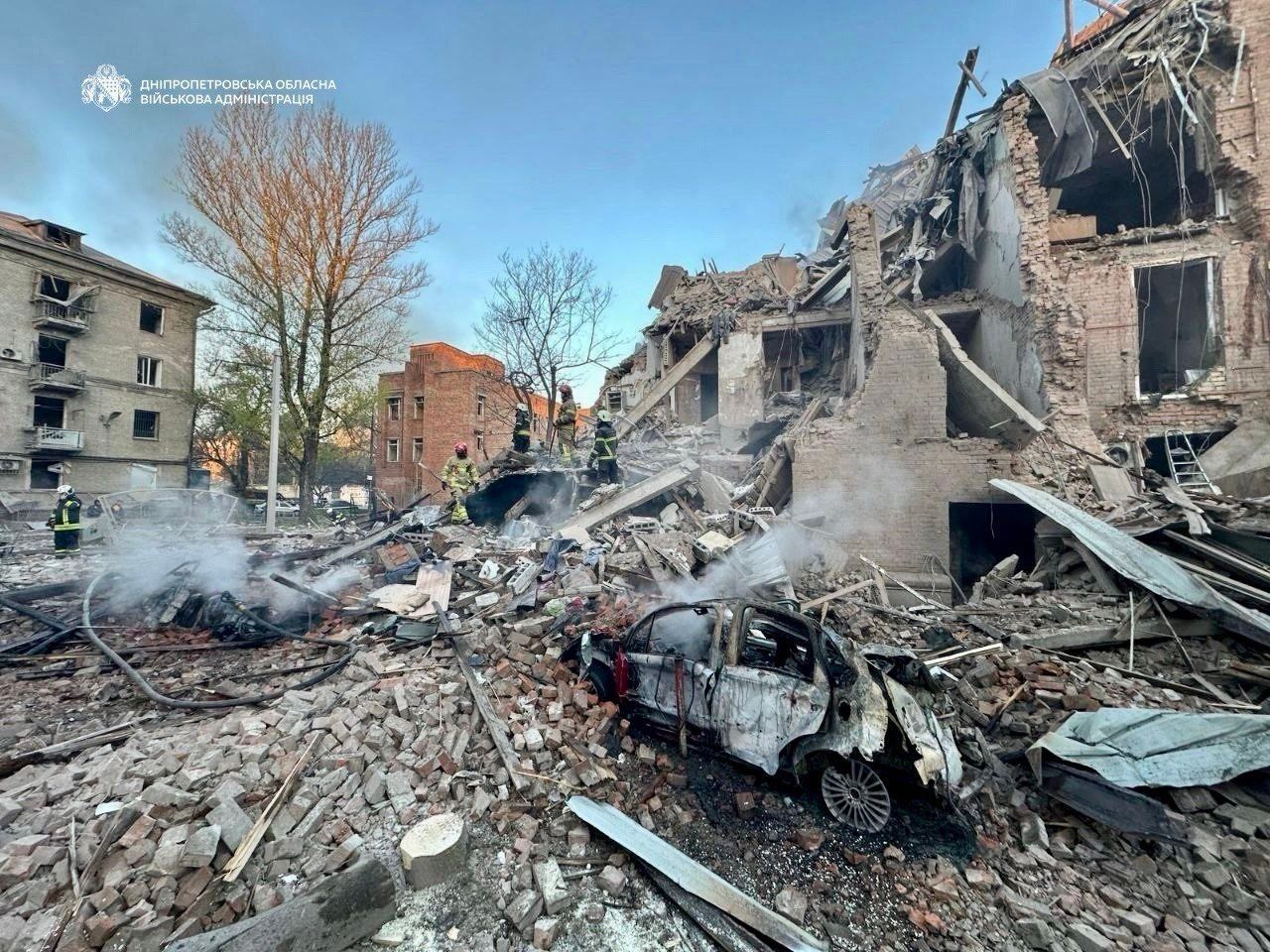
Russia launched one of its largest aerial strikes on Ukraine overnight, firing 47 missiles and 619 drones and causing at least 5 deaths and 32 injuries across multiple cities. Ukraine said it intercepted 580 drones and 30 missiles, but strikes still hit civilian and industrial infrastructure in Dnipro, Kharkiv, Odesa, Chernihiv and other regions, with additional regional air defenses scrambled in Poland and Romania. The attack adds to heightened geopolitical risk and reinforces escalation concerns in Eastern Europe.
This is less a one-night headline and more evidence of a scaling problem in modern air defense economics: the attacker can generate cheap, massed saturation while the defender spends scarce interceptors on a much higher marginal cost basis. That asymmetry tends to widen the gap between headline interception rates and the true operational burden on Ukraine and its backers, because each sustained barrage consumes inventory, maintenance time, and command bandwidth even when physical damage is contained.
The second-order market impact is not just on Ukraine exposure but on European security repricing. Every escalation cycle increases the probability of faster procurement, emergency budget reallocations, and accelerated replenishment orders for air-defense, EW, and missile-defense supply chains; the beneficiaries are the primes and component suppliers with production already qualified, not the legacy platforms waiting on multiyear ramps. Near term, the most sensitive assets are anything tied to Black Sea logistics, eastern European industrial activity, and regional power infrastructure reliability, where even limited damage raises insurance, rerouting, and working-capital costs.
A key contrarian point: the market may underappreciate that repeated attacks can be strategically inefficient for Russia if they accelerate Western air-defense deliveries and deepen NATO coordination around Poland/Romania. But that potential “backfire” is months away, not days; in the next 1-4 weeks, the dominant effect is a higher tail-risk premium for EM Europe and a stronger bid under defense names. The risk to the trade is a diplomatic pause or a visible improvement in interceptor coverage that compresses the urgency premium quickly.
For Ukraine-adjacent assets, the bigger issue is not one strike but cumulative outage probability: ports, power nodes, rail, and industrial parks become more fragile when attacks are frequent enough to force repeated repairs rather than full restoration. That favors vendors of grid hardening, mobile power, repair logistics, and surveillance/targeting systems, while pressuring insurers and any transport/cargo names with Black Sea or eastern corridor exposure.
AI-powered research, real-time alerts, and portfolio analytics for institutional investors.
Request DemoOverall Sentiment
extremely negative
Sentiment Score
-0.95
