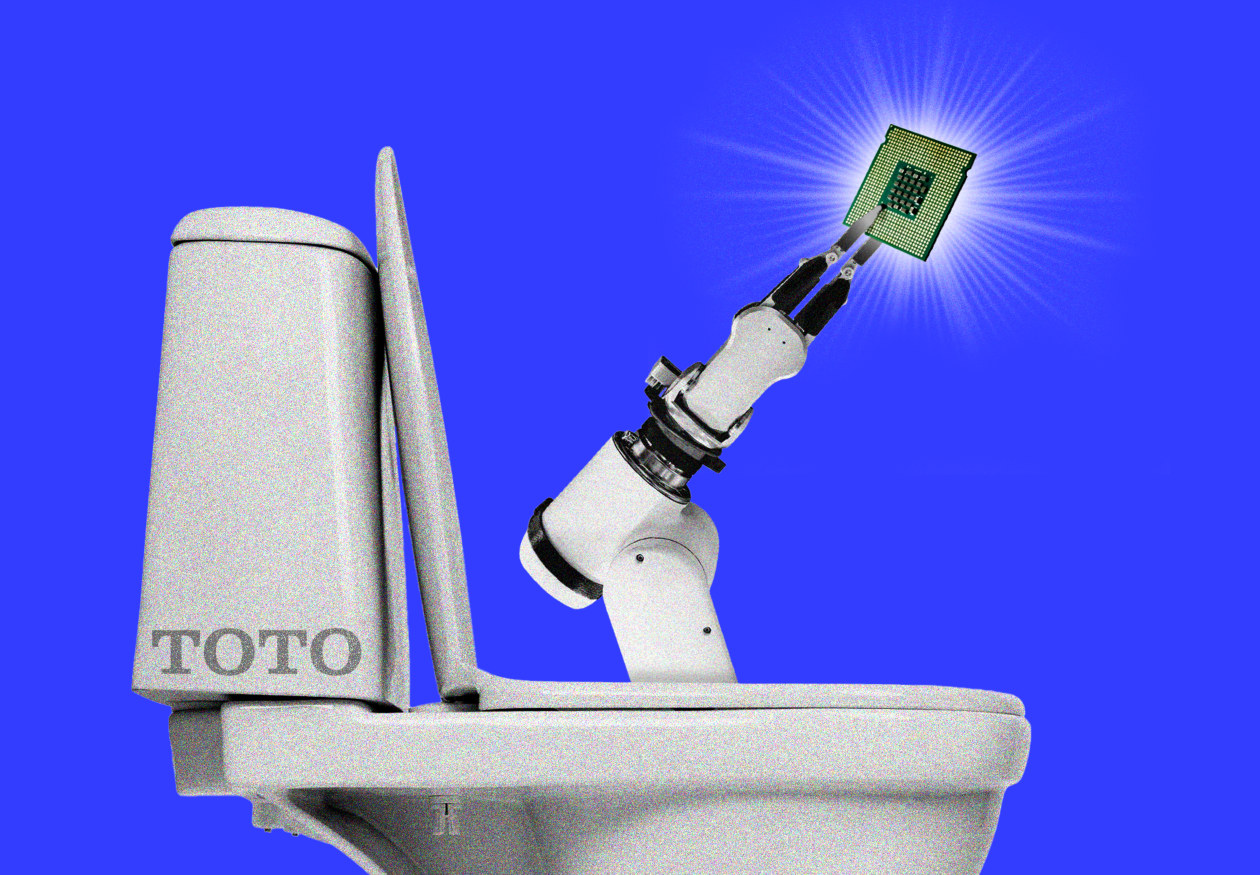
Toto is emerging as an unexpected AI supply-chain beneficiary by supplying electrostatic chucks, a semiconductor-manufacturing component tied to the memory-chip boom. The article highlights that the Japanese toilet maker's decades of ceramics expertise can be applied to chip production, alongside its core bathroom and surface-cleaning technologies. The tone is positive but largely thematic, with limited near-term market-moving detail.
The market is likely underestimating how “boring” industrial ceramics can become a leverage point in the AI capex stack. If this supplier is credible in electrostatic chucks, the real implication is that ceramic expertise is becoming a scarce enabling input for advanced wafer processing, which means AI hardware demand can spill into non-obvious beneficiaries before it shows up in traditional semiconductor names. That creates a second-order winner set: precision materials, specialty manufacturing equipment, and any supplier with qualification history in high-temperature, high-purity components.
The competitive dynamic is asymmetric because semiconductor customers are less sensitive to brand than to uptime, defect rates, and qualification cycles. Once a component is approved, switching costs and validation friction can lock in revenue for years, so the opportunity is less about a one-time product launch and more about a multi-year content expansion story if memory and logic capex stays elevated. The risk is that this is a niche, not a thesis-breaker: if AI capex normalizes or memory pricing rolls over, the incremental benefit compresses quickly.
The contrarian view is that the market may overpay for any company with an AI-adjacent label while missing that the real economic moat sits in process know-how, not end-market branding. That means the best trade is probably not chasing the obvious AI semis here, but looking for undervalued industrials/materials companies that can quietly gain share inside the equipment supply chain. The catalyst horizon is months, not days: qualification wins, capacity additions, and customer disclosures matter more than headline sentiment.
From a risk standpoint, the main failure mode is that this remains a limited revenue stream that gets narrative premium without meaningful earnings contribution. A second risk is customer concentration: if one or two semiconductor toolmakers account for most of the upside, any order delay or design change could create sharp disappointment. The setup works best if the company can demonstrate repeatable production scale and margin expansion over the next 2-4 quarters.
AI-powered research, real-time alerts, and portfolio analytics for institutional investors.
Request DemoOverall Sentiment
mildly positive
Sentiment Score
0.35
