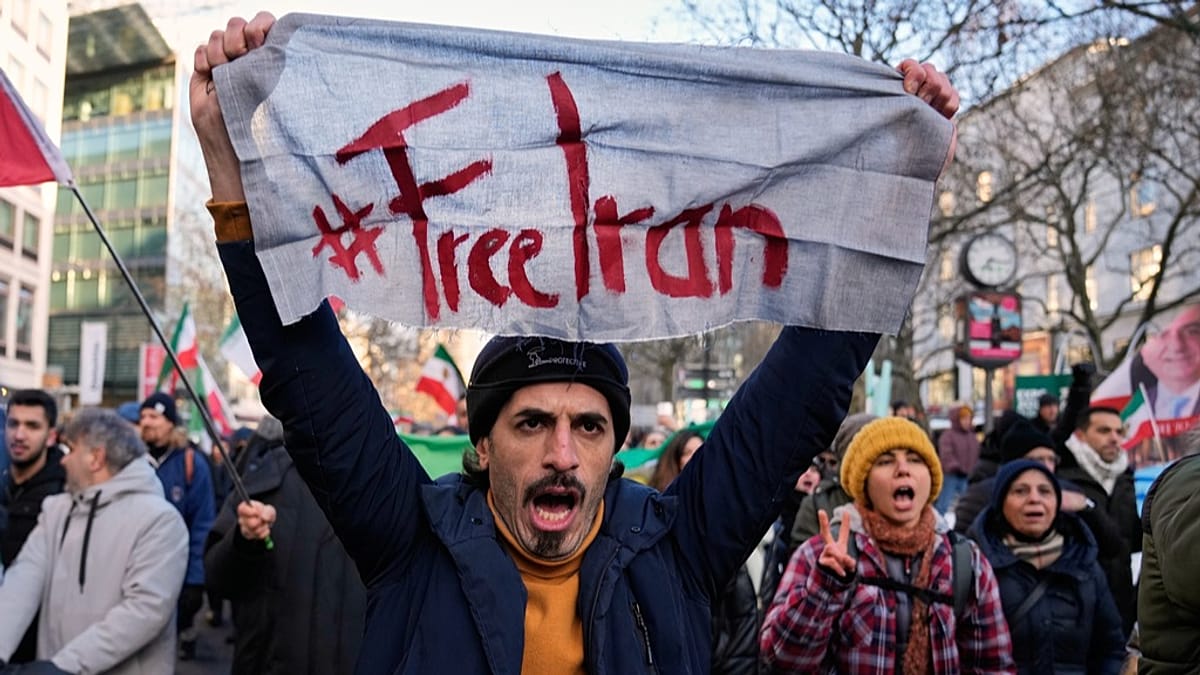
Protests that began in Iran two weeks ago over deteriorating economic conditions and a worsening food-price-driven inflation have persisted despite a nationwide communications blackout and reports of security forces using lethal force. Large solidarity demonstrations by the Iranian diaspora in European capitals (The Hague, Berlin) and a public statement from US President Donald Trump offering assistance and threatening military response increase geopolitical risk, a development that could raise regional political and energy-market volatility if escalation continues.
Market structure: Near-term winners include global defense contractors (RTX, LMT, NOC), gold (GLD) and USD liquidity providers; losers are Iran-linked assets, regional banks and EM high-yielders. Oil is the key price-sensitivity channel — a shipping/Strait of Hormuz disruption could push Brent +10–20% in days, benefiting integrated majors (XOM, CVX) and physical oil plays while pressuring European consumption names and airlines.
Risk assessment: Tail risks include limited US/coalition military strikes or a Strait blockade (low-probability, high-impact) that would force oil >$100 and spike EM sovereign spreads +200–500bp; immediate window is days-weeks for volatility, 1–12 months for fiscal/defense budget re-ratings. Hidden dependencies: proxy escalation (Hezbollah/Houthi attacks), refugee flows into EU and secondary sanctions dynamics that can re-price banking and shipping sectors.
Trade implications: Favor tactical long-defense (1–2% portfolio each in RTX and LMT, 3–9 month horizon) and a 1–2% GLD hedge for macro tail risk; rotate 3% out of MSCI EM ETF (EEM) into 3–12 month US Treasury bills (SHY/T-bills) to reduce EM currency exposure. Implement a short-dated Brent call spread (3-month; pay up to $2–3 premium) rather than naked exposure to capture >10% oil moves while capping loss.
Contrarian angles: The market may overprice structural oil scarcity — Iran exports are ~2–3% of global supply; absent systemic Strait closure, price spikes historically revert within weeks (2019 parallel). Consider selling volatility (10–20% notional) after a >15% Brent surge or buying beaten-down European travel names on normalization after 4–8 weeks; monitor Brent >$95 or EM CDS widening >150bp as sell/cover triggers.
AI-powered research, real-time alerts, and portfolio analytics for institutional investors.
Request DemoOverall Sentiment
moderately negative
Sentiment Score
-0.50
