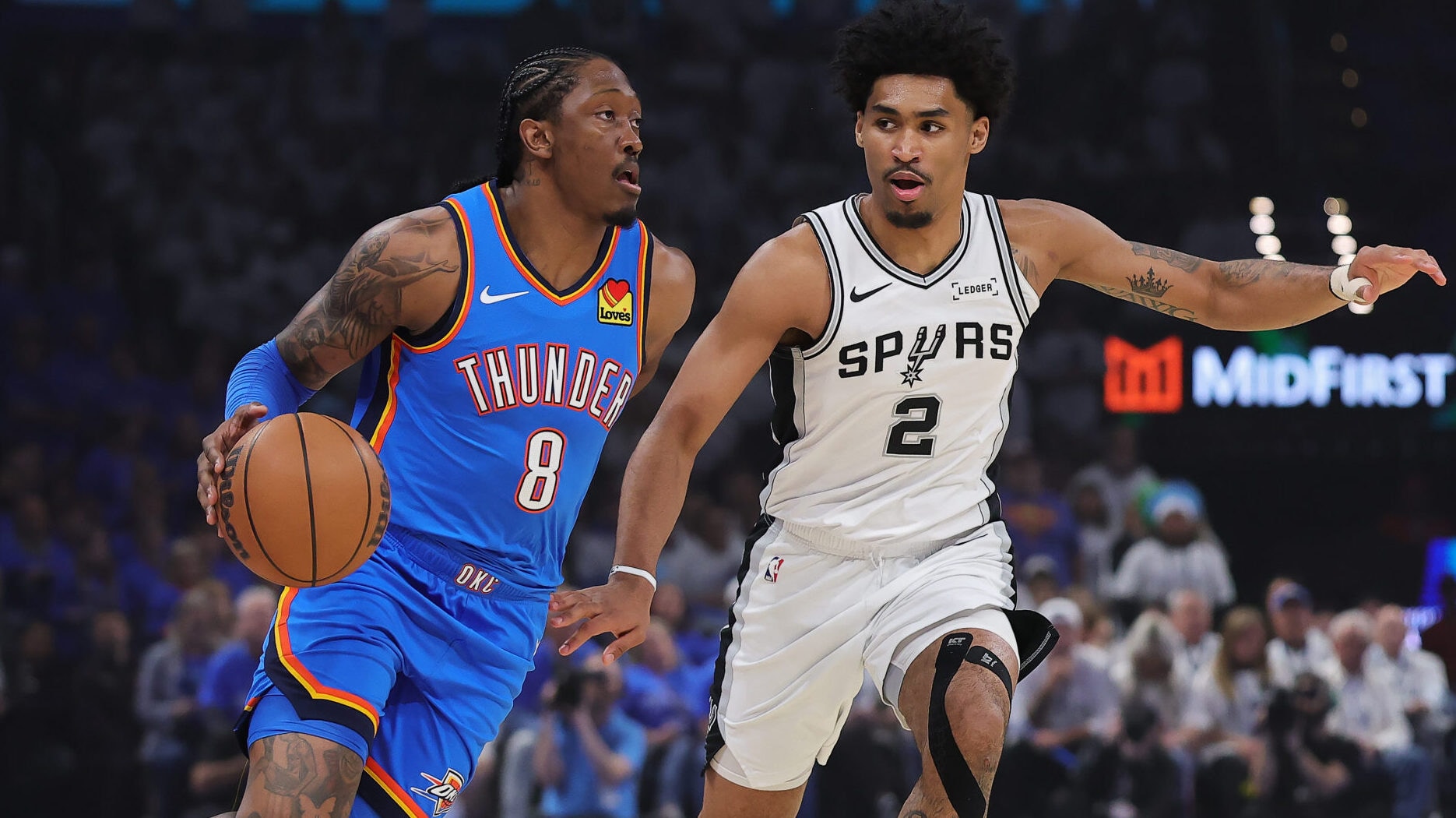
Game 3 of the Western Conference Finals featured injury-related status changes for three key players, with Oklahoma City’s Jalen Williams ruled out while Spurs guards De’Aaron Fox and Dylan Harper both played. Fox scored 15 points with six assists in 31 minutes after missing the first two games, while Harper returned to the bench and Williams remained sidelined by recurring hamstring issues. The article is primarily an injury update with no broader market implication.
The real market implication here is not the box score; it is that postseason availability is becoming a resource constraint, and the team with the deeper contingency map is gaining leverage. Oklahoma City’s edge compounds when the opponent’s primary ball handlers are forced into reactive minutes management, because every compromised guard reduces late-clock creation and increases turnover risk. That tends to matter most in the next 1-2 games, when fatigue and soft-tissue caution interact and the favored side can extend runs without needing a huge schematic adjustment.
The second-order effect is on bench value and minute concentration. When multiple perimeter creators are in and out, rotations shorten in a way that benefits versatile defenders and secondary initiators while punishing teams built around one or two high-usage guards. In a playoff environment, that usually widens the gap in free-throw rate, transition frequency, and live-ball turnover differential — three categories that can swing margins even if raw shooting is noisy game to game.
There is also a hidden risk that the injury story reverses quickly if the sidelined players get a few extra days, but the more important point is that recurrence probabilities rise materially once hamstring/adductor issues show up back-to-back. That makes any “questionable” tag less informative than normal; the market should assume elevated odds of late scratches or in-game restrictions for at least the remainder of the series. If the series lengthens, the cumulative effect can become more important than any single absence.
Consensus may be underestimating how much this favors the structurally healthier, deeper roster rather than treating each status update as isolated. The right way to frame it is a volatility tax on the undermanned side: more lineup uncertainty, lower offensive ceiling, and a higher chance that one player’s availability forces a cascade of inefficient possessions elsewhere. That makes the favorite’s cover probability more attractive than a simple series-winner lens would suggest.
AI-powered research, real-time alerts, and portfolio analytics for institutional investors.
Request DemoOverall Sentiment
neutral
Sentiment Score
-0.05
