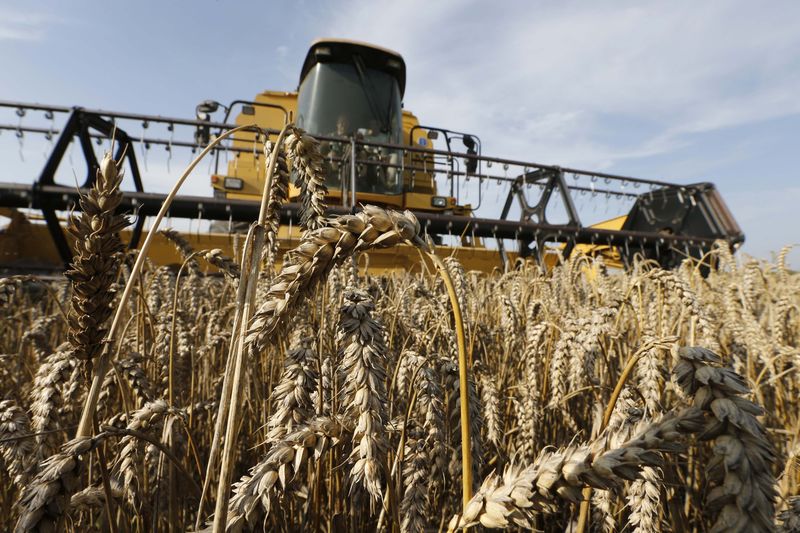
Euronext September milling wheat was unchanged at €203.25 per metric ton as traders paused ahead of the USDA's monthly world crop report due at 1600 GMT. The market is balancing drought-related U.S. production concerns against expectations for a strong European harvest, with favorable June weather seen limiting heatwave damage. Expana raised its 2026/27 EU soft wheat production forecast, adding to the cautious tone.
The grain tape is telling you the market is in a classic information vacuum: after a sharp run-up from oversold levels, participants are unwilling to press either direction until the USDA print resolves whether the near-term balance sheet is a genuine shortage story or just weather-risk premium. The key second-order effect is that a benign report does not need to be bearish for wheat; it only needs to confirm that supply is less impaired than feared, which would likely reprice volatility lower faster than outright price. That matters because vol compression typically hurts option buyers and favors relative-value shorts more than directional longs.
The bigger winner if U.S. and European crop damage proves limited is the downstream user complex: flour millers, bakeries, livestock feeders, and packaged-food names with fragile gross margins. Their input-cost sensitivity is immediate, but equity investors often lag the commodity by weeks, so any post-report pullback in wheat can create a cleaner entry point into food manufacturers that have been absorbing costs with a delay. Conversely, if the report surprises tighter, the most exposed losers are highly levered grain users in Europe where harvest expectations are already leaning on the market — a smaller supply shock there could amplify basis volatility and force more aggressive hedging.
The contrarian setup is that consensus may be overestimating how much this year’s weather noise translates into structural scarcity. If the USDA leaves U.S. production roughly intact, the market could quickly re-anchor on the bigger medium-term theme: improving 2026/27 EU output prospects, which argues for a softer forward curve even if nearby contracts stay supported. That creates a timing mismatch: nearby wheat can remain range-bound or choppy for days, while deferred contracts and producer hedges may offer better risk/reward over the next 1-3 months.
Catalyst risk is asymmetric around the report and the next weather update cycle. A bullish surprise can squeeze short-covering for 1-3 sessions, but a neutral-to-bearish print could trigger a faster unwind because positioning is already waiting for confirmation. The cleanest takeaway is to fade strength into the data unless the report materially revises yield loss assumptions, because the market is more likely pricing headline risk than a persistent supply deficit.
AI-powered research, real-time alerts, and portfolio analytics for institutional investors.
Request DemoOverall Sentiment
neutral
Sentiment Score
-0.05
