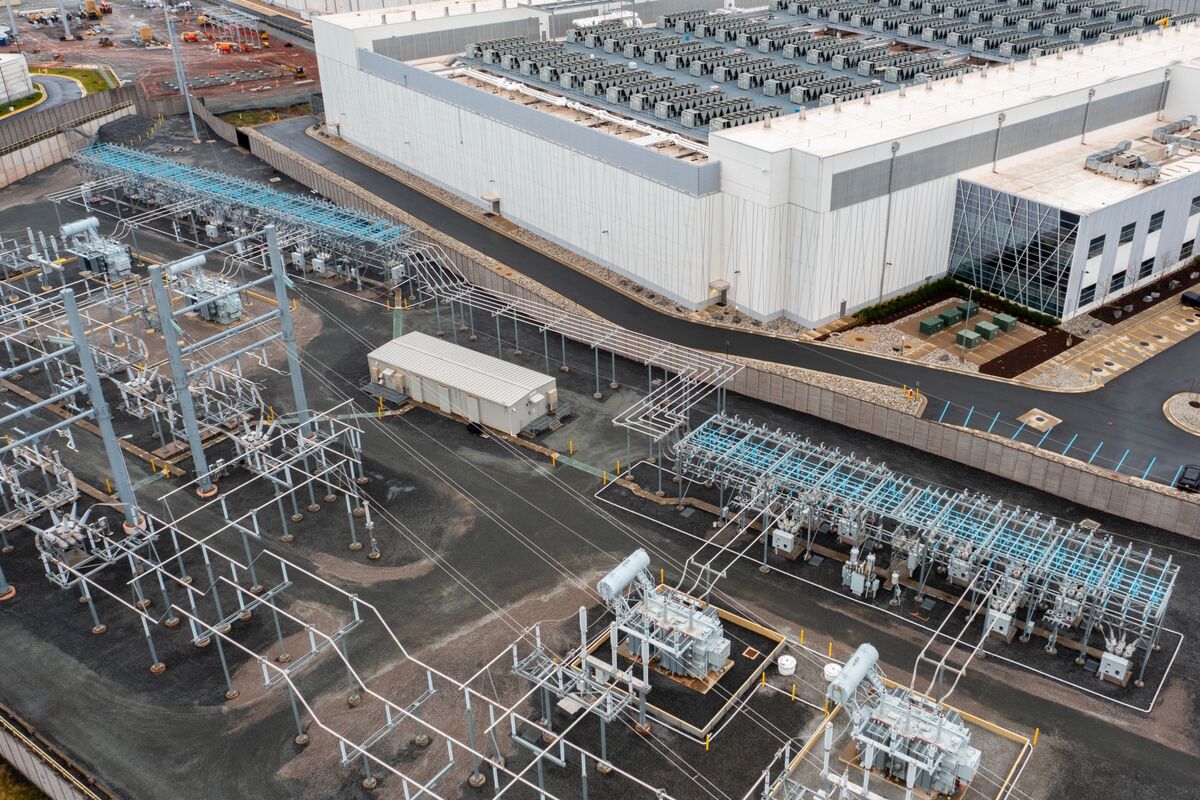
US spending on power-plant and electrical equipment is projected to triple to $65 billion by 2030 from $20 billion in 2025, with data centers potentially accounting for as much as 40% of total investment. Wood Mackenzie also expects US data-center capacity to rise more than 350% to 110 gigawatts, highlighting a major AI-driven infrastructure buildout that should benefit power equipment suppliers and related industrials.
This is less a pure AI trade than a multi-year capex supercycle with a bottlenecked supply chain. The key second-order effect is that the beneficiaries are likely to be the most levered to delivery lead times and pricing power, not the obvious “AI infrastructure” names; transformers, switchgear, breakers, busbars, and high-voltage interconnects should see the strongest margin inflection as order backlogs extend and customers prioritize time-to-power over price.
The market is likely underestimating how concentrated the winners will be. Capacity additions at the data-center layer create a ripple into utility equipment, grid services, and industrial controls, but the real upside accrues to vendors with long qualification cycles and constrained manufacturing footprints, because incremental demand cannot be re-routed quickly. That makes this more durable than a typical semiconductor or server cycle: once customers lock in multi-year buildouts, cancellation risk stays low unless financing costs spike or hyperscaler ROI expectations reset.
The main risk is not demand — it is timing. If AI capex slows, the equity market will punish the whole basket before the physical order book rolls over, so the next 1-2 quarters likely matter more for re-rating than the 2-3 year thesis. A secondary risk is policy and permitting: grid interconnect delays, local opposition, or a recession-driven pause in data-center leasing could push out revenues while leaving suppliers with stranded expansions.
The contrarian read is that this may still be early rather than crowded. The headline number will attract momentum capital into the obvious AI leaders, but the best risk/reward may sit one layer down the stack where expectations remain anchored to old utility-cycle multiples. If the spend truly triples, investors should expect not just top-line growth but a multi-year normalization of earnings quality via better utilization, mix shift, and pricing discipline across industrial electrification names.
AI-powered research, real-time alerts, and portfolio analytics for institutional investors.
Request DemoOverall Sentiment
moderately positive
Sentiment Score
0.55
