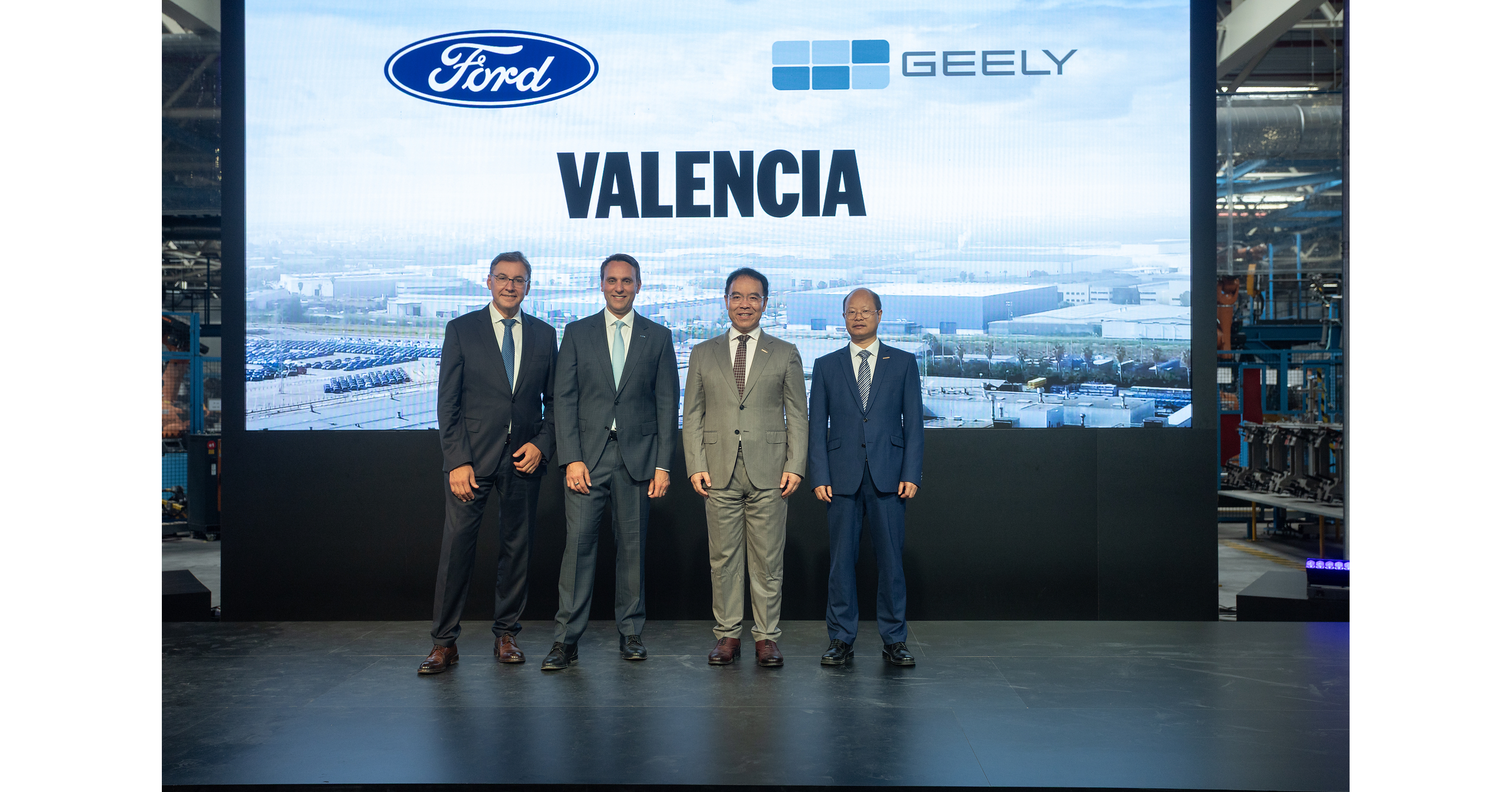
Ford and Geely will form a Europe-focused production joint venture at Ford’s Valencia plant, with Ford holding 66% and Geely 34%, pending regulatory approval. The JV is expected to start operations in 1H 2027 and begin producing the first new vehicles in 2028, including a new Ford multi-energy crossover, a new Bronco model, and two Geely electric SUVs—while Ford Kuga production continues uninterrupted during the transition. The deal targets improved cost competitiveness amid tougher EU rules and high operating costs, with the companies aiming to introduce five new multi-energy vehicles in Europe by 2029.
Ford’s immediate benefit is not incremental revenue but a lower Europe break-even: the JV should improve fixed-cost absorption, reduce the odds of incremental plant restructuring, and buy time for the region to stop bleeding cash. Because first output is years away, the stock’s first reaction should be driven more by perceived downside protection than by near-term EPS accretion; any rally is likely capped unless management later quantifies avoided closure costs or better Europe margin guidance.
Geely is the more underappreciated winner on a strategic basis. Localized production in the EU is a cleaner path to pricing power and regulatory resilience than shipping from China, and it also gives the brand a credibility boost versus other Chinese entrants. Second-order, this raises pressure on European OEMs with weak cost positions — especially those without a local partner model — because it reinforces the idea that future winners will share platforms, plants, and software stacks to defend pricing.
The contrarian risk is timing: this is mostly a 2027-2028 option on industrial rationalization, not a 2026 earnings catalyst. If European demand softens, the new capacity could still end up underutilized, and regulatory scrutiny around Chinese-linked manufacturing could slow the approval path. The thesis is falsified if Ford’s next two earnings cycles show no improvement in Europe EBIT or if the JV slips materially beyond the current launch window.
AI-powered research, real-time alerts, and portfolio analytics for institutional investors.
Overall Sentiment
mildly positive
Sentiment Score
0.25
Ticker Sentiment
