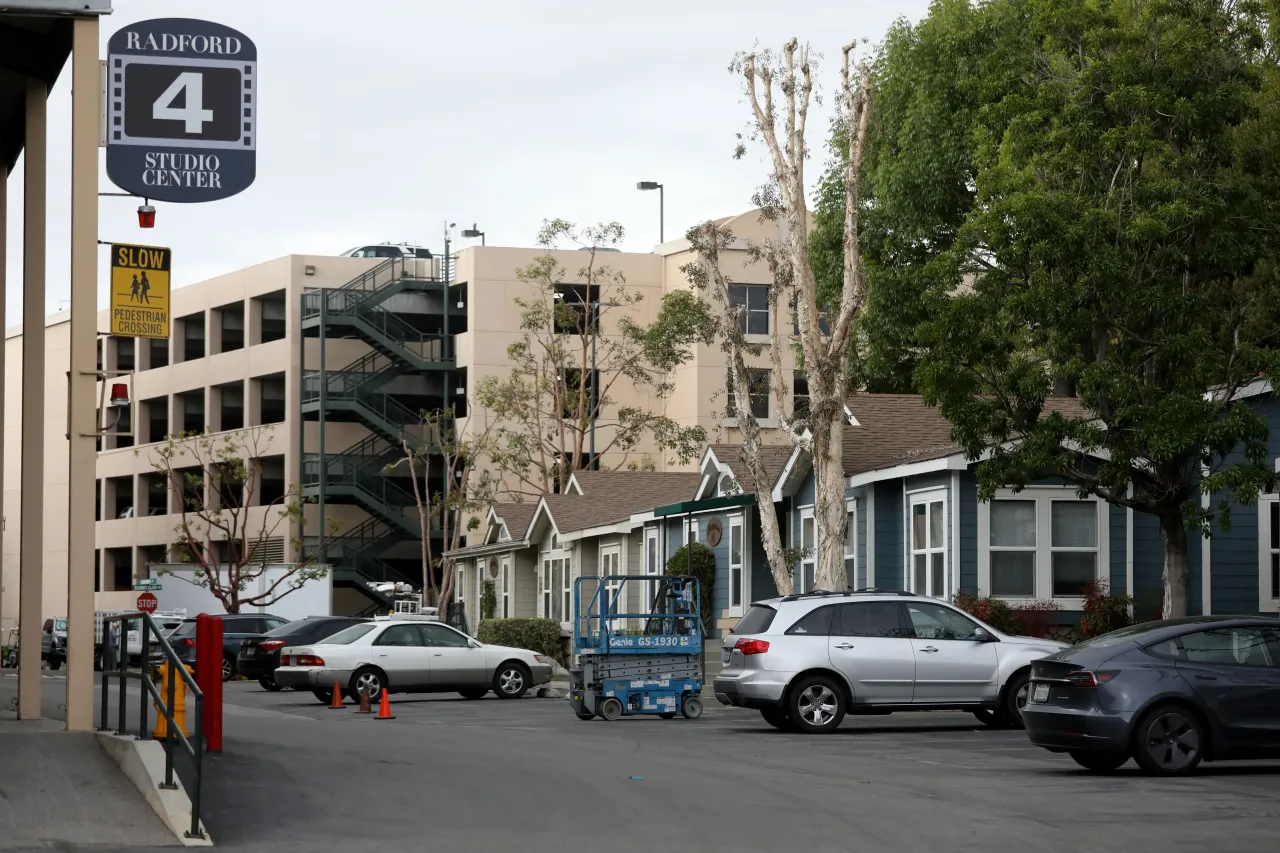
Netflix is reportedly in talks to buy Radford Studio Center, with the final price not yet set but potentially around $600 million versus its $1.85 billion 2021 sale price. The deal would deepen Netflix’s push into owned studio assets after it walked away from the Warner Bros. Discovery bid and already has $12.3 billion in cash and equivalents. NFLX shares rose 0.4% after hours even as they remain down more than 14% over the last three sessions.
This is less about a trophy real-estate purchase and more about Netflix converting balance-sheet optionality into a strategic moat. Owning premium studio capacity reduces long-run rent inflation, gives the company first claim on scarce production infrastructure, and lowers execution risk for a higher-content-throughput model if management keeps pushing into owned IP and live/format-heavy programming. The second-order winner is the lender group: distressed asset takeout prices here suggest hard-asset recovery value is doing real work for credit, while the loser is the prior owner, whose refinancing failure likely foreshadows tighter terms across leveraged media real estate.
For Netflix, the near-term market reaction should be separated from the fundamental signal. The stock’s recent drawdown has created a cleaner setup for any incremental capital allocation that can be framed as self-help rather than expensive content spend; investors tend to reward capex that improves per-hour production economics more than they reward headline growth. The real watch item is whether this becomes a pattern: if Netflix keeps migrating from tenant to owner, it implicitly signals confidence in multi-year content demand and could pressure smaller streamers that lack the balance sheet to secure similar assets.
The contrarian view is that this may be more defensive than bullish. Buying studios at a cyclical reset can lock in underutilized capacity if production volumes normalize lower, and real estate returns can dilute ROIC if management over-indexes on asset ownership versus IP economics. Also, the transaction could modestly tighten local financing conditions for other studio-backed borrowers, because lenders will now mark every media real-estate loan against a lower recent comp and higher refinancing haircuts.
The key catalyst window is 1-3 months: deal terms, financing structure, and whether management frames this as a capital-efficient bolt-on or a broader real-estate strategy. If the stock continues to trade on post-earnings de-risking rather than growth reacceleration, any headlines about disciplined asset purchases can extend the bounce; if guidance weakens again, the market will punish capex intensity and treat this as empire-building.
AI-powered research, real-time alerts, and portfolio analytics for institutional investors.
Request TrialOverall Sentiment
mildly positive
Sentiment Score
0.25
Ticker Sentiment
