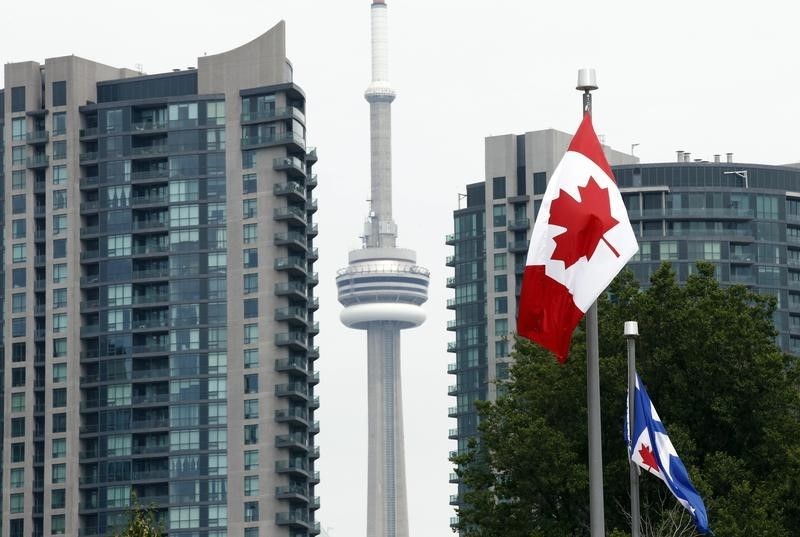
Gold is set for its largest quarterly drop since 2013 as “rate hike jitters” build after Canada’s April economy rebounded: real GDP rose 0.5% vs. 0.4% consensus, reversing a -0.1% March contraction. Growth is broad-based, lifting early Q2 annualized tracking to ~2.5% versus the BoC’s 1.5% projection, and CIBC expects no change to the overnight rate this year. Oil sands extraction jumped 6.6% (helped by reduced maintenance constraints), but the wider sector strength is keeping the market biased toward tighter policy expectations—pressuring gold prices.
The immediate market read-through is higher-for-longer Canadian policy, which is a tactical negative for duration-sensitive assets and rate-reset borrowers. But the bigger second-order effect is not just “no cuts”: keeping the front end elevated prolongs pressure on household cash flows while forcing lenders to choose between margin stability and rising credit losses; that is usually a worse mix for domestic banks than a clean easing cycle.
Energy-linked GDP strength is likely to be overstated in forward pricing because the rebound looks partly mechanical, so the durable winners are more likely the infrastructure names that move product when output normalizes, not the producers with one-quarter volume catch-up. That argues for relative longs in pipelines and rail over upstream beta, while Canadian homebuilders, REITs, and consumer lenders face a slower demand recovery if mortgage rates stay sticky into mid-2025.
For financials, the consensus may be missing timing: a “no cuts this year” path can support near-term NIMs, but it also keeps credit provisions elevated and compresses loan growth, especially in unsecured consumer and CRE books. That makes this more of a curve/trade than a fundamental growth story: short the parts of the market that need imminent easing, not the banks that can tolerate a plateau.
The main falsifier is a rapid cooldown in May/June employment or housing, which would bring BoC cuts back onto the table within 1-2 meetings. If that happens, this hawkish repricing reverses fast; if not, the next 1-3 months should reward short-duration exposures and punish the most rate-sensitive balance sheets.
AI-powered research, real-time alerts, and portfolio analytics for institutional investors.
Overall Sentiment
mildly negative
Sentiment Score
-0.25
Ticker Sentiment
