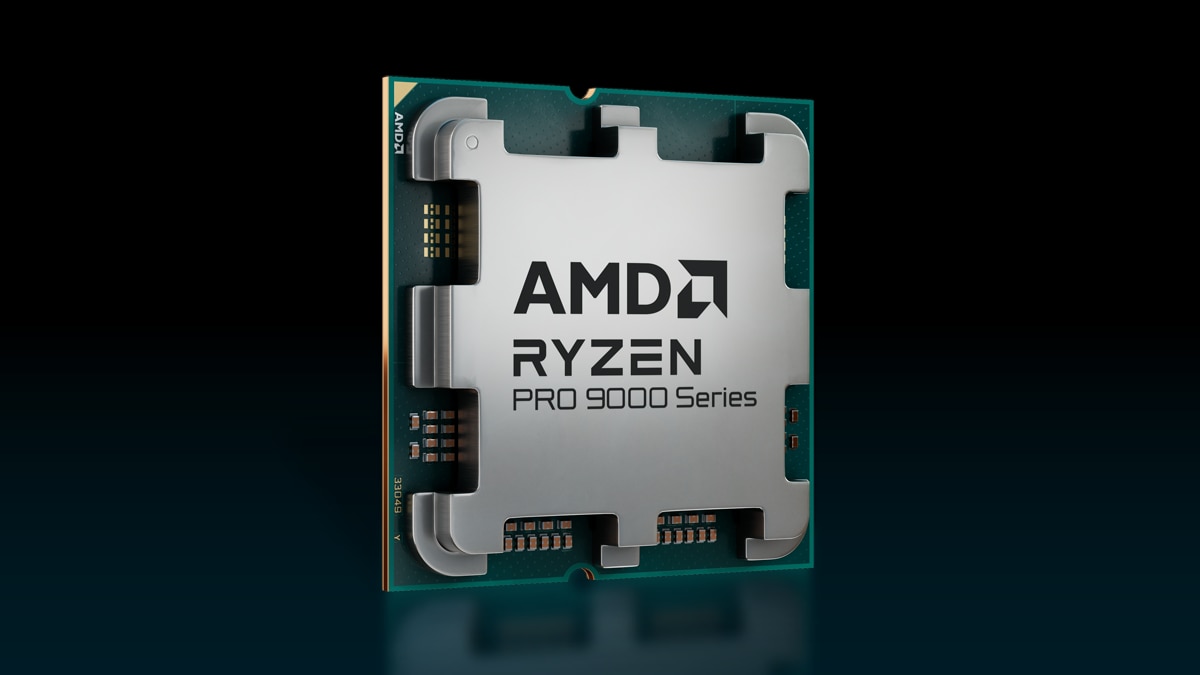
AMD expanded its Ryzen PRO 9000 Series workstation lineup on May 12, 2026, adding six- to 16-core models with 65W to 170W power envelopes and, in select SKUs, first-ever commercial desktop AMD 3D V-Cache technology. The chips are aimed at simulation, rendering, real-time visualization, and AI-driven workflows, with availability slated for the second half of 2026. The announcement is supportive for AMD’s workstation and commercial PC positioning, but near-term market impact should be limited.
This is less about immediate revenue and more about AMD extending its control point in commercial workstation refresh cycles. The meaningful second-order effect is platform lock-in: once an enterprise standardizes on a workstation CPU family with a differentiated memory hierarchy, the switching cost rises for adjacent refreshes in graphics, motherboards, validation, and software certification. That can translate into share durability even if the first-order performance delta is only modest versus incumbent alternatives.
The inclusion of cache-heavy SKUs is strategically important because it targets workloads where buyers pay for latency reduction, not just raw core count. That shifts the conversation from benchmark parity to workload-specific superiority, which tends to matter most in engineering, media, and AI-adjacent professional seats with high ASP tolerance. If the commercial channel embraces these parts, the mix effect could be more valuable than unit growth: fewer sockets, higher attach, and better pricing discipline.
The main risk is timing. Availability only in the back half of 2026 means the equity can run ahead of a benefit that will likely show up in procurement cycles with a 2-4 quarter lag. In the meantime, competitors can counter with pricing, refreshed workstation platforms, or bundle incentives, and channel inventory may cap near-term upside if buyers defer purchases awaiting the new lineup. A second risk is that workstation demand is more cyclical than the AI narrative implies; if enterprise capex slows, the product story becomes additive rather than catalytic.
Consensus is probably underestimating how much this helps AMD in the commercial segment, but overestimating how quickly it monetizes. The right read is that this is a share-grab catalyst, not a near-term earnings inflection. The market should reward AMD on multiple expansion if it believes this broadens the moat in a high-margin niche, but the actual P&L benefit likely arrives gradually and unevenly across the next 12-18 months.
AI-powered research, real-time alerts, and portfolio analytics for institutional investors.
Request DemoOverall Sentiment
moderately positive
Sentiment Score
0.45
Ticker Sentiment
