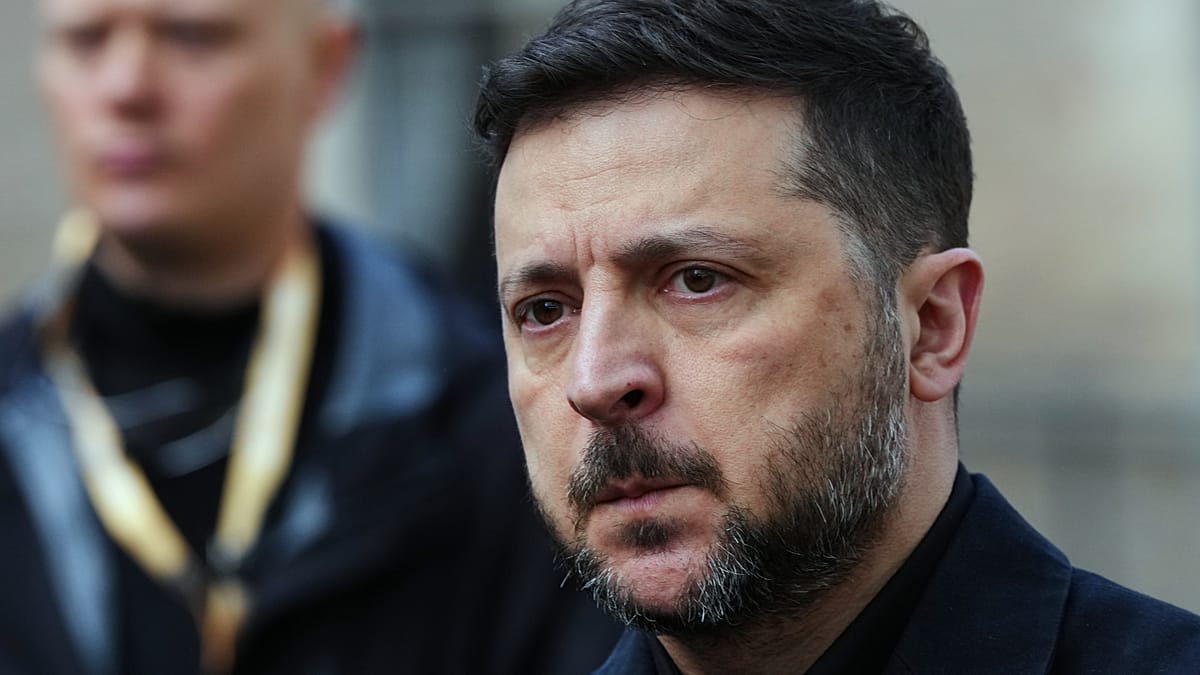
Ukraine warned it will "respond in kind" to Russian attacks and said it will decide its actions around Russia’s Victory Day parade depending on developments tonight and tomorrow. Zelenskyy said Russia violated Kyiv’s ceasefire proposal 1,820 times in the first 10 hours, including strikes on civilian infrastructure and a kindergarten attack in Sumy that killed two people. With Russia scaling back parade displays due to security fears and Ukraine showing it can strike targets about 1,000 km inside Russia, geopolitical risk remains elevated.
This is less a classic escalation headline than a volatility regime signal: the market is being told to price a non-zero probability of symbolic retaliation around a high-visibility event, with the relevant horizon measured in hours to days. That raises the odds of tactical shocks to energy, shipping, cyber, and defense supply chains more than it changes any multi-month front-line trajectory. The key second-order effect is that even limited strikes can force Russian air-defense, logistics, and command assets into a higher-readiness posture, which is expensive, error-prone, and creates short-lived windows for asymmetric Ukrainian pressure.
For equities, the immediate winners are defensive and hard-asset exposures tied to renewed wartime intensity, but the trade is not broad beta; it is dispersion. Defense primes benefit only modestly in the next few sessions, while specialty UAV, counter-UAS, EW, satellite imagery, and secure comms names can outperform on headline risk because the conflict is increasingly about detection, spoofing, and long-range precision rather than massed armor. On the loser side, any assets with direct Russia/Ukraine logistics exposure, Black Sea freight sensitivity, or Eastern Europe risk premia can gap on a single incident, but those moves tend to mean-revert unless there is a verified strike on a major node or escalation beyond the symbolic/parade window.
The contrarian angle is that the market may be overpricing the durability of any retaliation premium. Both sides have incentives to keep violence calibrated enough to preserve narrative control, and a scaled-back public event suggests Russia is already treating physical security as a constraint, which can reduce the odds of dramatic visible escalation. If nothing material happens tonight/tomorrow, the premium should decay quickly over 48-72 hours, especially in names that rallied purely on war headline momentum. The real medium-term risk is not the parade itself but a shift toward deeper infrastructure targeting that changes insurance, logistics, and cyber budgets across Europe over the next quarter.
AI-powered research, real-time alerts, and portfolio analytics for institutional investors.
Request DemoOverall Sentiment
strongly negative
Sentiment Score
-0.65
Ticker Sentiment
